Battle of Nesjar
The fleets met on Palm Sunday. It was March 25, 1016, and somewhere in the waters near the mouth of the Oslofjord -- the exact spot has never been pinpointed -- the ships of Olav Haraldsson collided with those of Sveinn Hákonarson and his coalition of farmer-chieftains. The Icelandic skald Sigvatr Thordarson composed a poem about what happened next, the Nesjavisur, and what survives of it suggests a fight of exceptional ferocity. No one recorded who fell or how many died. What the sagas remember is who won.
A Divided Kingdom
Norway in the early eleventh century was not a unified nation but a patchwork of competing claims. After the defeat and death of Olav Tryggvason at the Battle of Svolder around the year 1000, the country had been carved between Danish and Swedish interests. Eirikr Hákonarson governed the Danish portion; his kinsman Sveinn Hákonarson held the Swedish share from his power base in Trøndelag. When Eirikr left to join his brother-in-law Canute the Great in the conquest of England, Danish control over Norway collapsed. Into this vacuum stepped Olav Haraldsson, a descendant of the Harald Fairhair dynasty, who had spent years raiding and fighting abroad before returning to claim the throne of his ancestors.
The Clash at Nesjar
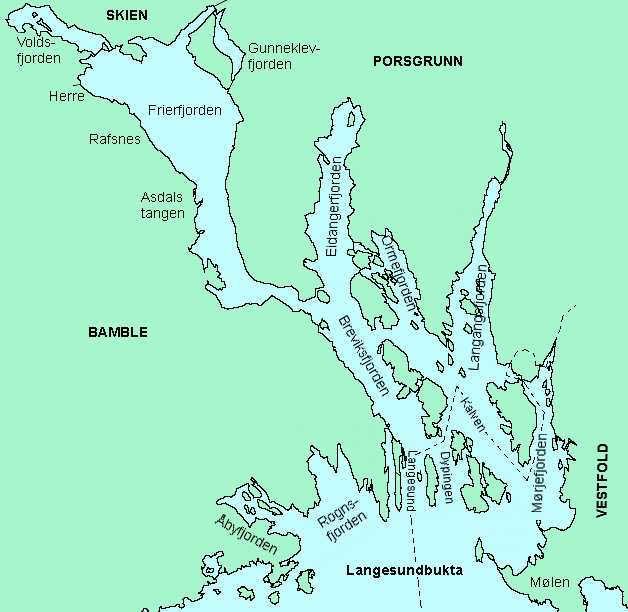
Sveinn learned that Olav was gathering support in eastern Norway and sailed south along the coast, collecting allies as he went. The most powerful of these was Erling Skjalgsson, a chieftain whose influence rivaled that of any king. Olav, meanwhile, had finished mustering his forces and was heading north to meet the challenge. The two fleets found each other somewhere near today's Langesundfjorden inlet, in the waters off Brunlanes in Vestfold. Few details of the fighting survive, but the sagas agree it was savage. In an age when chieftains personally led the line of battle, it is notable that none of the principal leaders died -- though the losses among their crews were evidently heavy.
A Saint's Beginning
Sveinn Hákonarson fled the battlefield and retreated to Sweden, where he died of illness before he could raise another army. The victory at Nesjar opened Norway to Olav's rule, but the road to unification proved rougher than the sea battle itself. Olav was forced into an uneasy alliance with the same Erling Skjalgsson who had fought against him, a partnership that held together for a dozen years before ending violently at the Battle of Boknafjorden in 1028, where Erling was killed. Two years after that, Olav himself fell at the Battle of Stiklestad. In death, however, Olav achieved what he could not in life: he was declared a saint, and his legacy became the foundational story of a united Norwegian kingdom.
Memory in Stone and Verse
The exact location of the Battle of Nesjar remains unknown. Tradition places it near the western end of the Oslofjord, in the fjord system around Brunlanes and Larvik, but no archaeological evidence has confirmed the site. What endures is the poetry. Sigvatr Thordarson's Nesjavisur stands as one of the most important skaldic compositions of its era -- a firsthand literary record of a battle that reshaped Scandinavian politics. In 2016, on the thousandth anniversary of the battle, a monument was erected in the village of Helgeroa in Larvik, Vestfold County. The Nesjar Monument stands where the clash is believed to have occurred, marking the waters where a future saint won his throne.
From the Air
Coordinates: 58.99°N, 9.83°E. The battle occurred somewhere in the waters around the Langesundfjorden inlet near Brunlanes, Larvik, on the western side of the Oslofjord. From the air, the coastline is a complex mix of fjords, inlets, and rocky shoreline. Recommended viewing altitude: 3,000-5,000 feet to take in the fjord geography. The Nesjar Monument is located in Helgeroa village. Nearest airports: Sandefjord Torp (ENTO) about 30 km northeast, Skien/Geiteryggen (ENSB) to the northwest.