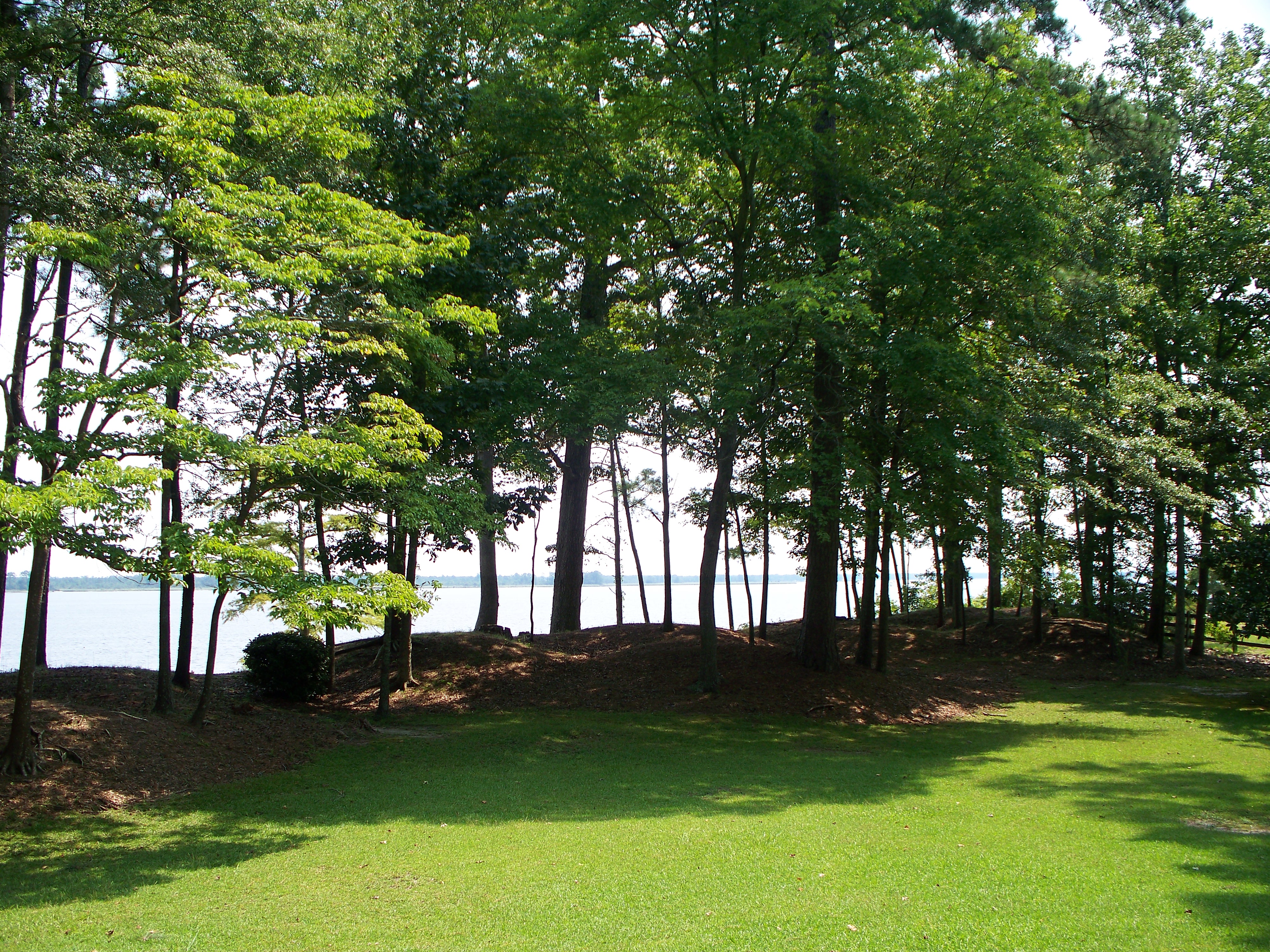
Battle of New Bern
The weakest point in the Confederate defensive line was manned by men who had been soldiers for exactly two weeks. Armed with shotguns and hunting rifles, this militia battalion held the dogleg where General Branch's breastworks met the railroad -- a gap created by haste and a shortage of labor. On the foggy morning of March 14, 1862, when Federal troops from the 4th Rhode Island charged through that gap and captured nine brass cannon, the entire Confederate position unraveled. The Battle of New Bern handed Union forces a strategic foothold on the North Carolina coast that they would not relinquish for the rest of the war.
The Railroad Prize
New Bern sat on the southwest bank of the Neuse River, about 37 miles above Pamlico Sound. By the 1860s it had lost much of its colonial-era prominence as a seaport to Morehead City and Beaufort, but it held something more valuable than a harbor: the Atlantic and North Carolina Railroad, which connected the coast to the interior. At Goldsboro, this line crossed the Wilmington and Weldon Railroad -- the lifeline that kept Robert E. Lee's Army of Northern Virginia supplied throughout the war. Capturing New Bern meant snapping a link in that supply chain. Brigadier General Ambrose Burnside, fresh from his victory at Roanoke Island in February 1862, understood this perfectly. The Confederate authorities in Richmond understood it too, but did almost nothing to prevent it.
A Line Too Thin
The land between the Trent River and Slocum's Creek -- the entire battlefield -- was low, flat, and marshy, covered in open pine forest broken by ravines and small creeks. Brigadier General Daniel H. Hill had originally built strong defensive works here, including Fort Thompson on the Neuse River with thirteen guns, river barriers of underwater iron-capped piles backed by thirty torpedoes each packed with two hundred pounds of powder, and a row of sunken hulks and chevaux de frise. But Hill was transferred to Virginia, and his successor General Lawrence O'Bryan Branch inherited both his fortifications and his problem: there were nowhere near enough men to fill them. Branch's aide estimated 6,130 troops were needed; Branch had roughly 4,000, many of them poorly armed militia, with their numbers regularly thinned by sickness. Forced to consolidate, Branch extended his line from the river past the railroad into a swamp -- doubling its length while cutting a fatal corner at a creek bed that left a dogleg in the center.
Rain, Mud, and Fog
Burnside's Coast Division -- eleven thousand strong, accompanied by fourteen Navy gunboats -- left Roanoke Island on March 11 and anchored near the mouth of Slocum's Creek the following evening. Federal troops began landing at dawn on March 13 against only token resistance. Then the rain started. The unpaved county road dissolved into mud so deep that artillerymen could barely move their howitzers; an entire infantry regiment, the 51st Pennsylvania, was detailed to haul the guns. Many of those soldiers later called it the hardest part of the whole battle. Confederate Colonel R.P. Campbell, commanding the right wing, mistook naval gunfire for the prelude to a flanking landing and pulled his forces back from the Croatan Works to the Fort Thompson line without a fight. Burnside's troops found the first line of breastworks abandoned and bivouacked for the night within a mile and a half of the Confederate position. The howitzers did not arrive until three in the morning.
The Brickyard Charge
Dense fog blanketed the field on March 14. Burnside ordered three brigades forward: Foster's First on the right along the county road, Reno's Second on the left along the railroad, and Parke's Third in reserve. Branch placed his regiments from Fort Thompson to a brickyard, its kiln loopholed for muskets. Beyond the railroad, the entire extended line fell to a single regiment -- the 26th North Carolina -- with the critical dogleg gap covered by the green militia battalion. The first Federal charge against the kiln, led by part of the 21st Massachusetts, drove into withering crossfire and fell back. But Colonel Isaac P. Rodman of the 4th Rhode Island, told by the retreating unit's commander that a second assault could succeed, took responsibility on his own authority. He formed his regiment and charged. The 4th Rhode Island broke through, captured nine brass field pieces, and found themselves behind the Confederate entrenchments. The militia fled, exposing both flanks. Branch ordered reserves forward, but they arrived too late. Regiment by regiment, the line collapsed.
A Retreat That Could Not Stop
The rout was total. Confederate soldiers sprinted across the bridge over the Trent River into New Bern, then burned it so hastily that some of their own men were stranded on the wrong side and captured. A fire raft in the river drifted against the railroad bridge and destroyed that too. Commander Stephen C. Rowan's gunboats, which had pushed past the river barriers and shelled Fort Thompson into abandonment, pursued the fleeing troops through New Bern itself, denying them any chance to regroup. Branch could not restore order until his men had run more than thirty miles to Kinston. The final toll: Branch lost 64 killed, 101 wounded, and 413 captured or missing. Burnside suffered 90 killed and 380 wounded, with a single man captured. New Bern remained under Federal control for the rest of the war, and the battlefield is preserved today as the New Bern Battlefield Site, with the American Battlefield Trust and the New Bern Historical Society continuing to acquire and protect the grounds.
From the Air
The battlefield lies just south of New Bern, North Carolina, at approximately 35.043N, 77.015W, in the low marshland between the Trent River and Slocum's Creek along the Neuse River. Coastal Carolina Regional Airport (EWN/KEWN) is the nearest facility, located about 20 miles southeast. From 3,000 feet, the flat coastal plain, pine forests, and winding rivers that defined the battlefield terrain are clearly visible. The Neuse River broadens dramatically as it approaches Pamlico Sound to the east. Fort Thompson's earthworks survive near the riverbank. Downtown New Bern and the confluence of the Trent and Neuse rivers are prominent landmarks.