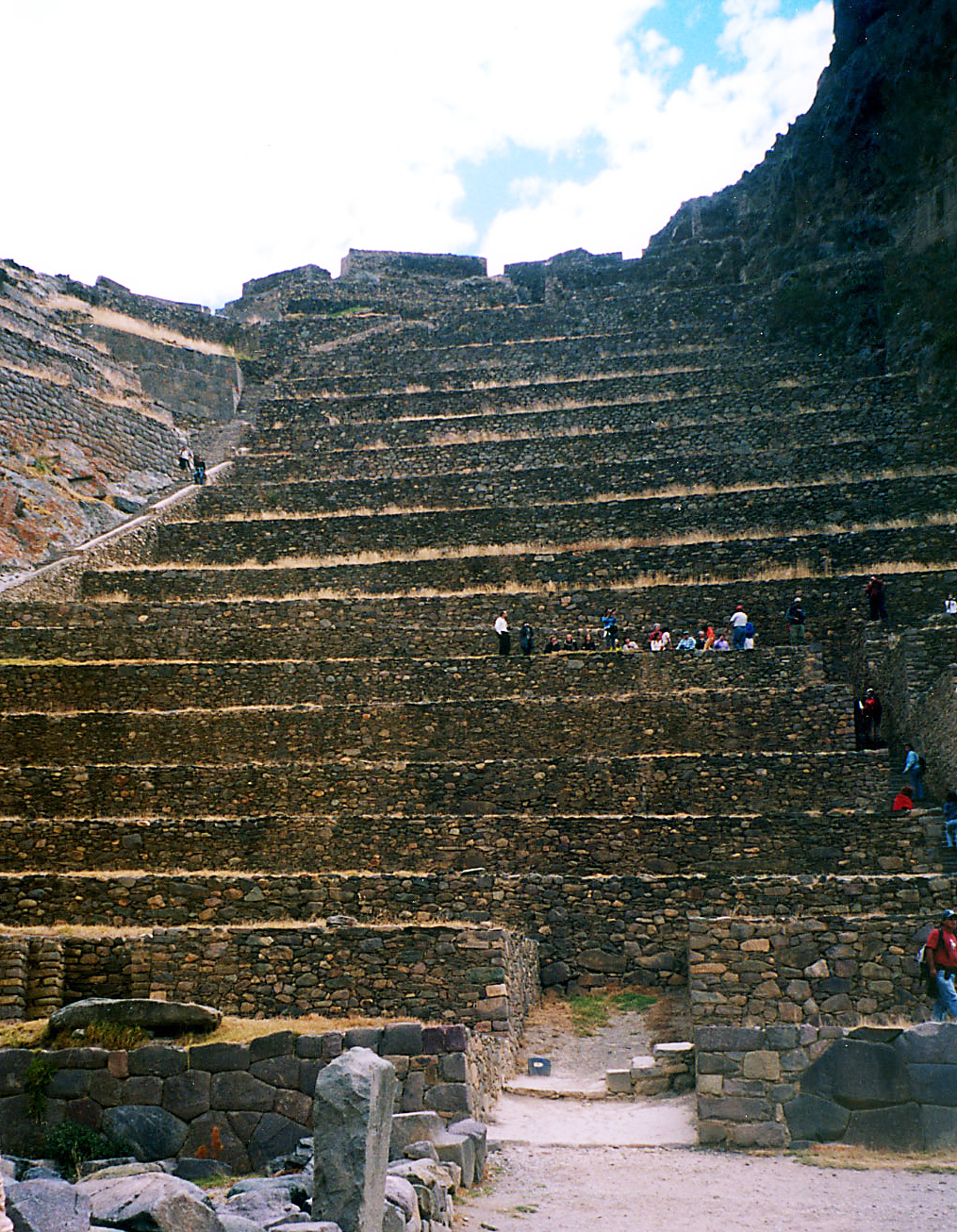
Battle of Ollantaytambo
The Spaniards had conquered an empire, but they could not cross a valley. In January 1537, a hundred Spanish cavalry and some thirty thousand allied warriors rode northwest from Cusco along the Urubamba River valley, intent on destroying the headquarters of Inca emperor Manco Inca at Ollantaytambo. What they encountered was not a ragtag rebellion but a sophisticated defense in depth -- fortified terraces, river crossings turned into kill zones, and a masterstroke of hydraulic engineering that turned the battlefield into a swamp. The Spanish expedition withdrew under cover of darkness, marking one of the few outright Inca victories during the conquest of Peru.
An Emperor's Betrayal
Manco Inca had once been the conquistadors' most valuable ally. After Francisco Pizarro captured and executed Atahualpa in 1533 and occupied Cusco, he installed Manco as a puppet ruler to legitimize Spanish control. For a time the arrangement worked -- Manco helped defeat the remnants of Atahualpa's forces and reestablish order across the empire. But the mask of partnership soon slipped. In 1535, a Spanish mob looted Manco's own house with impunity. The harassment escalated: demands for gold, the seizure of his wives, and eventually imprisonment. By May 1536, Manco had fled Cusco and raised an army. He besieged the Spanish garrison in the former Inca capital, beginning a conflict that would drag on for months before the Spanish decided to strike directly at his base seventy kilometers away at Ollantaytambo.
Terraces Turned Fortress
Manco chose his ground with care. The narrow Urubamba valley leading to Ollantaytambo offered natural chokepoints that his engineers transformed into a layered defense. The first barrier was a steep bank of terraces at Pachar. Behind it, Inca engineers channeled the Urubamba River to cross the valley twice, creating water obstacles that slowed advancing forces while defenders at the fortifications of Choqana and Inkapintay poured fire from both banks. At the plain of Mascabamba, eleven high terraces sealed the valley between the mountains and a deep river canyon. The only passage through was T'iyupunku, a thick defensive wall pierced by two narrow doorways -- barely wide enough for a man, let alone a horse. Behind everything stood the Temple Hill, a religious complex ringed by terraces that served as the last line of defense.
Water as a Weapon
The Spanish expedition, led by Hernando Pizarro, fought its way forward through river crossing after river crossing, meeting stiff resistance at every ford. More than twenty thousand Inca soldiers -- conscripted farmers and Amazon rainforest recruits armed with maces, slings, and spears -- held the terraces above. Their stone and bronze weapons rarely penetrated Spanish steel armor in direct combat, but here the terrain negated the conquistadors' greatest advantage: their horses. And then the water came. Manco's engineers diverted the river itself to flood the plain where the Spanish cavalry had deployed, turning firm ground into mud that immobilized the horses entirely. Attacked from three sides -- the terraces in front, the steep slopes of Cerro Pinkuylluna to the right, the river canyon to the left -- and mired in rising water, the Spaniards had no choice. They withdrew by night, retreating to Cusco in defeat.
Victory Without Salvation
Ollantaytambo was a triumph, but it could not reverse the broader trajectory of the conquest. Emboldened, Manco attempted a renewed assault on Cusco, only to be discovered and routed in a Spanish night attack. When Diego de Almagro returned from Chile in April 1537 with three hundred fresh soldiers, the balance tipped decisively. Manco recognized that Ollantaytambo, just seventy kilometers from the now-reinforced Spanish garrison, was indefensible. He withdrew westward to Vitcos, then deeper into the forested mountains of Vilcabamba. There he established the Neo-Inca State, a small independent kingdom in the jungle that held out for thirty-five years until the Spanish captured and executed its last emperor, Tupac Amaru, in 1572. The terraces at Ollantaytambo still stand, their stones carrying the memory of the day an empire fought back.
From the Air
Located at 13.26S, 72.26W in the Sacred Valley of the Urubamba River, approximately 70 km northwest of Cusco, Peru. The Ollantaytambo terraces are visible from the air as dramatic stepped formations against the mountainside. The narrow Urubamba valley runs east-west here, flanked by steep Andean peaks. Cusco's Alejandro Velasco Astete International Airport (SPZO) is the nearest major airfield. Terrain is extremely mountainous with elevations ranging from 2,800 to over 4,200 meters in the surrounding peaks.