Battle of Osan
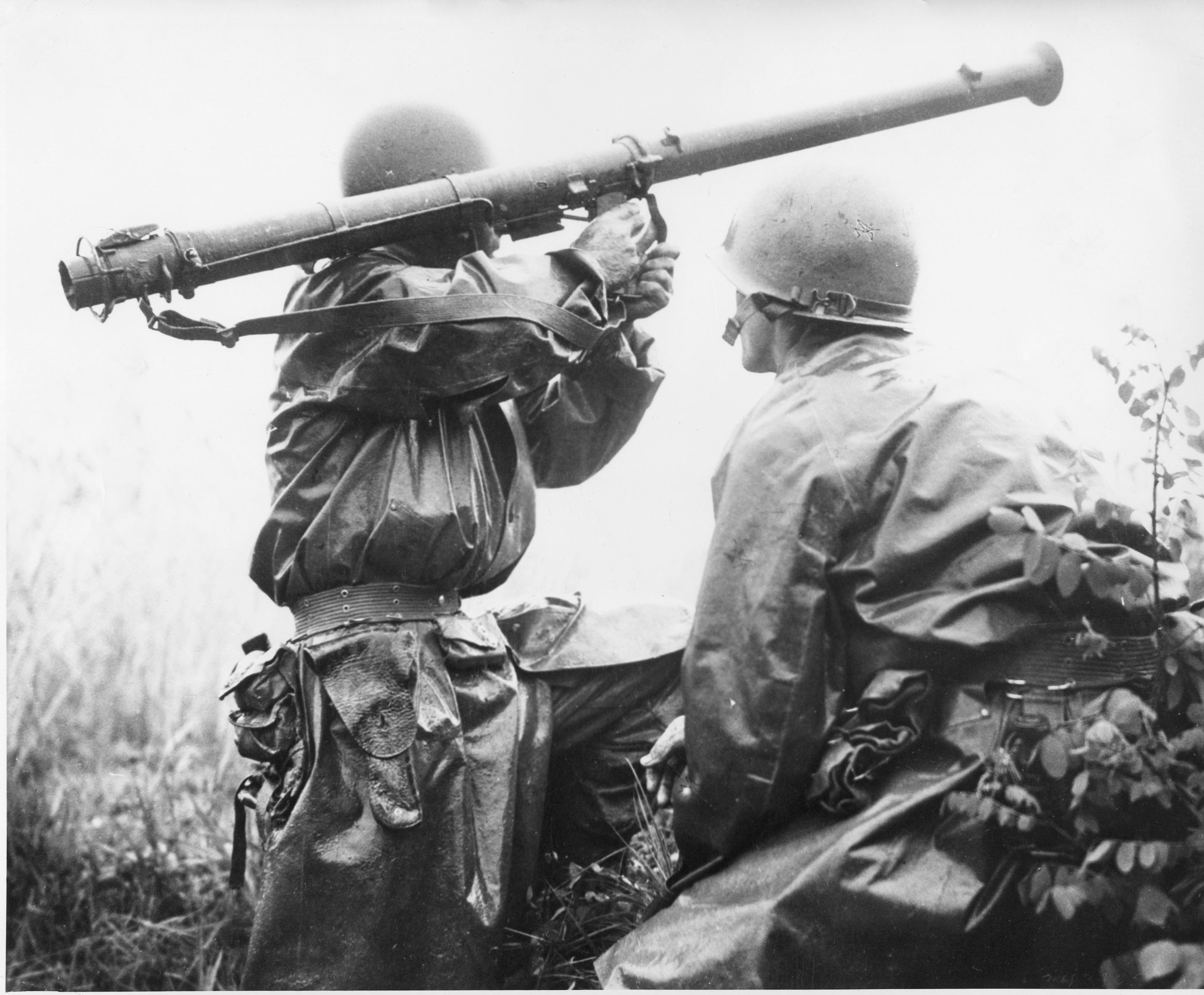
The soldiers were mostly teenagers. They had eight weeks of basic training, 120 rounds of ammunition each, two days of C-rations, and obsolete bazookas that could not penetrate the armor of a Soviet T-34 tank. On July 5, 1950, these 540 men of Task Force Smith -- named for their commander, Lieutenant Colonel Charles Bradford Smith, a Guadalcanal veteran -- dug in on two rain-soaked hills north of Osan and waited for the North Korean army to arrive. It was the first ground engagement between the United States and North Korea, and it was over in hours.
Rushed to the Front
Ten days earlier, on June 25, ten North Korean divisions had poured across the 38th parallel with 89,000 men. Seoul fell in three days. The South Korean Army, outgunned and outnumbered, disintegrated. President Truman ordered ground troops to the peninsula, but years of postwar military budget cuts had left the closest available unit -- the 24th Infantry Division, stationed in Japan -- understrength and equipped with World War II surplus. Major General William F. Dean selected the 21st Infantry Regiment's 1st Battalion as his most combat-ready unit and airlifted it into Korea aboard C-54 Skymasters. Task Force Smith consisted of 406 infantry and 134 artillerymen with six 105mm howitzers. They had exactly six anti-tank rounds between them. Dean's order was blunt: stop the North Korean advance along the highway from Suwon, "as far from Pusan" as possible.
Steel Against Flesh
At 7:30 on the morning of July 5, eight T-34 tanks appeared through the rain, heading south from Seoul. The Americans opened fire at 8:16. Howitzer rounds struck the tanks and bounced off. Recoilless rifle rounds scored direct hits that did nothing. Second Lieutenant Ollie Connor fired 22 bazooka rockets at a range of 15 yards -- so close he could hear the engines -- and watched the warheads fail to penetrate the rear armor. The tanks rolled through the American position without stopping, their crews apparently assuming the roadblock was manned by South Korean forces not worth engaging. A single forward howitzer, manned by Corporal Herman Critchfield and five cannoneers, fired its precious HEAT rounds and managed to damage two tanks, setting one ablaze. A crew member of the burning T-34 climbed out with a submachine gun and killed an American machine gunner before being shot himself -- the first American ground combat casualty of the Korean War. Then a second column of 25 tanks arrived.
Overwhelmed
After the armor passed, an eerie quiet settled over the hills. For about an hour, nothing moved on the road from Seoul. Then, at 11:00, three more tanks appeared. Behind them stretched a truck column six miles long carrying 5,000 infantry of the North Korean 4th Division. The column did not know the Americans were there. At 11:45, Smith gave the order to fire everything. Mortars, machine guns, rifles, and howitzers tore into the convoy, destroying trucks and scattering troops. But the North Koreans recovered quickly. A thousand soldiers formed in the rice paddies to the east and attempted to flank the American line. Another force enveloped from the west. T-34 tanks moved to within close range and opened fire directly on the hilltop positions. The communication wires between the infantry and artillery had been severed by tank treads hours earlier, leaving Smith unable to call for fire support. By 2:30 in the afternoon, with ammunition running low and North Korean troops closing on three sides, Smith ordered withdrawal.
The Cost of Seven Hours
The retreat dissolved into chaos. The 2nd Platoon of B Company never received the withdrawal order and found itself alone on the hill, surrounded. Wounded soldiers on stretchers were left behind with an attending medic. They were later found shot to death in their litters; the medic was never seen again. Of the original 540, only 250 made it back to American lines before nightfall. Final casualty counts, revised after the war, recorded 60 dead, 21 wounded, and 82 captured -- 32 of whom died in captivity. Forty percent of Task Force Smith became casualties. North Korean losses were approximately 42 dead and 85 wounded, with four tanks disabled. The advance was delayed approximately seven hours. Those seven hours bought time for the 34th Infantry Regiment to establish a defensive position at Pyeongtaek, fifteen miles south. It too would be overrun. The 24th Division fought a grinding month of delaying actions, losing ground steadily until the Eighth Army made its stand at Pusan. Three months later, Osan itself became the point where forces advancing from the Inchon landings linked up with troops breaking out of the Pusan Perimeter. Today, a monument stands on the hills where Task Force Smith fought, and the Eighth Army holds an annual commemoration there.
From the Air
Located at 37.19N, 127.05E, approximately 6 miles south of Suwon and 25 miles south of Seoul, South Korea. The battle site sits on hills straddling the main road connecting Seoul to the south. Osan Air Base (RKSO), a major US Air Force installation, is located nearby. Seoul Air Base (RKSM) and Suwon Air Base (RKSW) are also within range. The terrain is relatively flat agricultural land with low hills, making the ridgeline positions visible from moderate altitude. Recommended viewing altitude: 3,000-5,000 feet.