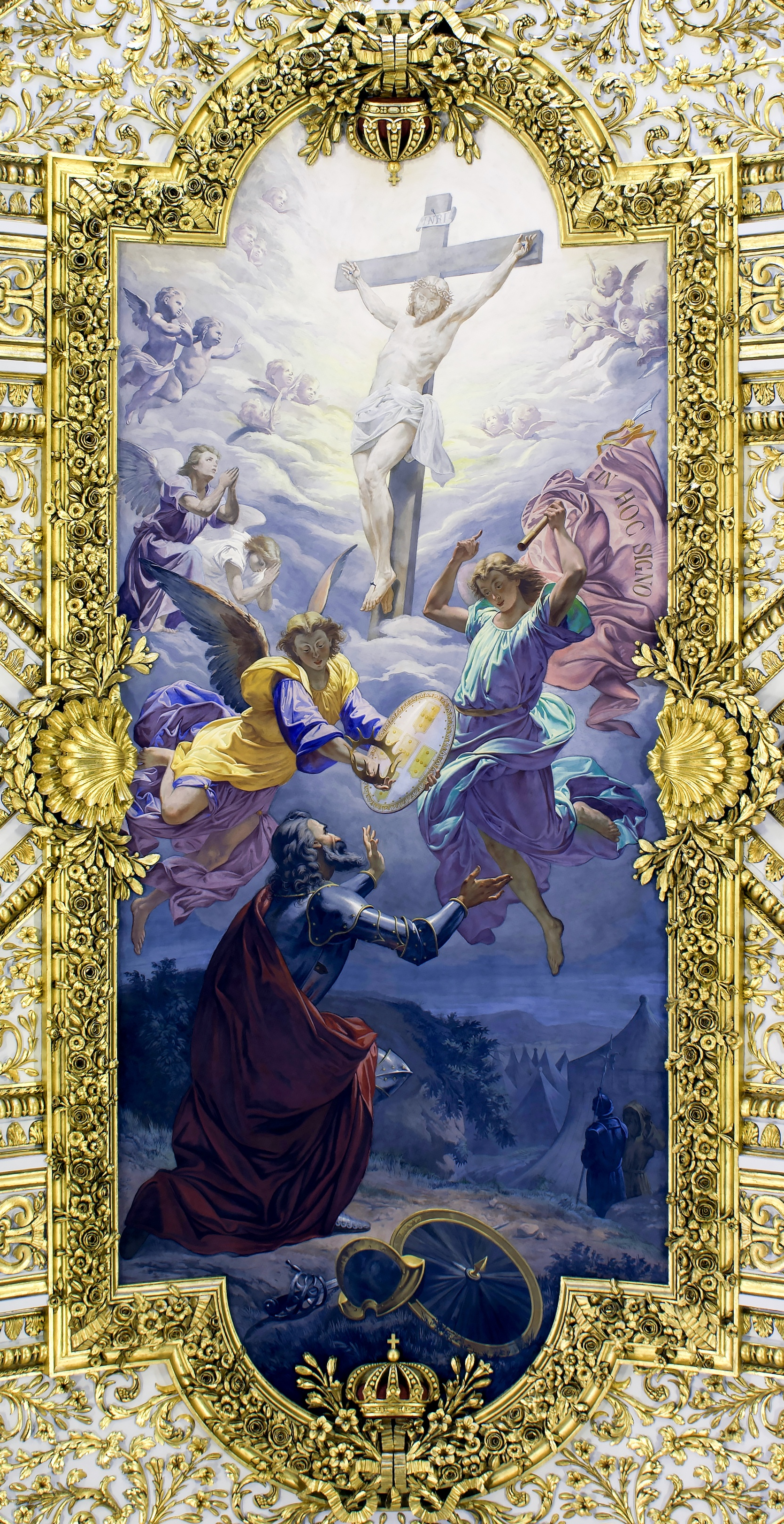
Battle of Ourique
Before the fighting began, the soldiers lifted their commander onto a shield. In the Germanic tradition, this was how you made a king. Count Afonso Henriques of Portugal stood atop that shield on July 25, 1139, hailed as rex by men who were about to charge into battle outnumbered against Almoravid forces. By the end of the day, according to legend, five Muslim kings lay dead and a new nation had its founding story. That the story was embellished, forged, and reinvented over the next eight centuries makes it no less central to what Portugal became.
A Count Who Needed a Victory
Afonso Henriques had problems. While he was entangled in disputes with Alfonso VII of Leon at the Battle of Valdevez, Muslim forces had attacked and destroyed Leiria and Trancoso at his southern frontier. The resulting Treaty of Zamora freed his troops to move south, but the Almoravid threat remained urgent. What happened next is disputed on nearly every point. Historians cannot agree where the battle took place -- the name Ourique designated a vast area south of Beja, and the distance from Christian-held territory has led some scholars to suggest alternative sites, including Vila Cha de Ourique near Santarem. Nor can they agree on the opposing forces. One early account names five Muslim kings; another names only one, called Ismar, identified as the Almoravid governor of Cordoba, Muhammad Az-Zubayr Ibn Umar.
The Battle Nobody Quite Remembers
The Chronicle of the Goths provides the most detailed account: Ismar waited until Henriques penetrated Muslim territory, then sent troops from Seville, Badajoz, Elvas, Evora, and Beja against the Portuguese count. The five kings of legend may have been the garrison commanders of each city, under the overall command of the governor. The Portuguese found themselves surrounded on a hilltop -- yet won anyway, aided by internal leadership problems among the Almoravid forces. It is also possible the entire engagement was inflated by chroniclers from a large-scale raid into something grander. Deep Christian incursions into Muslim territory were not unprecedented -- Alfonso VII had reached Cordoba and Seville, and in 1147 conquered Almeria south of Granada. A raiding party intercepted while retreating would explain the battle's confused geography.
The Miracle Industry
The legend that grew around Ourique became one of history's most productive political myths. First, Saint James was said to have intervened miraculously on behalf of the Portuguese -- the same saint venerated at Santiago de Compostela. As Portugal sought to distinguish itself from Spain, the legend was revised: Saint James was replaced by Saint George, then by Jesus Christ himself. In the fullest version, an old man visited Henriques the night before battle, telling him to ride out alone when he heard a chapel bell. A ray of light revealed Christ on a crucifix, who promised victory. The legend first appears in writing in the early 15th century, during the wars between John I and Castile. Alexandre Herculano, the great 19th-century historian, examined the evidence and pronounced it a "pious fraud."
Forging a Nation's Documents
The aftermath of Ourique was just as creatively embellished. Afonso Henriques allegedly convened Portugal's first estates-general at Lamego, where the Archbishop of Braga crowned him and laws were passed excluding Castilian kings from the Portuguese throne. This account was a deliberate falsification, produced by Cistercian monks at the Monastery of Alcobaca in the 17th century to justify Portuguese independence during the Iberian Union and support the claims of John IV. Even in 1632, doubts existed about the documents' authenticity, and Spanish jurists demonstrated they were not credible. The Portuguese defended them anyway. What cannot be forged, however, is the coat of arms: Portugal's first, featuring five small shields said to represent the five defeated Muslim kings, was created in commemoration of the battle. It endures on the national flag to this day.
From the Air
The traditional battle site is near Ourique at 37.65N, 8.22W in the Alentejo region of southern Portugal, though the actual location is disputed. The terrain is open, rolling plains typical of the Baixo Alentejo. Nearest airport: LPBJ (Beja, ~60 km east). The landscape below shows the sparsely populated agricultural steppe where medieval armies maneuvered.