Battle of Paardeberg
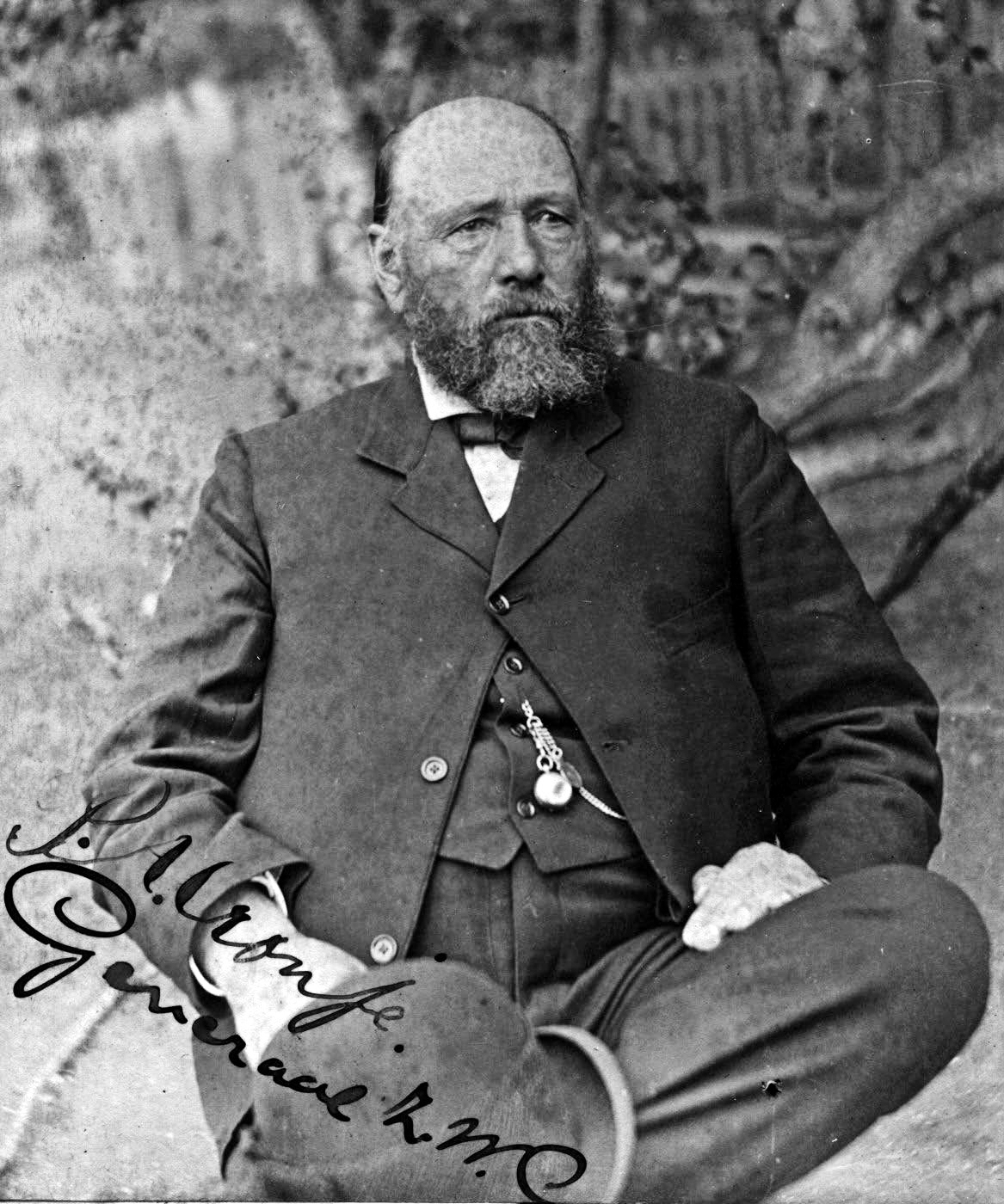
The name means Horse Mountain, but there is no mountain at Paardeberg -- just the low banks of the Modder River, a drift where ox-wagons could cross, and, in February 1900, the wreckage of an entire army. General Piet Cronje could have escaped. His 5,000 Boer fighters had slipped between two British forces in the dark, their ox-drawn wagons creaking past the sleeping cavalry camp. But when British horsemen caught up and opened fire at the crossing on 17 February, Cronje made a decision no one has adequately explained: he stopped, formed a laager, and dug in. Nine days later, he surrendered with 4,019 men and 50 women -- roughly ten percent of the entire Boer fighting force.
The Retreat That Stopped
Cronje's column was retreating from Magersfontein, where his forces had held the British at bay for two months. The relief of Kimberley on 15 February by John French's cavalry had made his position irrelevant; worse, French's flanking ride had cut his supply lines. On the night of the 15th, Cronje's men evacuated with their families, livestock, and 400 wagons. The slow convoy of ox-carts became his undoing. The Boers slipped between French's exhausted riders and the 6th Division's outposts at the Modder fords, but their mounted rearguards could not prevent the British from following. When they reached Paardeberg Drift on the 17th, 1,500 British horsemen opened fire from the north. Boer commander Christiaan De Wet was only 30 miles to the southeast, and another force under Ignatius Ferreira was equally close to the north. Cronje could have brushed aside the depleted cavalry and linked up with either. Instead, he chose to stand.
Bloody Sunday
Lord Roberts was ill, and his chief of staff, Herbert Kitchener, took command. Kelly-Kenny, the 6th Division's general, had a sensible plan: surround Cronje, bombard him, wait for surrender. Kitchener overruled him. On 18 February he ordered frontal assaults -- wave after wave of infantry and mounted troops thrown against entrenched Boer riflemen, despite months of evidence that such tactics were suicidal. Not a single British soldier is thought to have reached within 200 yards of the Boer lines. By nightfall, 24 officers and 279 men were dead, with 59 officers and 847 men wounded. It was the costliest single day for the British in the entire war. Kitchener compounded the disaster by stripping defenses from a critical hill -- Kitchener's Kopje -- to feed his assaults, allowing De Wet to seize it almost unopposed. The strategic picture flipped overnight. Rescue for Cronje suddenly seemed possible.
Stench and Stubbornness
Inside the Boer laager, the situation was equally grim. The soft riverbank had absorbed some of the bombardment's force, limiting casualties to around 100 dead and 250 wounded, but the wagons, horses, and oxen had no such protection. For Boer fighters, these wagons carried everything they owned in the world, and the horses were as essential to their way of fighting as their Mauser rifles. Ammunition cooked off in burning wagons. Stores were destroyed. The stench of dead animals became unbearable as the days wore on and more British guns arrived -- 5-inch howitzers, pom-poms, field batteries ringing the position. Cronje requested a ceasefire to bury the dead. Roberts refused. Cronje's reply was defiant: "If you are so uncharitable as to refuse me a truce as requested, then you may do as you please. I shall not surrender alive. Bombard as you will." Yet De Wet, who held the key to Cronje's escape, withdrew on 21 February. Ferreira's forces lost direction after their commander was accidentally shot dead by one of his own sentries. Cronje was alone.
Dawn at Sixty-Five Yards
On the night of 26 February, the Royal Canadian Regiment of Infantry was rotated to the front line. Rather than preparing for another costly daylight charge, the Canadians and Royal Engineers advanced in darkness toward the Boer camp and began digging trenches on high ground barely 65 yards from the Boer lines. When dawn broke on 27 February, Boer fighters woke to find Canadian rifles leveled at them from point-blank range. White flags appeared along the line. Cronje surrendered at six in the morning -- the nineteenth anniversary, to the day, of the British defeat at Majuba Hill in 1881. Whether that symbolism was coincidence or deliberate timing remains debated, but the date was not lost on anyone. In historian Thomas Pakenham's summary: "Cronje's blunders had outmatched Kitchener's and Roberts's after all."
Paardeberg Day
The battle marked the first major British victory of the war and the first significant overseas deployment of Canadian forces since the Nile Expedition during the Mahdist War. Two British soldiers -- Alfred Atkinson of the Yorkshire Regiment and Francis Parsons of the Essex Regiment -- received posthumous Victoria Crosses for their actions on Bloody Sunday. For two decades after the war, Canadians gathered on 27 February at war memorials across the country for what they called Paardeberg Day, honouring the men who had dug trenches in the dark on the Modder River. The tradition faded only after the First World War introduced Armistice Day, and the scale of later sacrifices eclipsed the memory of a muddy river crossing in the Free State. A bronze monument in Halifax, Nova Scotia, still depicts the Boer surrender, with the Royal Canadian Regiment in the foreground.
From the Air
Paardeberg Drift lies at approximately 28.98S, 25.09E, on the Modder River in the Free State, roughly 40 km southeast of Kimberley. The terrain is flat, open veld -- characteristic Free State grassland with scattered farms. The river itself is a modest watercourse, easily missed from altitude, but the drift (ford) area and surrounding floodplain are identifiable. No major airport is nearby; Kimberley Airport (FAKM) is the closest at about 40 km northwest. Best viewed at 3,000-5,000 ft AGL. The landscape is remarkably unchanged from 1900 -- open plains, low riverbanks, and the occasional kopje that defined the battlefield.