Battle of Patay
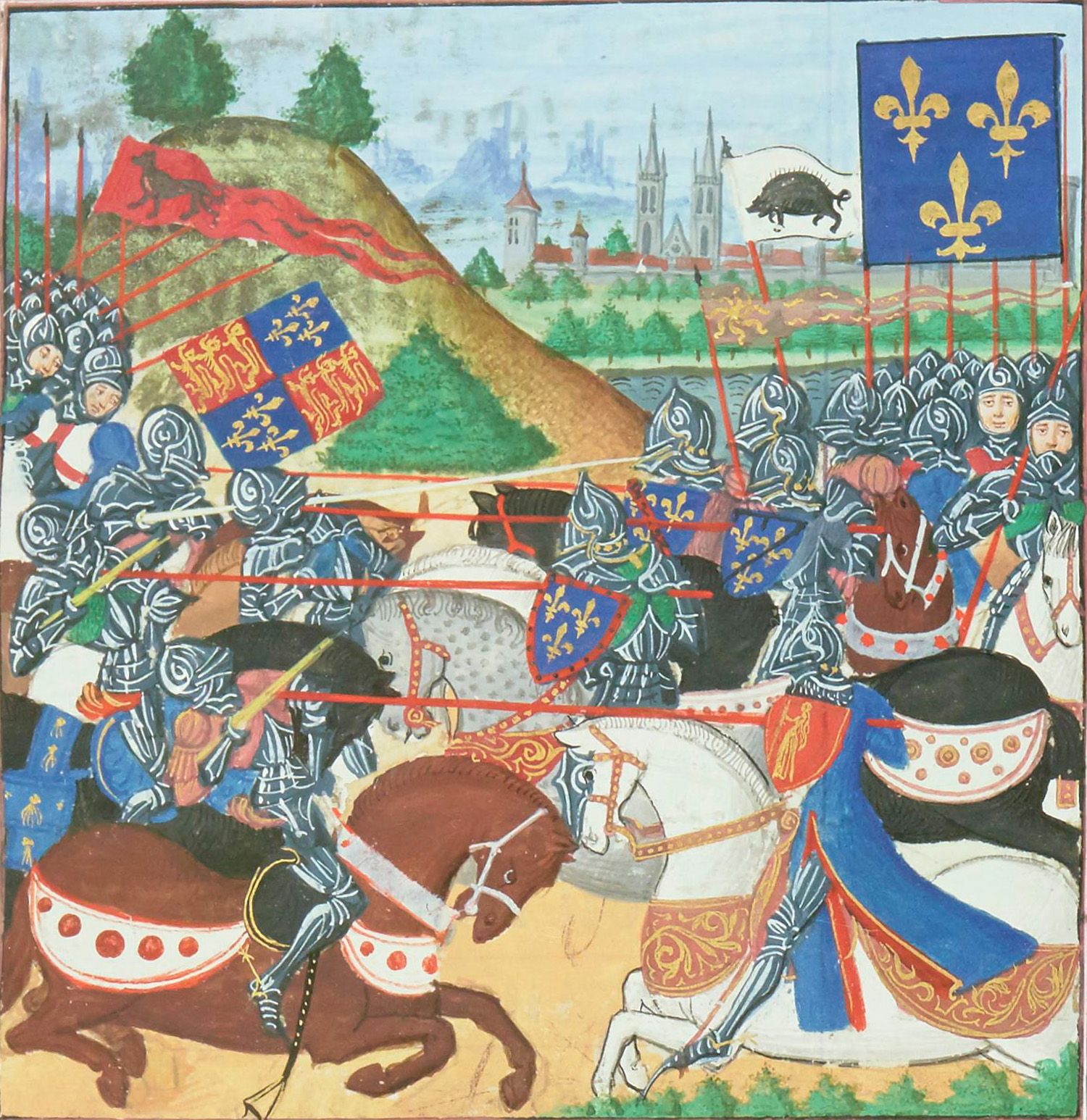
A lone stag wandered onto a field near the village of Patay on 18 June 1429. Hidden in nearby woods, 500 English longbowmen who had been lying in ambush could not resist: they raised a hunting cry. French scouts heard it, pinpointed the concealed position, and sent word racing back to the vanguard. Within the hour, France's best cavalry commanders launched a charge that would shatter England's military position in central France. The Battle of Patay is often credited to Joan of Arc, but she was miles away with the main army. The men who won this fight were La Hire and Jean Poton de Xaintrailles, and their weapon was speed.
Retreat from the Loire
Patay was the culmination of the Loire Campaign, a five-battle French offensive that had begun with the relief of Orleans in May 1429. After losing Jargeau, the bridge at Meung-sur-Loire, and Beaugency in rapid succession, the English were reeling. Sir John Fastolf had marched a reinforcement army from Paris and joined the remnants of the besieging forces under Lord Talbot and Lord Scales at Meung-sur-Loire. Talbot wanted to fight immediately to relieve Beaugency, but the more cautious Fastolf resisted, unwilling to risk a pitched battle against the more numerous French. When the Beaugency garrison surrendered on 18 June, unaware that Fastolf's reinforcements had arrived, Talbot agreed to retreat toward Paris. The French pursued.
The Stag That Lost a War
The English attempted the same defensive tactics that had won at Crecy and Agincourt: longbowmen behind sharpened stakes, positioned to channel and destroy any cavalry charge. Talbot sent archers to ambush the approaching French from woods along the road, then ordered them to redeploy to a hidden position blocking the main route. They moved quickly, but not quickly enough. The hunting cry that betrayed them to French scouts was a small, absurd moment that altered the trajectory of the Hundred Years' War. Learning their enemies were closer than expected, the French vanguard of 180 knights under La Hire and Xaintrailles raced ahead and attacked before the English archers could finish setting their stakes. The ambush was shattered before it could be sprung.
Cavalry Against Bowmen
With the hidden archers overwhelmed, the rest of the English army stood exposed and strung out along the road. La Hire and Xaintrailles deployed their knights and charged from the flanks without waiting for the main French army to arrive. Meanwhile, 1,300 French men-at-arms crested a ridge south of the English lines and appeared in battle order behind them. Fastolf's unit tried to link up with the English vanguard cavalry, but those mounted troops took one look at the charging French and fled the field, forcing Fastolf to follow. What remained was not a battle but a slaughter -- a prolonged heavy cavalry mopping-up operation against fleeing English units with almost no organized resistance. The longbowmen, the backbone of English military power for a century, bore the worst of it. Historian Juliet Barker called Patay the most disastrous English defeat since Bauge in 1421, and one with far greater consequences.
The Crown at Reims
The numbers tell the story: over 2,000 English dead out of roughly 5,000 engaged, with most casualties among the irreplaceable longbowmen. French losses were about one hundred men. Every senior English commander was captured except Fastolf, the only one who had remained mounted -- and for that survival he was accused by Talbot of cowardice and desertion. Fastolf was eventually cleared by a special chapter of the Order of the Garter, but his reputation never recovered. Combined with the Earl of Suffolk's capture at Jargeau and the Earl of Salisbury's death at Orleans the previous November, the English command structure in France had been gutted. In the weeks that followed, the French met negligible resistance as they swept across territory south, east, and north of Paris. On 17 July 1429, barely a month after the hunting cry at Patay, the Dauphin was crowned King Charles VII at Reims Cathedral. The English dream of a dual monarchy ruling all of France was finished, though the war itself would grind on until 1453.
From the Air
Located at 48.05°N, 1.70°E near the village of Patay in the Loiret department of north-central France. The battlefield is open agricultural land typical of the Beauce plain. Nearest airport is Orleans-Bricy (LFOJ) approximately 25 km to the southeast. Best viewed from 2,000-4,000 feet AGL. The flat, open terrain makes clear why cavalry was so decisive here -- there was nowhere for the fleeing English to find cover.