Battle of Penang
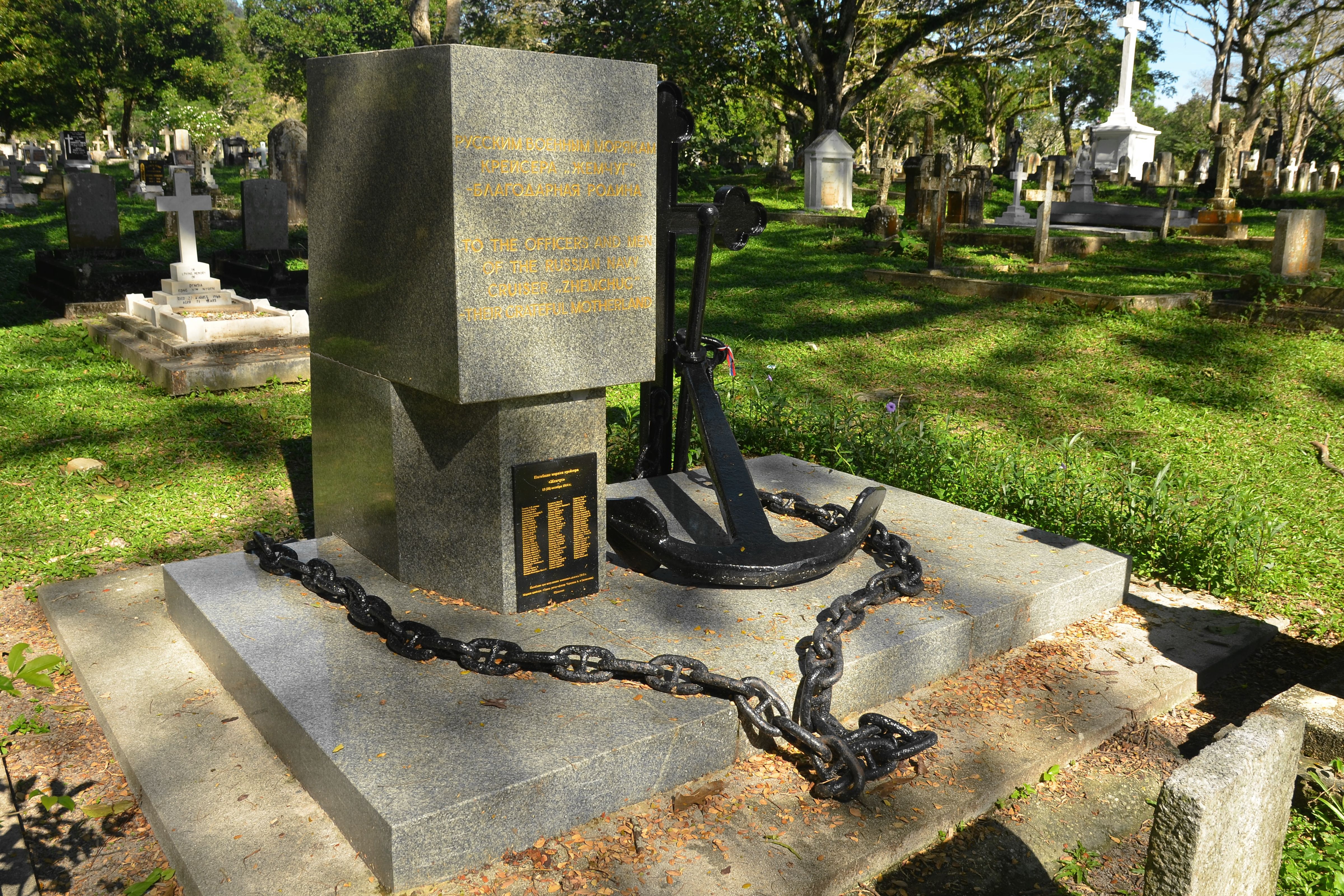
Commander Baron Cherkassov was not aboard his ship on the morning of 28 October 1914. He was ashore at the Eastern & Oriental Hotel, visiting his wife -- or, by some accounts, his mistress. The keys to the magazine had gone with him. No lookouts had been posted. When the German light cruiser SMS Emden ghosted into Penang harbour flying a false fourth funnel to disguise her profile, the Russian protected cruiser Zhemchug lay tied up and utterly defenceless. The only battle of the First World War fought in British Malaya was over almost before it began.
The Lone Wolf of the Indian Ocean
The Emden's solo mission was born from strategic opportunism. When the German East Asia Squadron departed its base at Tsingtao, China, in the war's opening weeks, the main fleet headed east toward home. But Commander Karl von Müller convinced his superiors to let his light cruiser peel off alone into the Indian Ocean for a commerce-raiding campaign. It was a gamble that paid extraordinary dividends. Over the following weeks, the Emden captured or sank merchant vessels, shelled the port of Madras, and spread panic across Allied shipping lanes. Von Muller earned a reputation as a gentleman warrior -- courteous to prisoners, meticulous in his tactics, and devastatingly effective. Penang, a bustling harbour in the Straits Settlements crowded with Allied warships and merchantmen, presented an irresistible target.
Fifteen Minutes of Chaos
The Emden entered the harbour at dawn, her disguise fooling the port's defences long enough to close within torpedo range. The Zhemchug, with a crew of 250 aboard and no ammunition ready, took two torpedoes and sustained devastating gunfire. Eighty-eight Russian sailors died; another 121 were wounded. Cherkassov watched from the hotel as his ship sank to the bottom of the Penang Strait. The old French cruiser D'Iberville and the destroyer Fronde opened fire on the Emden, but their shooting was wildly inaccurate. Von Muller simply ignored the incoming rounds and turned his ship toward the harbour entrance. On his way out, he encountered the French destroyer Mousquet returning from patrol, completely unaware of the carnage inside. Caught off guard, the Mousquet was sunk by the Emden's guns. Her commander, Lieutenant Felix Theroinne, was among the 47 killed.
Honour and Disgrace
The aftermath sorted the battle's participants into sharply different fates. Cherkassov was court-martialled for negligence and sentenced to three and a half years in prison, reduction in rank, and expulsion from the Russian Navy. His deputy, Lieutenant Kulibin, received eighteen months. Tsar Nicholas II softened the sentences -- both men were ordered to serve as ordinary seamen instead. In a twist that reads like fiction, both former officers later distinguished themselves in combat and were decorated with the Cross of St. George, one of Russia's highest military honours. Von Muller, meanwhile, demonstrated the code of conduct that earned him grudging Allied respect. The Emden rescued 36 survivors from the Mousquet's crew of 80. Three French sailors died of their wounds and were buried at sea with full military honours. Two days later, von Muller transferred the remaining prisoners to the British steamer Newburn, which carried them to neutral Sabang in Sumatra.
Ten More Days
The Emden's luck held for just ten more days after Penang. On 9 November 1914, she was intercepted near the Cocos Islands by HMAS Sydney, a Royal Australian Navy light cruiser with heavier guns and longer range. The Sydney's superior firepower tore into the Emden, and von Muller was forced to run his battered ship aground on North Keeling Island. The raider's extraordinary solo campaign -- which had terrorized shipping from the Bay of Bengal to the Strait of Malacca -- was finished. In Penang, the battle left 135 French and Russian sailors dead and 157 wounded. The Germans suffered not a single casualty. A memorial to the Mousquet still stands in front of the Church of the Assumption in George Town, where the French sailors who died are remembered.
Memory in the Strait
More than a century later, the Battle of Penang remains a vivid episode in the city's layered history. In October 2024, Russian Navy corvettes arrived in George Town for a ceremony marking the 110th anniversary of the engagement -- the first Russian naval visit in twenty years. The wreck of the Zhemchug still lies somewhere beneath the waters of the Penang Strait, a reminder that this prosperous trading port once woke to the sound of German guns. George Town itself has moved on through Japanese occupation, independence, and UNESCO World Heritage status, but the story of one audacious morning endures -- a tale of negligence and daring, of honour codes observed amid the killing, and of a harbour that learned the hard way that neutrality of geography offers no protection in wartime.
From the Air
Located at 5.43N, 100.33E in the Penang Strait between Penang Island and the Malay Peninsula mainland. The harbour of George Town is visible from altitude along the northeast coast of Penang Island. Penang International Airport (WMKP) lies at the island's south end. The Eastern & Oriental Hotel, where Cherkassov watched his ship sink, faces the waterfront. At cruise altitude, the narrow strait where the Emden attacked is easily identifiable between the island and Butterworth on the mainland.