Battle of Pinos Altos
Captain Thomas Mastin had no cannonballs. What he did have was an old cannon, a handful of nails, some buckshot, and three hundred Apache warriors charging through the center of Pinos Altos at noon on September 27, 1861. His militiamen were overwhelmed. The hand-to-hand fighting had devolved into chaos. So Mastin ordered his men to load the cannon with whatever they could find and wheel it into position. The improvised blast tore through the Apache advance, scattering warriors and reversing the tide of a battle that moments before had seemed lost. By one o'clock, the engagement was over. The Apaches had fled toward the Gila River. And Mastin lay dying from wounds sustained leading the cavalry charge that drove them away.
Gold, Settlers, and Fury
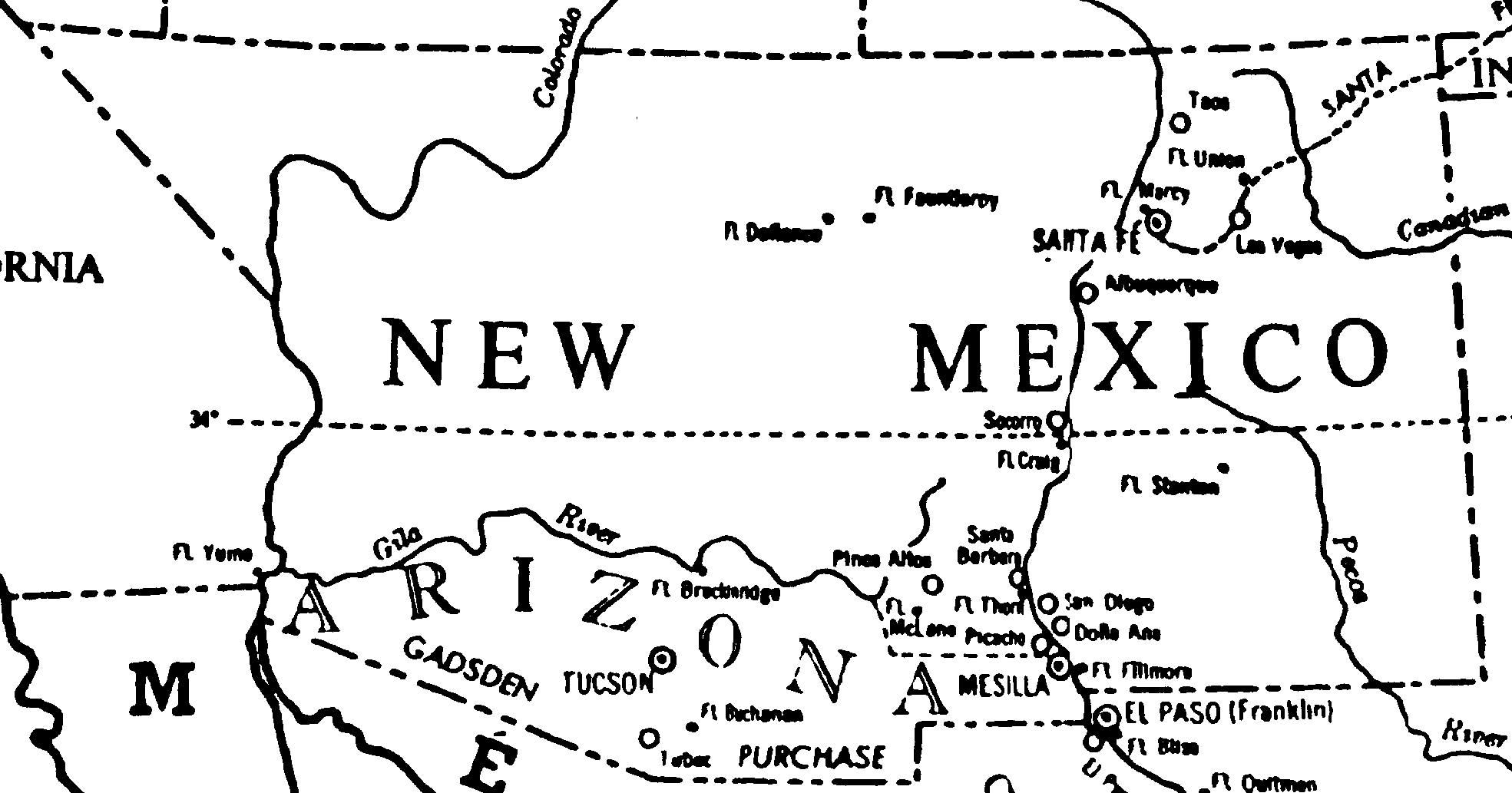
The discovery of gold in the Pinos Altos Mountains in 1860 brought thousands of prospectors flooding into Apache territory. This was not empty land. The Mimbreno and Chiricahua Apache had lived and hunted here for generations, and they watched with growing rage as miners tore into their mountains and settlers claimed their valleys. By 1861, two powerful Apache leaders had formed an alliance: Mangas Coloradas, the towering chief of the Mimbrenos, and Cochise, whose fury had been ignited by the treachery of the Bascom Affair earlier that year. Together they vowed to drive every American and Mexican from their homeland. Pinos Altos, seven miles north of present-day Silver City, was one of the major mining towns in the region. Recognizing the danger, the settlers formed two militia companies for protection: the Arizona Guards under Captain Thomas Mastin, and the Minute Men under Captain William Markt. Among the Guards was Jack Swilling, who would later found the city of Phoenix.
Confederate Soldiers in Apache Country
The political situation added another layer of complexity to an already volatile frontier. In July 1861, Lieutenant Colonel John Baylor had occupied Mesilla and annexed the provisional Arizona Territory to the Confederacy. The militia companies at Pinos Altos were mustered into the Confederate Army, though this mattered little to the poorly equipped men facing Apache raids. Half of the Minute Men deserted immediately after their induction, leaving the Arizona Guards to shoulder most of the town's defense. The Guards were not professional soldiers but miners and settlers from around Pinos Altos and the Mimbres River valley, men who had joined simply to protect their lives and property. They patrolled the surrounding countryside, watching for signs of Apache movement, unaware that the largest coordinated attack of the Apache Wars was about to descend upon them.
The Morning Assault
Mangas Coloradas and Cochise struck at dawn on September 27, their combined force exceeding three hundred warriors. The assault caught the town completely by surprise. Two separate Arizona Guards patrols were out when the attack began, including one commanded by Mastin himself. At the nearby mining camp, prospectors were trapped in their diggings and killed. Some survivors stayed underground, too terrified to emerge, contributing nothing to the town's defense. Apache warriors attempted to burn the log cabins along the settlement's perimeter but were repulsed. Mastin's squad of fifteen men returned to town shortly after fighting began and found chaos. He ordered his men, the remaining Minute Men, and civilian defenders to form a defensive position at the settlement's center. For hours they fought at medium and long range, but around noon the Apaches launched their full assault, overwhelming the defenders and forcing hand-to-hand combat.
Nails and Buckshot
With his militiamen being overrun, Mastin ordered the old cannon brought forward. There were no proper cannonballs, so the gun was loaded with nails and buckshot. The improvised artillery piece was wheeled into position and fired directly into the charging Apache warriors. The blast cut down many attackers and broke their momentum. The Apaches began retreating. The Arizona Guards mounted horses and pursued while civilians fired muskets from their windows. By one o'clock in the afternoon, the battle was over. At least ten Apache warriors lay dead on the battlefield; Confederate accounts claimed over twenty more dead and wounded were carried away by retreating warriors. The victory came at cost. Five Confederates were killed, including Captain Mastin, who was mortally wounded during the cavalry charge and died days later. Seven other settlers and militiamen were severely wounded.
The End of Massed Attacks
The Battle of Pinos Altos marked a turning point in Apache warfare. After this engagement, with the exception of the later Battle of Apache Pass, the Apache largely abandoned massed attacks against defended settlements. They continued their resistance through guerrilla tactics, targeting mining camps and isolated communities where they held the advantage. Captain Peter Hardeman of the 2nd Texas Mounted Rifles pursued the retreating Apache with twenty-five men, tracking them all the way to the Gila River before dwindling rations forced him back. Confederate forces chased Apache raiding parties into Mexico multiple times in 1861 and 1862, the Arizona Guards penetrating as far as Lake Guzman in Chihuahua without catching their elusive enemy. Despite their victory, most Pinos Altos settlers abandoned the mining camp. On October 8, a hundred reinforcements arrived, the largest Confederate force ever sent to relieve a town threatened by Apache attack. But the expected assault never came, and soon only seventy miners remained. The Arizona Guards continued their lonely garrison duty, defending a town that had already lost its will to grow.
From the Air
Located at 32.87N, 108.22W, Pinos Altos sits in the mountains approximately seven miles north of present-day Silver City, New Mexico. The historic mining town lies in rugged terrain at the edge of the Gila National Forest. From the air, look for the forested Pinos Altos Mountains rising above the semi-arid valleys. Grant County Airport (KSVC) in Silver City is the nearest facility, about 8 miles to the south. Recommended viewing altitude of 4,000-6,000 feet AGL to appreciate the mountainous terrain where Confederate militiamen and Apache warriors clashed.