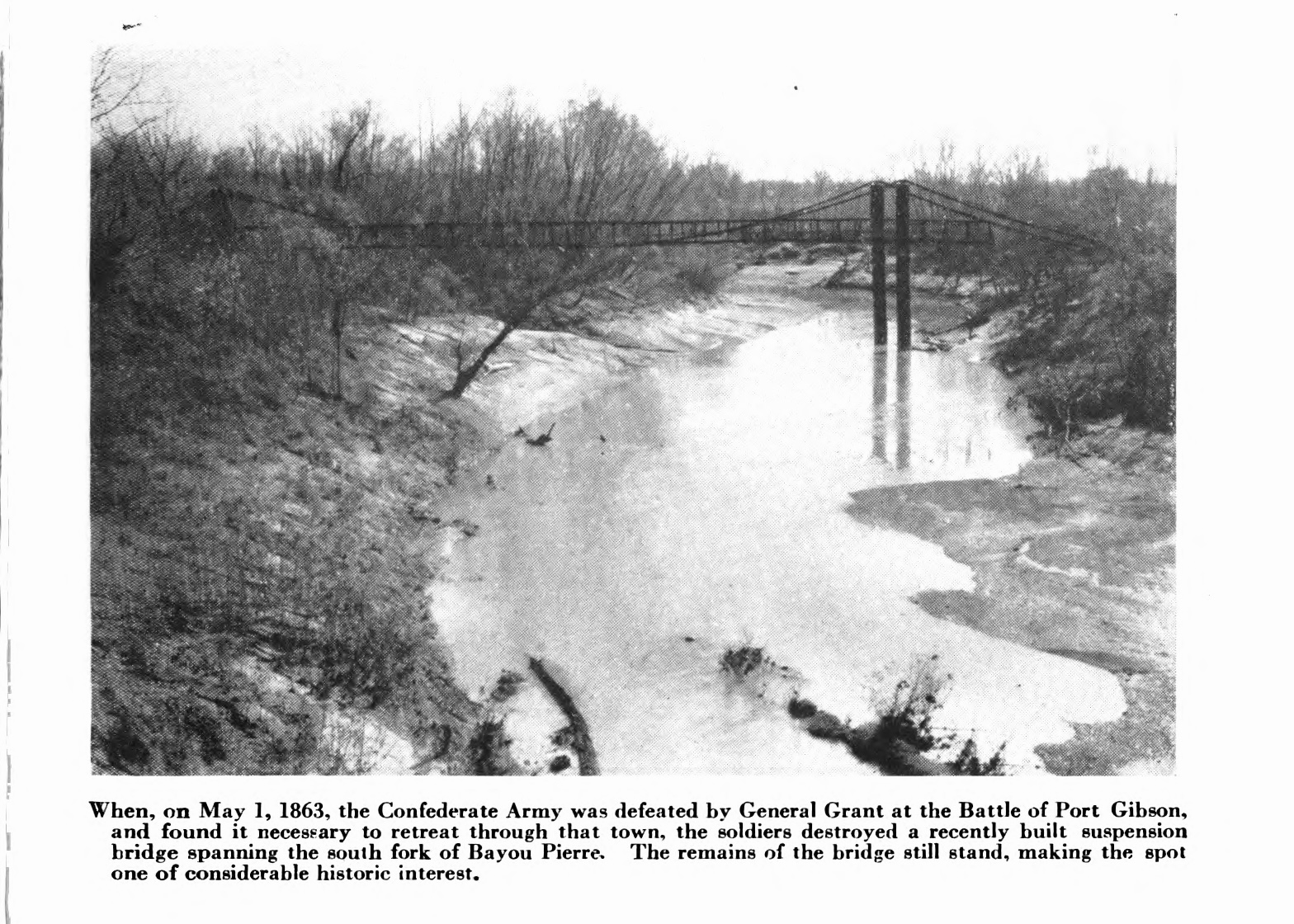
Battle of Port Gibson
"I can't spare this man, he fights." Abraham Lincoln's blunt assessment of Ulysses S. Grant proved prophetic on May 1, 1863, when Grant's army fought its way inland from the Mississippi River at Port Gibson, Mississippi. For five months, Grant had tried and failed to crack the fortress city of Vicksburg -- through overland marches, canal-digging schemes, and bayou expeditions that went nowhere. The Battle of Port Gibson was the payoff for his most desperate gamble yet: running gunboats past Vicksburg's batteries at night, marching his army through swamps on the west bank, and crossing the river into enemy territory with no reliable supply line. It was the first domino to fall in a campaign that would split the Confederacy in two.
Five Months of Frustration
Grant took command of the Army of the Tennessee in October 1862 and immediately set his sights on Vicksburg, the Confederate stronghold whose artillery batteries controlled the Mississippi River. His first overland approach with 40,000 soldiers collapsed in December when Earl Van Dorn's cavalry destroyed his supply base at Holly Springs. A simultaneous river assault under William Tecumseh Sherman was repulsed at Chickasaw Bayou. In early 1863, the Yazoo Pass and Steele's Bayou expeditions both failed, and Grant's attempts to dig canals bypassing Vicksburg's guns were abandoned one after another. Newspaper editors demanded his removal. Grant's own subordinate commanders opposed his next plan when Lieutenant Colonel James H. Wilson suggested running Admiral David Dixon Porter's fleet past the Vicksburg batteries under cover of darkness, then marching the army south along the western bank to cross the river below the fortress. Every senior officer thought it reckless. Having exhausted every alternative, Grant gave the order.
Running the Gauntlet
On the night of April 16, 1863, Porter's squadron -- ironclads, warships, and three transports towing supply barges -- steamed past Vicksburg. For two hours the Confederate batteries hammered every vessel. One transport caught fire and burned, but the rest made it through with only fourteen men wounded. A second convoy on April 22 pushed six more transports past the guns; only a hospital ship was lost. Grant now had his fleet south of Vicksburg. Meanwhile, he launched three diversionary operations to confuse Confederate commander John C. Pemberton: Frederick Steele's expedition toward Greenville, Benjamin Grierson's legendary cavalry raid clear across Mississippi to Baton Rouge, and Sherman's feint at Snyder's Bluff north of Vicksburg. Pemberton's forces scattered in pursuit of phantoms. When Porter's gunboats failed to reduce the Confederate strongpoint at Grand Gulf on April 29, Grant learned from a local enslaved man of a good road inland from Bruinsburg, a few miles downstream. On the morning of April 30, the army crossed unopposed.
Ridges, Ravines, and Two Roads
Grant later wrote of that crossing: "I was now in enemy territory, with a vast river and the stronghold of Vicksburg between me and my base of supplies. But I was on dry ground on the same side of the river with the enemy." Confederate General John S. Bowen, outnumbered nearly three to one, rushed troops to block the two roads leading inland from the river toward Port Gibson. The terrain favored defense: flat-topped ridges separated by steep ravines choked with dense vegetation, and the nearly impassable Centers Creek dividing the battlefield. Bowen could only communicate between his two wings by a lengthy roundabout route. At 6:30 on the morning of May 1, McClernand's Union corps attacked along the southern Rodney road. The fighting was savage and confused. Brigadier General Edward Tracy was killed defending the northern Bruinsburg road, and brigade after brigade was fed into the tangled landscape. By early afternoon, Bowen telegraphed Pemberton that he was outnumbered three-to-one and his ammunition was running out.
The Door Swings Open
Despite their disadvantage, Bowen's Confederates fought stubbornly. Colonel Francis Cockrell's Missouri regiments launched a fierce counterattack on the Union right flank, rolling up two Federal regiments in a forty-minute firefight before pulling back. But by 5:30 that evening, Bowen's defenses had reached the breaking point, and he ordered a retreat through Port Gibson. Grant committed 23,000 men and suffered 875 casualties; Bowen's 8,000 defenders lost 787 men and four artillery pieces. There was no pursuit -- the Union soldiers were simply too exhausted from marching and fighting all day. Grant occupied Port Gibson on May 2 and shifted his base to Grand Gulf. Without a reliable supply line, he made the audacious decision to have his army live off the land. Within three weeks, Grant won a string of battles, cut the railroad between Vicksburg and Jackson, and surrounded Pemberton's army. The Siege of Vicksburg began on May 19 and ended with Confederate surrender on July 4, 1863, giving the Union complete control of the Mississippi River. Port Gibson was where that chain of victories began.
From the Air
The Port Gibson battlefield lies at approximately 31.96N, 91.02W in Claiborne County, Mississippi, just west of the town of Port Gibson. The terrain of flat-topped ridges and deep ravines is still visible from the air. The American Battlefield Trust has preserved significant portions of the field. Nearest airports include Vicksburg Municipal Airport (KVKS, ~40 nm north) and Natchez-Adams County Airport (KHEZ, ~35 nm south). Best viewed at 2,000-4,000 ft AGL. The two historic approach roads (Bruinsburg and Rodney) converge at Port Gibson and are still traceable through the landscape.