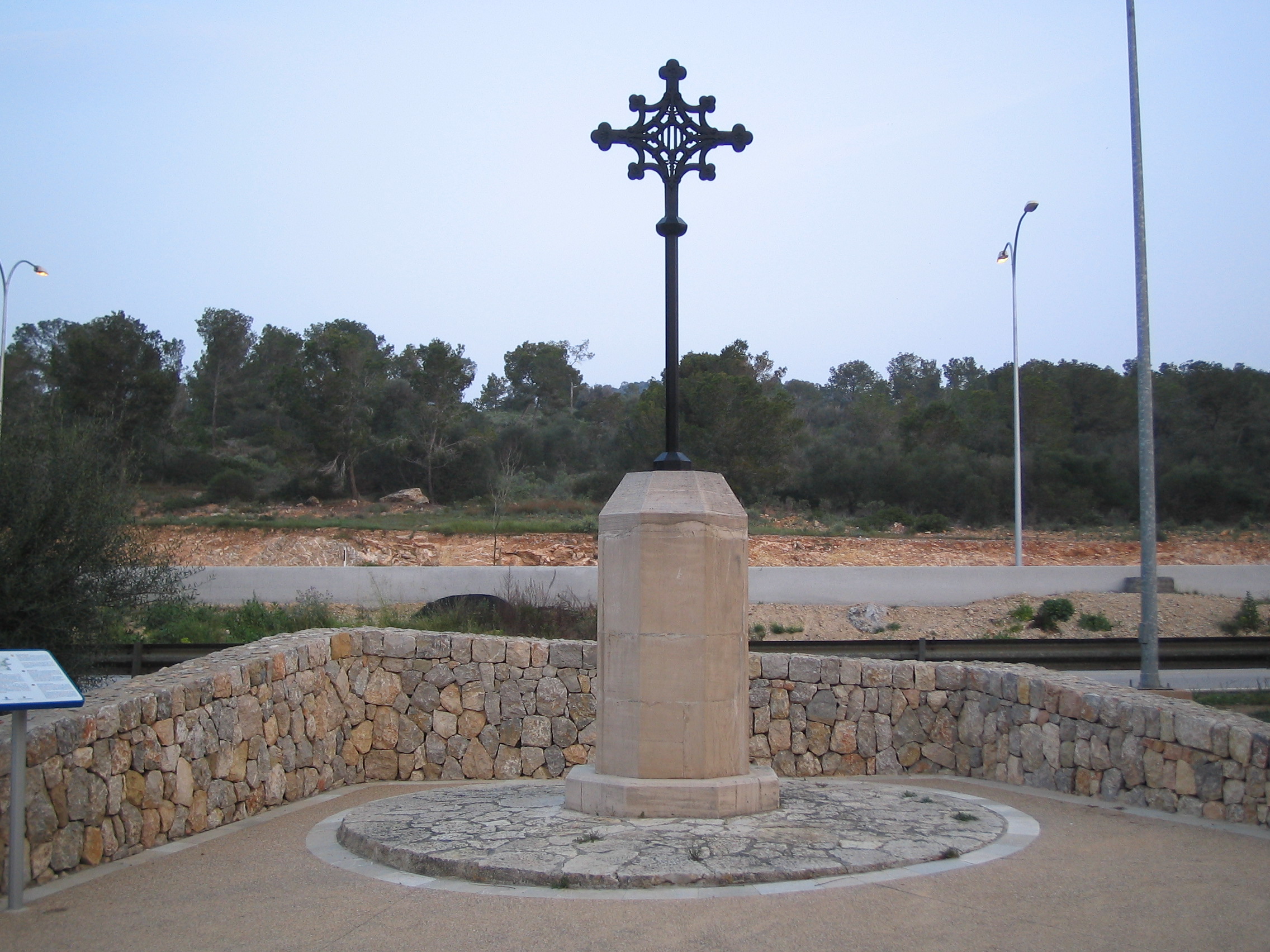
Battle of Portopi
"Vergonya, cavallers, vergonya!" -- For shame, knights, shame! King James I of Aragon shouted the words at his retreating cavalry as Muslim horsemen threatened to overwhelm them in the highlands of the Sierra de Na Burguesa. It was September 12, 1229, and the fate of Majorca hung on whether the Aragonese army could hold its ground in these mountains above the sea. Two of the king's most important nobles already lay dead. The battle was not going according to plan.
A Contested Landing
James I's fleet had anchored in the bay of Santa Ponsa two days earlier, on September 10. The Aragonese army deployed and fought its first clash with the Almohad defenders that same day, winning convincingly enough to make camp for the night. But the Almohad governor of the island, Abu Yahya, was not finished. By evening, word reached the Aragonese camp that the governor had regrouped his forces in the capital, the City of Majorca, and was marching to meet the Christians. James gave orders for his men to prepare against a surprise attack. The mountains between Santa Ponsa and the capital -- the Sierra de Portopi, as it was then known -- would become the killing ground.
Death of the Montcadas
On the morning of September 12, an argument erupted among the Christian leaders. Guillermo de Montcada and his nephew Ramon demanded the honor of riding at the army's head, competing for precedence with the nobleman Nuno Sanchez. According to the chronicler Zurita, the Montcadas did not wait for Sanchez -- they led their men toward the Muslim positions without the rest of the army, forcing the king to follow. The Montcadas struck first in the mountain foothills and appeared to gain the upper hand, but they were soon surrounded by a force that outnumbered them badly. Uncle and nephew fell together. Tradition holds that they were captured and beheaded. The Bishop of Barcelona, Berenguer de Palou, carried the grim news to the king.
The King Holds the Heights
James I, still unaware of the Montcadas' deaths, advanced along the same mountain path with the rest of his army and encountered the Muslim forces in the highlands. When a powerful contingent of Almohad cavalry broke through and sent Nuno Sanchez's troops retreating, the king rallied them with his famous rebuke. The shame worked. Throughout the day, fighting surged across different sections of the Sierra de Na Burguesa, the forested slopes echoing with the clash of steel and the screams of horses. By nightfall, the Aragonese held the strategic high ground. From there they could see the City of Majorca spread below them. They camped at a place they named Bendinat -- from the Catalan phrase "Be hem dinat," meaning "We have eaten well" -- a name that endures on the map of Majorca to this day.
Conquest and Commemoration
The Battle of Portopi proved decisive. After September 12, there were no more major open-field engagements. The Aragonese navy advanced from La Porrassa to the port of Portopi, capturing several Muslim vessels, and the siege of the City of Majorca began in earnest. The Montcadas were buried on September 14 beside a pine tree in the Bendinat mountains, a tree that survived until 1914, known as the Pine of the Montcadas. Several monuments now mark the conquest's landmarks. The Creu de Montcada, a Gothic cross erected in 1887 at the spot where the two nobles reportedly died, bears the heraldic bars of Aragon on one face and the Montcada coat of arms on the other. The poet Jacinto Verdaguer participated in its dedication ceremony. In 1929, the seven hundredth anniversary brought two more monuments: the Shrine of the Sacred Stone, housing the rock that served as the altar for the invaders' first mass, and the Cross of the Landing at Santa Ponsa.
From the Air
Located at 39.52N, 2.52E on the southwestern coast of Majorca, in the mountainous area between Santa Ponsa and Palma de Mallorca. The Sierra de Na Burguesa is visible as a forested ridge between the coast and the city. Best viewed at 3,000-5,000 feet. Palma de Mallorca Airport (LEPA) is approximately 20 km to the east. The bay of Santa Ponsa and the resort coastline are clear visual references.