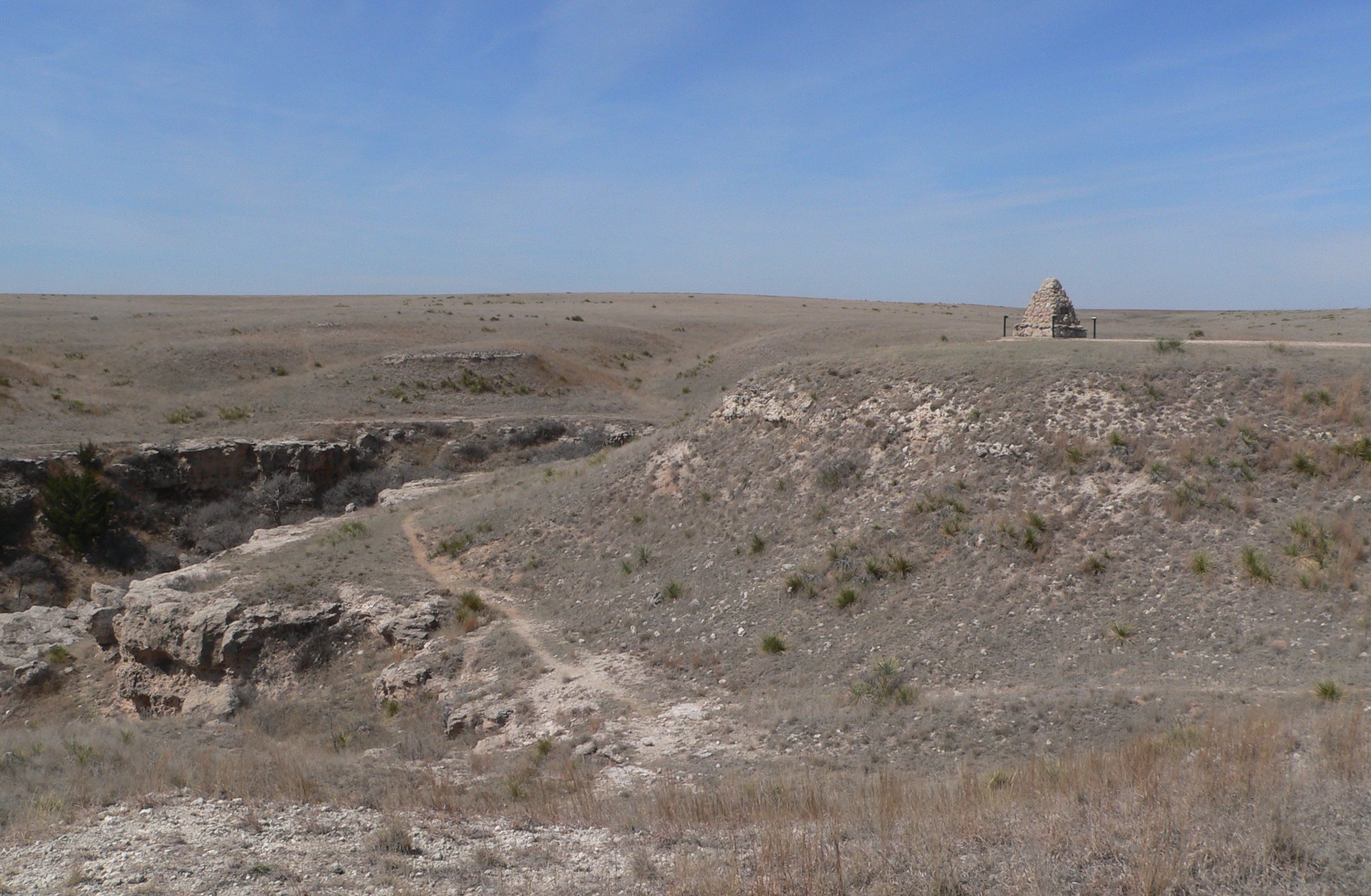
Battle of Punished Woman's Fork
They had walked away from everything they were promised and found nothing they were given. In September 1878, Chiefs Dull Knife and Little Wolf led 353 Northern Cheyenne -- ninety-two warriors, the rest women, children, and elderly -- off their reservation in Oklahoma and headed north. Their destination: Montana, where other Northern Cheyenne still lived free on the plains their ancestors had roamed for generations. The reservation near Fort Reno, west of present-day Oklahoma City, had offered measles, malaria, and starvation in place of the homeland they had been forced to leave. They had pleaded to return north. They were refused. So on the night of September 9, they simply left. What followed was one of the most extraordinary and heartbreaking odysseys in the history of the American West.
Nine Hundred Miles Through Hostile Country
The Northern Cheyenne traveled northward on horseback, covering ground rapidly while fighting three successful skirmishes with pursuing soldiers and civilian volunteers, including the Battle of Turkey Springs. In northern Oklahoma and southern Kansas, they took horses and cattle for subsistence. Nine ranchers were killed in these encounters. The Cheyenne were not a raiding party -- they were a people in flight, with families and elders slowing every mile. But flight demanded resources, and resources on the open plains belonged to someone. The Army mobilized. Colonel William H. Lewis was given command of approximately 200 soldiers, mostly cavalry, and ordered to intercept the Cheyenne in northern Kansas.
The Ambush That Almost Worked
On September 27, Lewis found the Cheyenne trail in hilly terrain north of present-day Scott City, Kansas. The Cheyenne had planned their defense carefully. They dug rifle pits overlooking a narrow ravine along Punished Woman's Fork -- now called Ladder Creek -- and positioned their warriors on the high ground, hiding women, children, and horses in nearby ravines. The plan was to lure the soldiers into the canyon. It nearly succeeded. A warrior fired prematurely, alerting the advancing troops. Lewis adjusted, directing his cavalry along higher ground rather than into the ravine. His men found and scattered the Cheyenne horse herd, a devastating blow. But Lewis himself led from the front, took a bullet, and bled to death the following day. His soldiers withdrew, claiming one Cheyenne killed. The Cheyenne had lost many of their horses and much of their food, but they were still free.
Blood Along Sappa Creek
The loss of horses and supplies forced the Cheyenne into increasingly desperate measures as they moved north of the battle site. They entered a region populated by farmers for the first time. Between September 29 and October 3, in the Sappa Creek valley near the town of Oberlin, Kansas, the Cheyenne raided farms to replenish their supplies. The violence escalated far beyond what their chiefs had sanctioned: more than thirty civilians were killed and several women were assaulted. The raids have been interpreted as revenge for a massacre of Cheyenne near Sappa Creek by soldiers three years earlier, and as rage over the conversion of ancestral bison hunting grounds into farmland. Seven Cheyenne warriors were later arrested and charged with murder, but all were acquitted for lack of evidence. Violence was not confined to one side. Several Cheyenne women, children, and elderly who fell behind the fast-moving caravan were executed by white soldiers and civilians.
Two Paths, Two Endings
In Nebraska, the exodus split. Little Wolf took the stronger members and successfully reached the Northern Cheyenne in Montana. Dull Knife's smaller group was captured and imprisoned at Camp Robinson, Nebraska. In January 1879, during the Fort Robinson breakout, the imprisoned Cheyenne attempted to escape. Nearly all were either killed or recaptured in what became one of the most infamous episodes of the Indian Wars. The survivors of both groups were eventually allowed to remain on the northern plains -- the homeland they had traveled nine hundred miles and shed so much blood to reach. The journey had cost dozens of lives on all sides and exposed the cruelty at the heart of the reservation system.
A Monument Above the Canyon
Today a stone monument stands at the battle site overlooking the canyon where the Cheyenne dug their rifle pits. The landscape has changed little: rolling prairie, creek draws, and the vast western Kansas sky. In Oberlin, the Decatur County Last Indian Raid Museum commemorates the Cheyenne passage through the Sappa Creek valley. The Battle of Punished Woman's Fork holds a somber distinction as the last battle between Native Americans and the United States Army in Kansas. It was not a conventional military engagement so much as a rearguard action by a desperate people who had been promised a home and given a death camp, and who chose the only path they believed was left.
From the Air
Located at 38.644°N, 100.928°W at approximately 2,900 feet MSL in Scott County, Kansas, north of Scott City. The battle site lies along Ladder Creek (formerly called Punished Woman's Fork), which is visible as a creek draw cutting through rolling prairie terrain. Scott City Municipal Airport (KTQK) is the nearest airfield, approximately 10 miles to the south. The monument overlooking the canyon is not visible from altitude, but the creek's ravine and the surrounding hilly terrain that shaped the battle are clearly identifiable from 3,000-5,000 feet. The landscape is predominantly agricultural, with the creek corridor providing the most distinctive visual feature in otherwise flat-to-rolling High Plains terrain.