Battle of Qala-i-Jangi
The name translates to 'the war fortress' in Dari, and for six days in late November 2001, Qala-i-Jangi earned it. More than 400 foreign fighters, captured during the fall of the Taliban's northern strongholds, were transported to this 19th-century fortress near Mazar-i-Sharif. They had not been properly searched. Some carried concealed grenades. On November 25, as two CIA officers began interrogating prisoners in the courtyard, the captives rose up, overwhelmed their guards, and seized the fortress's armory. What followed was the first major close-quarters battle of America's war in Afghanistan, fought with air strikes, tanks, and flooding, inside the walls of a mud-brick castle.
A Fortress Full of Fighters
The fighters held at Qala-i-Jangi were not Afghans. They were foreign jihadists drawn from across the Islamic world: Arabs from Egypt, Saudi Arabia, and Yemen; Central Asians from Uzbekistan, Tajikistan, and Kazakhstan; Southeast Asians from Indonesia and the Philippines; Africans from Algeria, Nigeria, and Sudan. A few appeared to be white Westerners. Among them was an American citizen named John Walker Lindh. These were Al Ansar, the 'guest' fighters who had come to Afghanistan to fight alongside the Taliban. They had surrendered outside Mazar-i-Sharif on November 24 under an agreement between warlord Abdul Rashid Dostum and Taliban commanders. But the surrender had warning signs. On the day the prisoners arrived, two of them detonated grenades in suicide attacks, killing one of Dostum's commanders. Despite this, security at the fortress was not reinforced.
Two Hours to Chaos
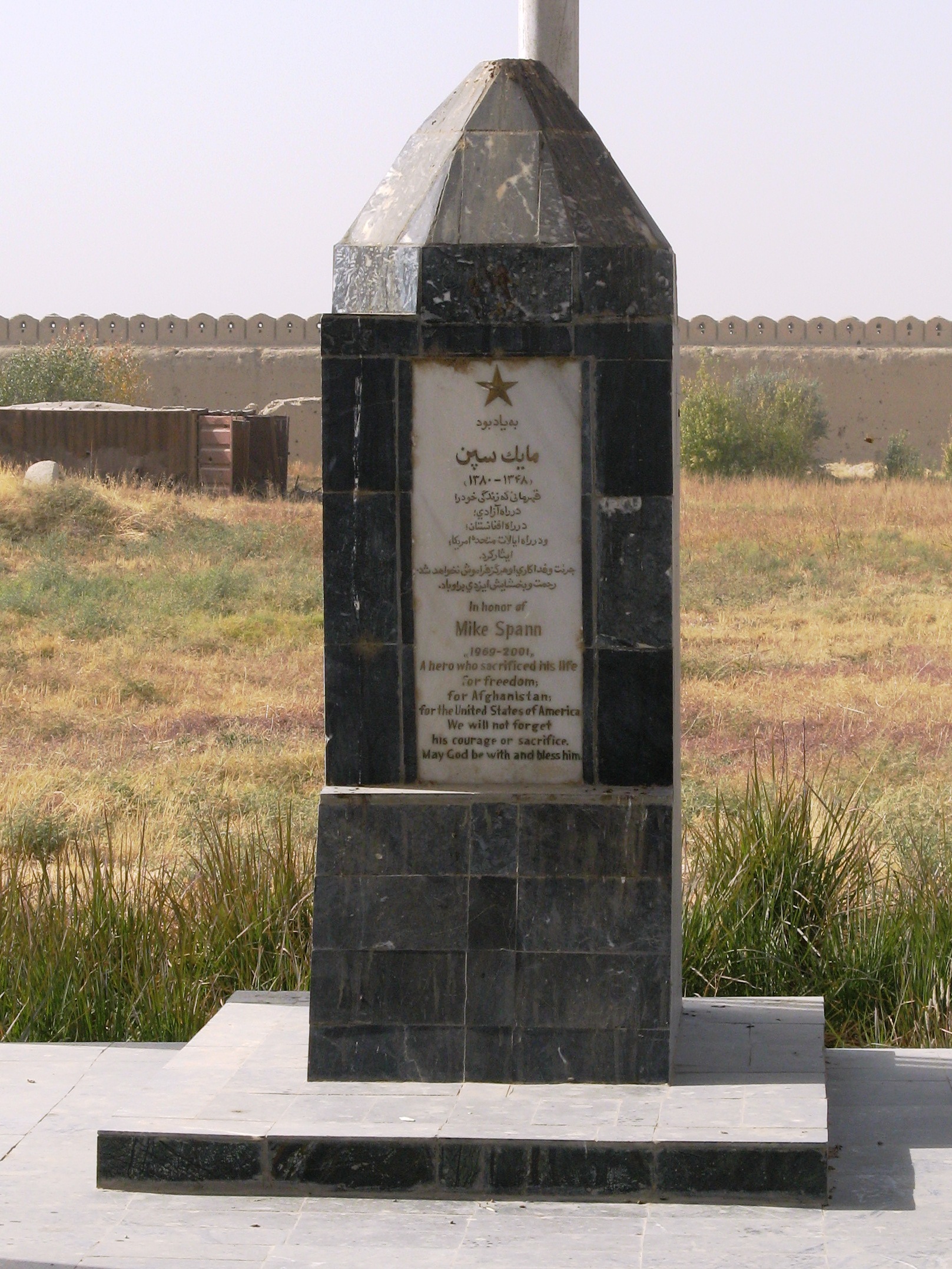
CIA officer Johnny Micheal Spann arrived at the fortress on the morning of November 25 with his colleague David Tyson. They were hunting al-Qaeda operatives among the prisoners. Spann interrogated several men in the courtyard, including Lindh, whom the Americans had singled out because he looked European. About two hours in, prisoners with hidden grenades suddenly attacked. Outnumbering their captors roughly four to one, and in many cases better trained than the Northern Alliance guards, the fighters overran the southern half of the fortress. They captured the armory, seizing rifles, rocket-propelled grenade launchers, and mortars. Spann was killed fighting, holding his position with an AK rifle until he ran out of ammunition, then drawing his pistol. Afghan doctors on scene later told his family he could have run, but his stand gave others time to escape. He became the first American killed in combat during the Afghanistan war.
Six Days of Fire
Tyson escaped to the fortress's northern section, where he found himself trapped alongside a German television crew. He borrowed their satellite phone, called his wife in Tashkent, then called the U.S. embassy in Uzbekistan. A rescue force of nine Green Berets and eight British Special Boat Service operators arrived that afternoon. U.S. Navy F/A-18 Hornets dropped nine 500-pound laser-guided bombs on the armory. The next day brought a catastrophic error: a 2,000-pound JDAM bomb struck a friendly position after a pilot entered wrong coordinates, killing several Afghan fighters, flipping a T-55 tank, and wounding five Americans and four British operators. That night, two AC-130 Spectre gunships circled the fortress, pouring fire into the prisoner-held areas. By the third day, allied forces had retaken most of the compound. But over 100 prisoners had retreated into the basement dungeon of a central building. They held out for three more days, even killing body collectors who ventured inside. The basement was eventually flooded. On December 1, eighty-six survivors emerged. Of the more than 400 prisoners brought to Qala-i-Jangi, the rest were dead.
Honors and Hard Questions
The battle produced extraordinary decorations. Major Mark Mitchell received the Distinguished Service Cross, the first awarded since the Vietnam War. Navy SEAL Stephen Bass earned the Navy Cross for recovering Spann's body under fire. Spann himself received a posthumous Intelligence Star and was buried at Arlington National Cemetery. But the battle also raised uncomfortable questions. Amnesty International called for an independent inquiry into the deaths, noting the disproportionate firepower used against prisoners. American soldiers found some of the dead with their arms still tied behind their backs. One surviving detainee, Abdulaziz al-Oshan, later told American authorities at Guantanamo Bay: 'They called it an uprising and it's not; it's some kind of massacre.' Among the survivors was Yaser Esam Hamdi, a U.S. citizen who spent three years detained without trial before winning the landmark Supreme Court case Hamdi v. Rumsfeld, which affirmed the right of American citizens to habeas corpus even in wartime.
From the Air
Coordinates: 36.67N, 66.98E. Qala-i-Jangi fortress is located approximately 15 km west of Mazar-i-Sharif in Balkh Province, northern Afghanistan. The fortress compound is large enough to be visible from moderate altitude as a rectangular walled structure. Nearest airport is Mazar-i-Sharif International Airport (OAMS). Elevation approximately 360 meters (1,180 feet). The terrain is flat steppe with irrigated agricultural land.