Battle of Rawalakot
On 15 June 1947, Sardar Ibrahim Khan stood before 20,000 people in Rawalakot and spoke in what authorities would later describe as "most seditious terms." Pakistan, he told the crowd, was coming into being, and the people of Jammu and Kashmir could not remain unaffected. After that day, he would later write, "a strange atmosphere took the place of the usually peaceful life in these parts." Within months, that strange atmosphere would erupt into open warfare. The Battle of Rawalakot, fought between November 4 and 14, 1947, became one of the decisive engagements of the First Kashmir War, a conflict born from the chaotic partition of British India that would permanently divide a region and its people.
A Valley Preparing for War
The roots of the battle reached back to the spring of 1947, when Sardar Ibrahim, a member of the Legislative Assembly from the Bagh-Sudhnoti constituency, returned to Poonch convinced that the state forces and the Rashtriya Swayamsevak Sangh were conspiring against the Muslim population. He urged the people of Poonch to organize politically. By his own account, they "got courage, became defiant, and started organizing themselves exactly on military lines." On 22 June, Chaudhary Hamidullah, acting president of the Muslim Conference, visited Rawalakot to initiate secret plans for organizing the district's ex-servicemen, many of whom had served in the Second World War and knew how to fight. Captain Hussain Khan began gathering these veterans and volunteers, though recruitment proved slow at first. By August, a no-tax campaign had taken hold across Bagh and Rawalakot, and public meetings were drawing thousands who demanded accession to Pakistan and openly denounced the Maharaja.
Bloodshed Before the Battle
August 1947 brought escalating violence. On the 22nd, over 2,000 people in Rawalakot petitioned for accession to Pakistan. The state administration called in local leaders, who temporarily withdrew their demands. But when the people of Bagh refused to comply, the situation spiraled. Pakistani groups coordinated a thousand-man march from Arja to Poonch, which splintered into factions that raided shops belonging to Sikhs and Hindus. The state government imposed Section 144, banning gatherings of five or more people. On 26 August, three state soldiers carrying supplies were ambushed near Bani Pissari, and state forces responded by attacking a public meeting there. In Bagh tehsil on August 27, a mob of 500 to 600 seized Jemadar Kharud Singh and four state signalers, bound them, and threw them into the Mahal River. Two drowned; Kharud Singh freed himself by swimming downstream. The violence had passed the point of negotiation.
The Siege and the Mortar
On 19 and 20 October, Azad forces launched their assault on Rawalakot itself. State forces had fortified a mosque, gambling that the attackers would spare a house of worship. Captain Hussain Khan's men carried a three-inch mortar on foot, lashing it to wooden poles to bring it within range. Havildar Sanwala Khan took charge of the weapon. The first three rounds missed their targets, one striking a different mosque entirely. But subsequent fire proved accurate, and combined with medium machine-gun support, the bombardment inflicted significant casualties on the garrison. Indian aircraft bombed Azad positions, killing five fighters, but failed to break the siege. Two volunteers, Akbar Shah and Painda Khan, crawled to the civil hospital to clear out remaining state troops, and hand-to-hand fighting erupted when Akbar seized a soldier at close range. By November 6, Captain Hussain Khan was leading renewed assaults that compromised the garrison's outer defenses.
Retreat Through the Mountains
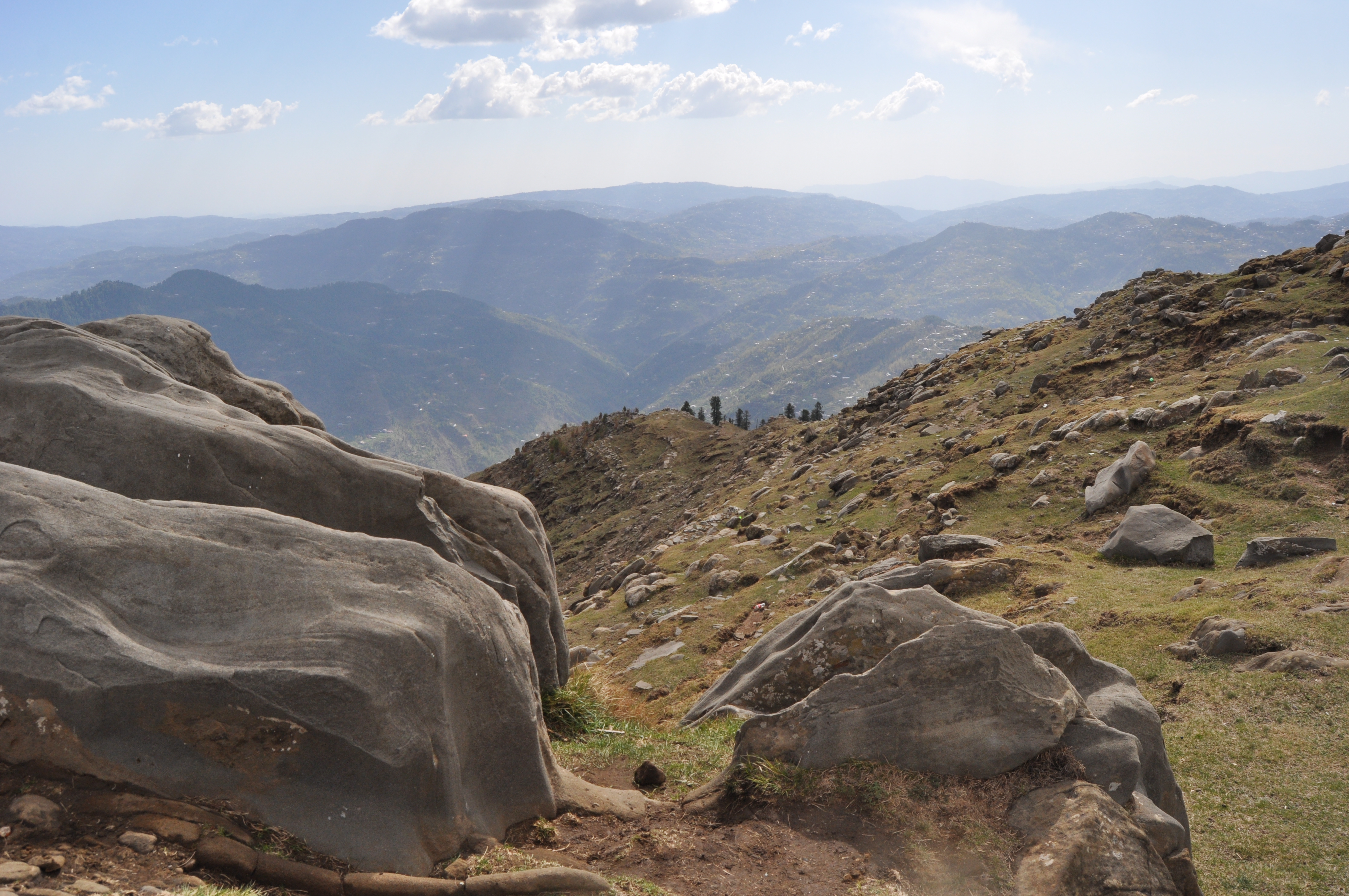
Colonel Ram Lal, commanding the state forces garrison, recognized the situation was untenable. Ammunition and supplies were critically low, and refugees were flooding in. His withdrawal plan called for two stages: Major Amarnath would lead a column with 3,000 refugees toward Hajira to resupply and return. But Hajira was already under attack when they arrived. A Royal Indian Air Force fighter dropped 1,000 rounds of ammunition, but fewer than 600 could be recovered, many damaged. The decision was made to abandon Rawalakot and fall back to Poonch. The retreat passed over Toli Pir, one of the tallest peaks in the district at 10,000 feet, and Captain Hussain Khan's forces pursued relentlessly, never allowing the column to rest or reorganize. The withdrawal reached Poonch battered and diminished.
A Line Drawn Through a Homeland
The fall of Rawalakot to the Azad forces helped establish facts on the ground that would prove permanent. When hostilities ended and the Karachi Agreement established a ceasefire line, the Poonch district was divided between India and Pakistan. Rawalakot became the capital of Poonch Division and Poonch District in Pakistani-administered Azad Kashmir, a status it holds to this day. The ceasefire line, later formalized as the Line of Control, cut through communities, families, and a landscape that geography had never intended to divide. The battle was one engagement among many in the First Kashmir War of 1947-1948, but for the people of Poonch, it was the moment their valley's fate was sealed.
From the Air
Located at 33.85N, 73.75E in Pakistani-administered Azad Kashmir. Rawalakot sits in a valley in the Poonch district at approximately 1,600 m (5,250 ft). Toli Pir peak (3,048 m / 10,000 ft) is visible to the south. The Line of Control runs to the east. Islamabad International Airport (OPIS) is approximately 120 km to the southwest. Muzaffarabad Airport (OPMF) lies to the north. Mountainous terrain with limited flat areas. The Poonch River valley is a visual reference.