Battle of Reunion
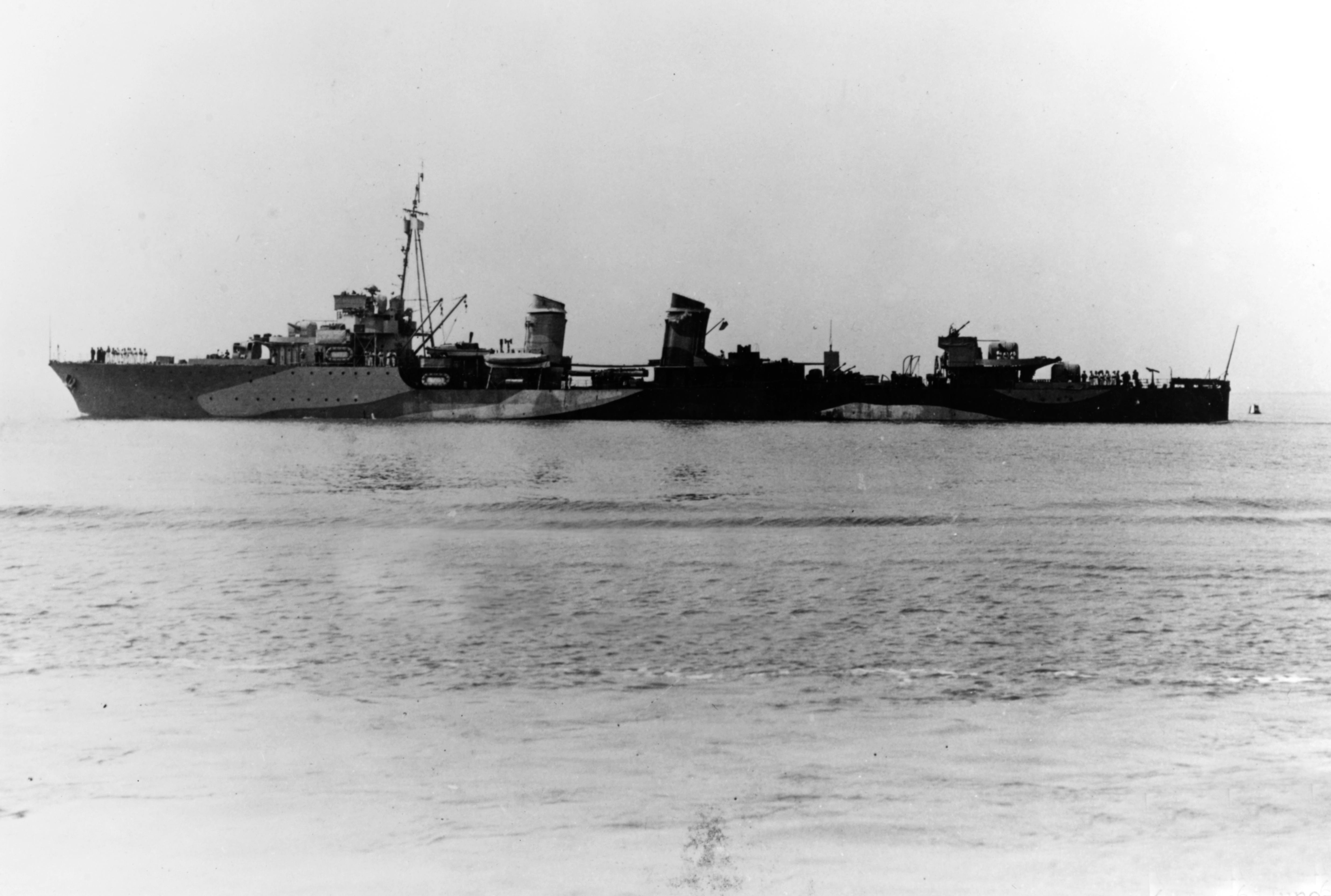
The destroyer Leopard slipped out of Mauritius on the night of November 26, 1942, carrying 74 troops and a mission that Charles de Gaulle considered urgent: reclaim the tiny Indian Ocean island of La Reunion before the British or Americans did it for him. What followed was one of the strangest liberations of World War II -- an invasion opposed more by bureaucratic face-saving than by military force, where the most consequential shot was fired not at the invaders but at an engineer trying to broker a ceasefire.
An Island Between Loyalties
Since France's defeat in 1940, Reunion had drifted in a peculiar limbo. The Compiegne Armistice had stripped the island's military to a skeleton force: three officers, a doctor, eleven non-commissioned officers, and about 270 men, of whom only 23 were professionals. The coastal artillery was broken. Governor Pierre Aubert, moderate in his loyalty to Vichy, held supreme authority but kept his regime relatively restrained. His cabinet director, Jean-Jacques Pillet, was another matter entirely -- Pillet threw himself into the Vichy Revolution nationale, organizing censorship, propaganda, a special criminal court, and a pro-regime militia. Quiet resistance simmered beneath the surface. On Remembrance Day 1941, about twenty women placed flowers on the 1918 war memorial in Saint-Denis and were fined for the gesture. Communist cells under Leon de Lepervanche operated cautiously. Even the exiled Emperor of Vietnam, Duy Tan, was on the island, using his radio equipment to communicate with Mauritius until authorities confiscated it.
A Destroyer in the Dark
Leopard arrived off Saint-Denis at eleven o'clock on the night of November 27, captained by Commander Jules Evenou, who used the nom de guerre Jacques Richard. Two launches went ahead with a five-man party to scout a landing spot. By 2:30 in the morning, about 60 troops had come ashore, and Lieutenant Moreau's detachment took control of the government palace without significant resistance. By evening, Saint-Denis was under Free France's control. Andre Capagorry, the governor designated by de Gaulle, arrived around six in the morning to cheering crowds and broadcast a call for calm on Radio Saint-Denis. The hard-core Vichyist Pillet fled inland to Hell-Bourg -- a retreat that drew mockery from de Gaulle's supporters, given the town's name.
The Battery at Le Port
The following day brought the operation's only real violence. Communist cells under Lepervanche seized the Hotel de Ville and arrested the mayor, then attempted to capture the 95-mm coastal battery at Le Port commanded by Lieutenant Emile Hugot, a committed Petainist. They failed, and Hugot's battery opened fire on Leopard. The destroyer retreated to open water and returned fire, killing two people on shore. Engineer Raymond Decugis tried to negotiate a ceasefire and was killed by small arms fire -- the most consequential death of the entire affair. A counterattack by the Vichyists was repulsed by resistance fighters, and Hugot himself was severely wounded. His gunners, fearing an assault by regular troops, abandoned their positions. Once Aubert learned the invaders were French rather than British, he gave up the idea of even symbolic resistance. Captain Evenou, nervous about submarines, clumsily threatened to destroy the island's factories. After lengthy negotiations, Aubert agreed to surrender -- on the condition that the factory ultimatum be restated publicly, giving him a face-saving pretext.
Rice Daddy
The surrender was formalized on November 30 at 8:45 in the morning. Within days, Pillet, local army commander Artignan, and their wives were discreetly smuggled aboard Leopard to avoid popular retaliation. Aubert followed the next day. The destroyer then made itself useful in a way no warship typically does: Leopard ran multiple supply trips between Mauritius and Reunion carrying rice, which had been desperately scarce. The deliveries made Governor Capagorry enormously popular, earning him the affectionate nickname papa de riz -- the Rice Daddy. By April 1943, a special court had reversed all sanctions imposed under the Vichy regime. Most former officials received light penalties. Raymond Decugis, the engineer who died trying to stop the shooting at Le Port, was posthumously named a Chevalier of the Legion of Honour and a Companion of the Liberation -- recognition that his attempt at peace had cost him everything.
From the Air
The Battle of Reunion centered on Saint-Denis (20.88S, 55.45E) and the port of Le Port (20.94S, 55.29E) on the northwestern coast of Reunion Island in the Indian Ocean. Roland Garros International Airport (FMEE) is located near Saint-Denis. The bay of Saint-Paul, where the Leopard anchored, is visible from the air along the western coast. Reunion rises dramatically from sea level to over 3,000 m at the Piton des Neiges, roughly 30 km inland.