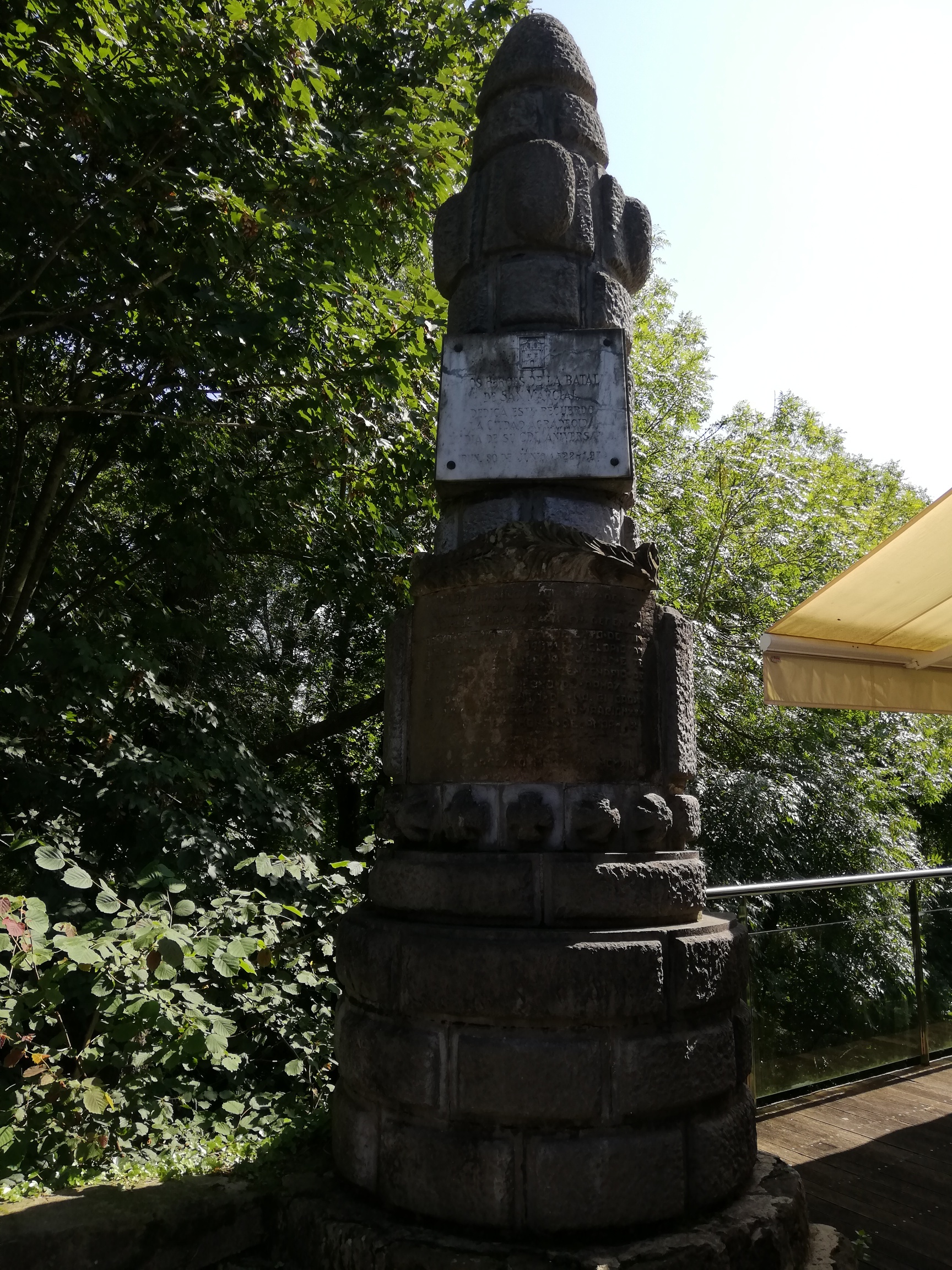
Battle of San Marcial
Wellington refused to send reinforcements. It was 31 August 1813, and Spanish General Manuel Freire's battered troops had just thrown back a second French assault on the heights of San Marcial near Irun, at the Franco-Spanish border. When Freire requested British soldiers to shore up his line, Wellington replied with words that became legendary: "As he has already won his victory, he should keep the honour of it for his countrymen alone." It was one of the finest hours in the Spanish army's long Peninsular War, fought by troops who had not eaten full rations in days, against a French force that outnumbered them on the slopes.
The Trap Between Two Sieges
By late August 1813, Wellington's allied army was caught between two urgent tasks. The siege of San Sebastian consumed enormous resources - the assault on 31 August alone would cost 2,376 British dead and wounded. Meanwhile, Soult had rebuilt his battered field army far faster than anyone expected after his defeat at the Battle of the Pyrenees. He concentrated nine divisions at Ainhoue, aiming to break through and relieve San Sebastian before it fell. The Spanish 3rd, 5th, and 7th divisions held the San Marcial heights overlooking the Bidassoa River, forming a screen between Soult and the besieged fortress. Neither side was in fighting trim. The French were demoralized by weeks of retreat, while Freire's soldiers, neglected by the Spanish commissariat, were ragged and hungry. What followed would prove that hunger does not always determine who fights harder.
Bayonets on the Heights
Seven French divisions crept toward the Bidassoa at dawn through early morning mist, fording the river under covering artillery. They surprised allied positions at Vera and Irun, but the alert reached Freire in time. He drew his men into line along the heights and waited. The French columns lost cohesion scrambling up the rough terrain, arriving at the Spanish positions in a disordered mass. Freire's troops met them with a devastating volley, then advanced with fixed bayonets and drove Soult's leading divisions tumbling back downhill. At noon, Soult committed fresh troops to a second assault. Again the line of Spanish bayonets held. The faltering French could not sustain their attack, and Soult ordered a withdrawal across the river. He had failed without encountering a single British redcoat in the fighting.
Seventy Rifles at the Bridge
The drama did not end with Soult's retreat. That afternoon, a violent thunderstorm turned the Bidassoa into a torrent, stranding General Clausel's rearguard on the wrong side of the river with six feet of floodwater covering the fords. General Vandermaesen led 10,000 French troops upstream to Vera, where a narrow bridge - barely wide enough for three or four men abreast - offered the only escape. A 70-man company of the British 95th Rifles under Captain Daniel Cadoux held the village. At two in the morning, the French rushed the bridge but advanced no further. Their wet muskets would not fire, forcing them to attack with bayonets alone, while the riflemen, sheltered in loopholed buildings with dry powder, cut them down in heaps. Cadoux sent for help from a Light Division brigade camped a mile away. Major General Skerrett refused. He ordered Cadoux to withdraw instead. The captain disobeyed and held his ground through repeated attacks.
Dawn and Its Cost
Skerrett eventually repeated his order, and Cadoux reluctantly prepared to comply. But dawn had broken, the rain had stopped, and French gunpowder was now dry. As the green-jacketed riflemen abandoned their buildings, French muskets opened fire. Cadoux fell dead alongside sixteen of his men. The French filed over the undefended bridge to escape the trap, abandoning their artillery in the process. General Vandermaesen was among the dead left behind. It was a bitter postscript to a triumphant day - the needless death of a captain who had held 10,000 men at bay through the night, undone by an order to retreat at the worst possible moment.
The Last Spark of Soult's Army
San Marcial broke something in the French army that could not be repaired. Historians would later write that Soult's divisions, "war-weary and despondent, had lost all heart and, except in a few inspired flashes, were never again to fight with their once customary skill and zeal." For the Spanish, the battle stood alongside Bailen and Albuera as proof that their armies could match the best of Napoleon's marshals. Five weeks later, Wellington would cross the Bidassoa into France at the Battle of the Bidassoa on 7 October. The heights of San Marcial, where hungry Spanish soldiers had held firm with nothing but bayonets and resolve, marked the beginning of the end for French power in the Iberian Peninsula.
From the Air
The San Marcial heights overlook the Bidassoa River near Irun at 43.33N, 1.76W, close to the Franco-Spanish border on the Bay of Biscay coast. The terrain is hilly, rising from the river floodplain to modest heights. Best viewed at 2,000-4,000 feet AGL for the topographic relationship between the river crossings and the defensive positions. The nearest major airport is San Sebastian (LESO), approximately 10 nautical miles southwest. Biarritz-Anglet-Bayonne (LFBZ) is about 15 nautical miles northeast across the French border. Coastal weather can bring sudden fog and low cloud, particularly in morning hours.