Battle of Saumur (1940)
One of the annual war games played by students at the French Cavalry School was to plan the defense of the Loire River crossings at Saumur, covering four bridges along a 40-kilometer front. In June 1940, the exercise became real. Eight hundred cadets, most of whom had joined the school only three months earlier, found themselves defending those same bridges with live ammunition against the Wehrmacht's 1st Cavalry Division. The battle that followed came after Marshal Petain had already called for a ceasefire, making it, in the eyes of many, one of the first acts of the French Resistance.
A War Game Turns Real
In the first week of June 1940, as the Battle of France collapsed, Colonel Charles Michon ordered the cadets to take up defensive positions along the southern bank of the Loire. The contingency seemed remote at the time. Then Wehrmacht troops entered Paris. On June 15, Reynaud resigned and Philippe Petain became prime minister. The next morning, Petain asked Germany for a ceasefire through the Spanish ambassador and announced it over the radio. But the ceasefire had not yet been signed, and the German advance continued southward. The French troops defending the Loire comprised Michon's 800 young cadets, their instructors who had not already joined their regular units, and whatever retreating soldiers could be collected. Against them, the Wehrmacht's 1st Cavalry Division brought 10,000 troops with armored cars, artillery, and motorized infantry, advancing at 45 to 60 miles per day.
Cavalry School Against Cavalry Division
The German 1st Cavalry Division was the only horsed cavalry division remaining in the Wehrmacht; all others had converted to armored vehicles. There was a bitter symmetry in the matchup: graduates of the German cavalry school facing cadets from the French cavalry school. The lead German elements arrived at the river just before midnight on June 18. Motorcycle reconnaissance units came first, then armored cars. Cadet Hoube, manning a 25mm gun, scored the first hit. At dawn on the 19th, a German staff car approached the destroyed Saumur bridge under a white flag. A German officer and a French officer stepped out together. For reasons that were never explained, the French opened fire, killing both officers and destroying the car. The Germans responded by bringing up artillery. Over the next two days, 2,000 shells struck Saumur, destroying ancient buildings and driving the civilian population into cellars and wine caves.
Two Days on the Loire
The cadets held their positions for two days against overwhelming force. Telephone lines to headquarters were severed by shellfire, forcing a relocation three kilometers west to the Auberge de Marsoleau near the airfield. Further east, the Wehrmacht crossed the Loire toward Tours and began circling behind the defenders. A bridge at Port-Boulet, which had failed to collapse when demolition charges fired, was defended tenaciously until midnight on June 20. By the morning of the 21st, the defense was untenable. The cadets had accomplished what no one expected: they had delayed the German advance along their sector for two full days, long after their government had asked for surrender, fighting for what their memorial would later describe as the honor of the French Army.
Echoes Along the River
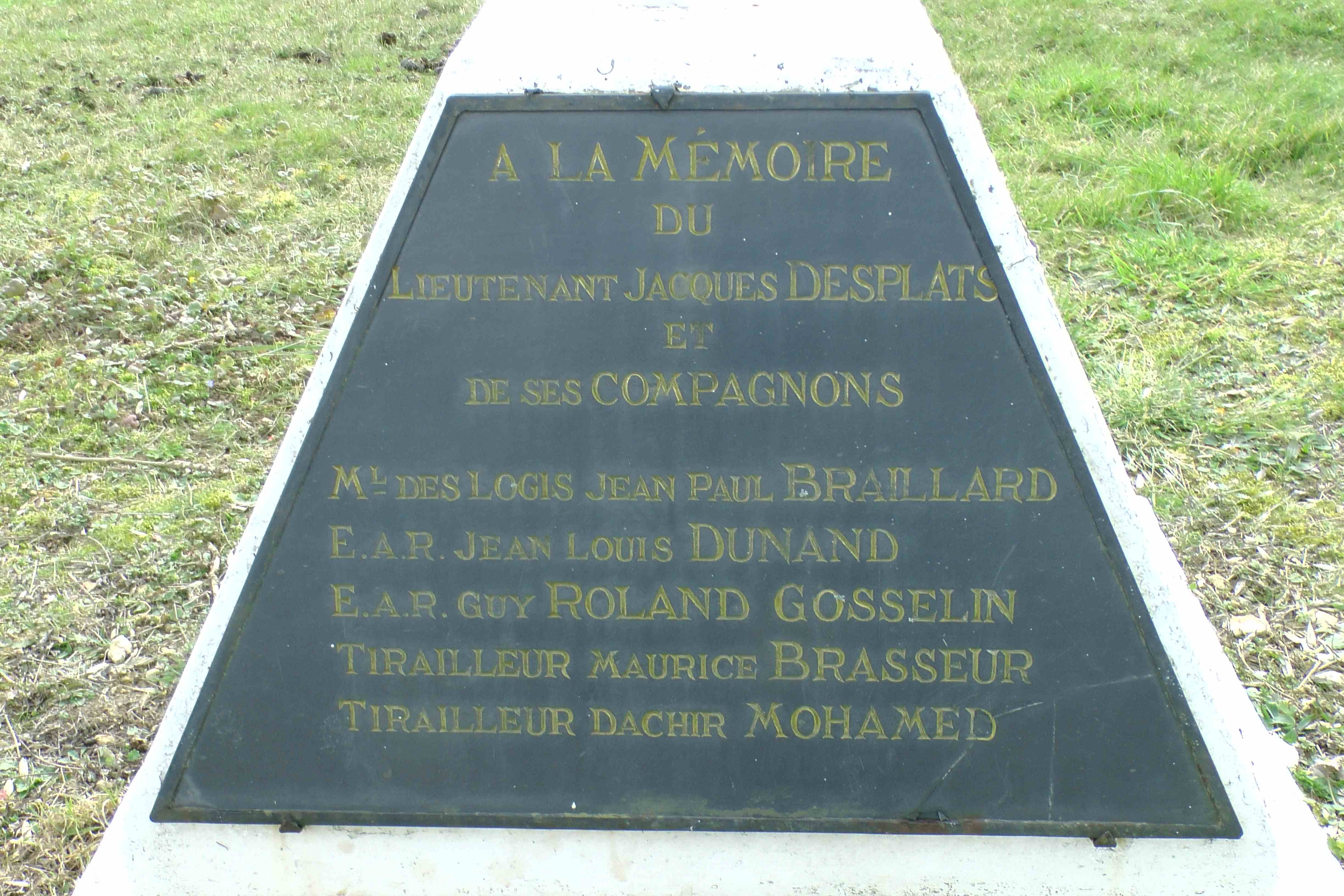
Saumur became a center of resistance during the German occupation. Unable to capture the town's troublemakers, the Wehrmacht fined Saumur 500,000 francs. After the war, the town received the Croix de Guerre with palm, its citation calling Saumur a symbol of French patriotism. The bridges the cadets defended were rebuilt under German orders, only to be destroyed again in 1944 by Allied bombers isolating the Normandy battlefields. The liberation of Saumur on August 30, 1944, carried its own irony: the liberating forces were commanded by U.S. General George S. Patton, who had studied at the very same Cavalry School in 1912, under the instruction of then-Colonel Maxime Weygand. Today, memorials line the Loire at Saumur, Gennes, and along the rural roads where individual cadets and instructors fell. The Pont Napoleon was renamed Pont des Cadets de Saumur. At the Fort Mont-Valerien memorial outside Paris, a relief plaque by sculptor Pierre Duroux commemorates the battle with words that could serve as the cadets' epitaph: "The soldier falls, yet his sacrifice will not be in vain."
From the Air
Located at 47.260N, 0.077E along the Loire River at Saumur, Maine-et-Loire department. The battle took place along a 40 km front covering four bridges at Saumur, Gennes, and Montsoreau. From the air, the Loire is the dominant feature, with the town of Saumur identifiable by its prominent chateau on the hill above the river. The Pont des Cadets de Saumur (formerly Pont Napoleon) and the island between the two bridges are visible at low altitude. Nearest airport: Angers-Loire (LFJR) approximately 50 km downstream. The surrounding Loire Valley is flat, with vineyards and the distinctive tufa-stone buildings of the region. Multiple memorial sites are distributed along the river.