Battle of Secessionville
The attack lasted less than forty-five minutes. At 4:30 on the morning of June 16, 1862, Union soldiers advanced through predawn darkness toward a Confederate earthwork on a narrow peninsula of James Island, south of Charleston. The fort they were assaulting -- a crude battery of heavy guns manned by 500 men on a spit of land barely 125 yards wide, flanked by impassable marsh on both sides -- would become the graveyard of the Union's only attempt to take Charleston, South Carolina, by land during the entire Civil War.
Charleston's Lifeline
General Robert E. Lee himself had spelled out the stakes. "The loss of Charleston would cut us off almost entirely from communications with the rest of the world," he wrote, "and close the only channel through which we can expect to get supplies from abroad, now almost our only dependence." After winning the Battle of Port Royal in late 1861, Union forces had been methodically island-hopping toward Charleston, capturing Edisto and Johns Island, moving troops through the Stono Inlet, and by early June 1862, positioning twenty vessels within striking distance. The plan was to cross James Island, seize the peninsula village called Secessionville -- a scattering of summer homes belonging to island planters -- and open a path to Charleston's back door. The Confederate defenders had other ideas. They built a battery across the peninsula's narrowest point, mounted a Columbiad and rifled artillery pieces on it, and named it the Tower Battery for its observation platform.
Into the Marsh and Fire
The 8th Michigan led the charge. Behind them came the 7th Connecticut and the 28th Massachusetts, advancing through a killing ground that offered no cover and no room to maneuver. Confederate gunners opened fire with grape and canister, and the Michigan men were, as one Union officer reported, "mowed down in swaths." Some soldiers fought their way into the battery itself, grappling with Confederate artillerymen hand to hand, but reinforcements did not arrive in time. The 7th Connecticut's left flank bogged down in marsh mud. The 28th Massachusetts piled into the same mire, both regiments intermingling into a confused mass under relentless shellfire. The Highlanders of the 79th New York scaled the walls of Tower Battery and went over the top, only to be driven back when no support materialized. The 100th Pennsylvania Roundheads tried next, then stalled. Regiment after regiment fed into the narrow approach and broke against the same combination of marshland, canister fire, and a defensive position that channeled every attack into a gauntlet.
A General Disobeys
The battle produced roughly 683 Union casualties, including 107 killed, against approximately 204 Confederate losses with 52 dead. But the most consequential casualty was a career. Brigadier General Henry Benham had launched the assault against explicit orders. On June 10, his superior, Major General David Hunter, had issued a directive forbidding any attack on Charleston or Fort Johnson. Benham attacked anyway. In the aftermath, he tried to characterize the debacle as a "reconnaissance in force." Hunter was unconvinced. He relieved Benham of his command, placed him under arrest, and on June 27 ordered the complete abandonment of James Island. By July 7, every Union soldier was gone. Seven months later, the Judge Advocate General ruled that Benham's attack had in fact been justified and was not prohibited by the June 10 directive. The vindication came too late to matter. Benham would never receive another field command.
What Remains on James Island
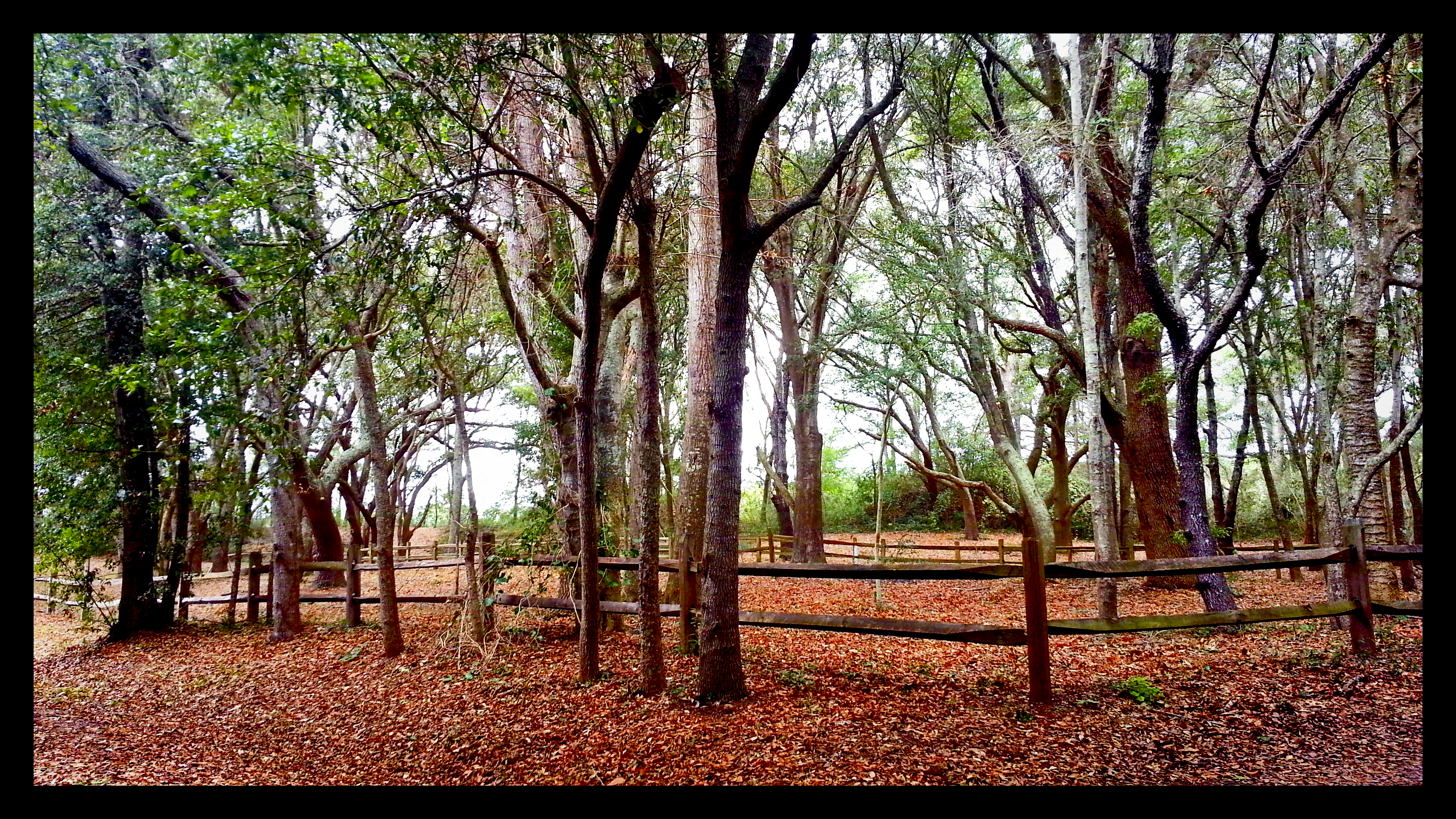
Thomas Lamar, the Confederate colonel who held Tower Battery with his 500 men against waves of Union infantry, was hailed as "The Hero of Secessionville." The village itself -- those few summer cottages of James Island planters -- gave its name to a battle that kept Charleston in Confederate hands for nearly three more years, until Sherman's march finally forced the city's evacuation in February 1865. Today the Secessionville Historic District preserves remnants of the earthworks on the narrow peninsula where marsh and artillery conspired to stop a Union army. The terrain is the story's best narrator: stand on that spit of land and the tactical reality becomes obvious. There is nowhere to go but forward into the guns, or back into the mud.
From the Air
The Secessionville battlefield is located at 32.704N, 79.948W on the southeastern portion of James Island, south of Charleston. The narrow peninsula between marshlands is visible from low altitude -- look for the spit of land separating Folly Island from Morris Island, with tidal creeks and salt marsh on both sides. Charleston Executive Airport (KJZI) is 7nm north-northwest, Charleston AFB/International (KCHS) is 12nm north. Fort Sumter is visible 4nm to the east across the harbor. Best viewed from 1,500-2,500 feet AGL to appreciate the narrow terrain that shaped the battle.