Battle of Selma
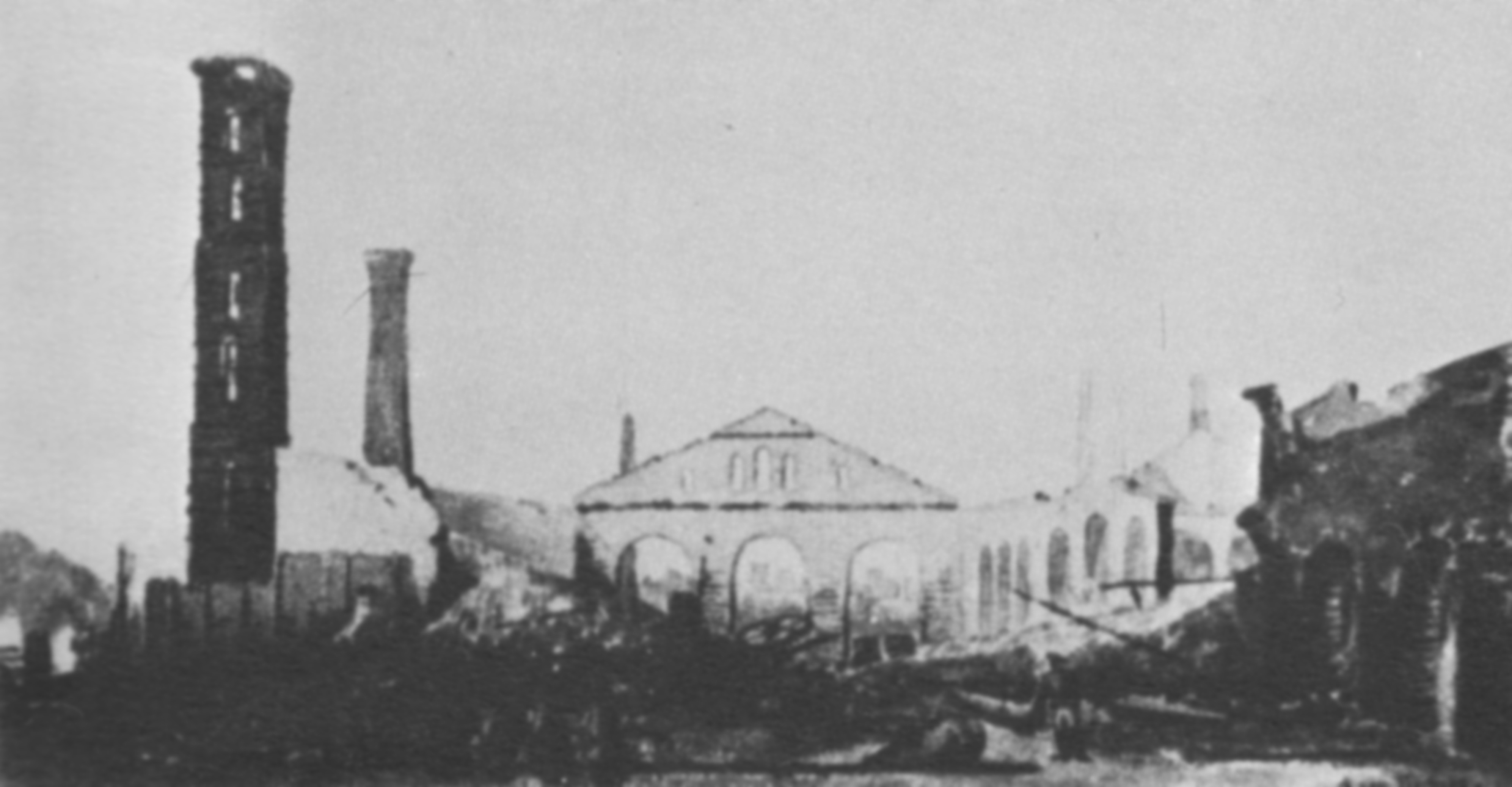
Nathan Bedford Forrest arrived at Selma on the morning of April 2, 1865, horse and rider covered in blood. He had been wounded by a saber the day before at Ebenezer Church, then killed his attacker with a revolver - one of thirty men he would claim in personal combat during the war. Now he had a city to defend with 2,000 exhausted troops, many of them old men and boys from the Alabama militia, against 9,000 well-armed Union cavalrymen carrying seven-shot Spencer repeating rifles. The fortifications were formidable - three miles of earthworks, eight to twelve feet high, anchored on the Alabama River - but the men behind them were spread so thin that five to ten feet separated each defender. By nightfall, Selma would fall, and with it the Confederacy's last great arsenal in the Deep South.
The Arsenal on the River
Selma was no ordinary Southern town. By 1865, it had become the Confederacy's second-most important industrial center after Richmond. The city's arsenal, naval foundry, and eleven iron works churned out the cannons, ammunition, and ironclad components that kept Confederate armies fighting. Its position on the Alabama River made it a natural logistics hub, and the semicircle of fortifications built two years earlier - earthen walls fifteen feet thick at the base, fronted by ditches and sharpened picket fences - reflected just how vital the city was to the Southern war effort. When Major General James H. Wilson launched his cavalry raid south from Gravelly Springs, Alabama, on March 22 with 13,500 men, Selma was the prize.
The Running Fight
Wilson was methodical and ruthless. He detached a brigade to destroy Confederate property at Tuscaloosa, then captured a courier carrying dispatches that revealed the exact strength and positions of Forrest's scattered forces. Armed with this intelligence, Wilson sent troops to cut the bridge across the Cahaba River at Centreville, severing Forrest from reinforcements. The legendary cavalryman spent days trying to consolidate his scattered command - units spread across Mississippi, Alabama, and Tennessee were refitting after the disastrous Middle Tennessee Campaign. At Ebenezer Church on April 1, Forrest made his stand with fewer than 2,000 men. The outnumbered Confederates fought for over an hour before a Union cavalry charge broke the militia on Forrest's right flank, sending his battered force retreating toward Selma.
Thirty Minutes of Fury
Wilson's plan called for a coordinated night attack, but war rarely follows the script. At 5 p.m., Confederate forces attacked Wilson's ammunition train in the rear. General Eli Long, positioned across the Summerfield Road, decided to assault the fortifications immediately rather than wait. His dismounted troopers advanced in three lines, Spencer repeaters blazing. The defenders answered with artillery and small arms, and the casualties were severe - Long himself was wounded - but the attackers kept coming. When they reached the earthworks, the fighting turned medieval: clubbed muskets, hand-to-hand combat, men grappling in the ditches. In less than thirty minutes, Long's division had broken through. General Emory Upton, seeing the breakthrough, sent his own division forward. Wilson personally led the 4th U.S. Cavalry in a mounted charge down Range Line Road until devastating Confederate fire toppled his horse beneath him. He remounted and ordered a dismounted assault that finally overwhelmed the defenders at the railroad depot. By 7 p.m., Selma had fallen.
Escape in the Darkness
Hundreds of Confederates surrendered, but hundreds more fled through the night down the Burnsville Road. Forrest, Armstrong, and Roddey escaped in the chaos. To the west, retreating soldiers fought their way to Valley Creek and swam the Alabama River to freedom. During his escape, Forrest killed yet another Union trooper in close combat. Wilson's losses totaled 359 men. Forrest lost over 2,700 - mostly prisoners - along with 32 artillery pieces. The victorious Union troops looted the city that night, and Wilson's men spent the following week systematically destroying the arsenal and naval foundry that had been Selma's reason for being a target.
The War's Last Breath
Selma proved that even Forrest, considered by many the most dangerous cavalry commander in either army, could not stop what was coming. Wilson's raiders left the smoldering city and marched on to Montgomery, fought at Columbus on Easter Sunday, and pushed east to Macon, Georgia, where they learned the war had ended. On May 10, they captured Jefferson Davis himself in Irwinsville, Georgia. Today, the Battle of Selma is reenacted annually near the mouth of Valley Creek, where those Confederate soldiers once swam for their lives. The fortification earthworks have largely returned to the Alabama soil, but the story of that brutal April evening - when repeating rifles met desperate courage across three miles of crumbling earthen walls - remains one of the Civil War's most vivid final chapters.
From the Air
Located at 32.42N, 87.02W on the north bank of the Alabama River. Selma's historic downtown and the river bluffs where fortifications once stood are visible from moderate altitude. The Alabama River curves prominently around the city from the southwest. Craig Field Airport (KSEM) is located 4 miles southeast of the city. The Edmund Pettus Bridge (famous from the civil rights era) crosses the Alabama River just south of downtown and serves as a prominent visual landmark. Valley Creek, where Confederate soldiers escaped by swimming the river, joins the Alabama River to the west of town. Montgomery Regional Airport (KMGM) is approximately 50 miles to the east.