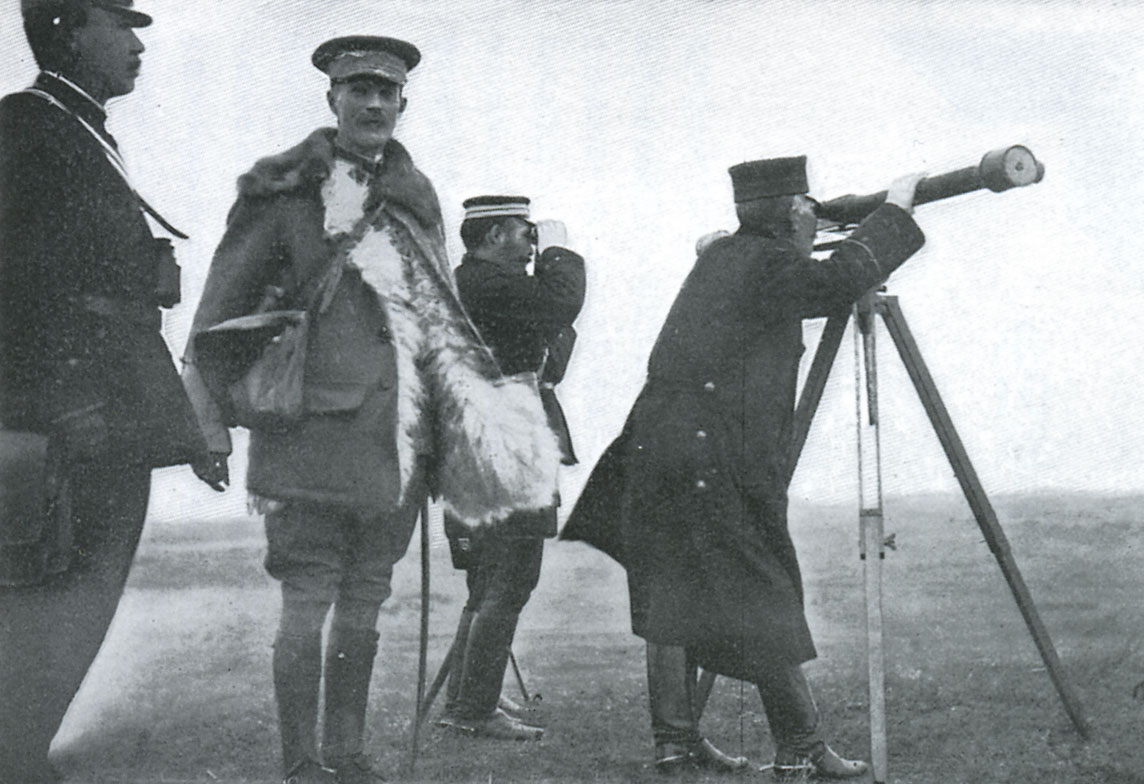
Battle of Shaho
General Kuropatkin sent a telegram to the Tsar proclaiming victory. He based this claim on the recapture of a single hill, 100 feet tall, that the Japanese called Sankaiseki-san and the Russians called One-Tree Hill. The rest of the Battle of Shaho told a different story. Fought along a 37-mile front centered on the Shaho River south of Mukden from 5 to 17 October 1904, it was the Russo-Japanese War's second great land battle, a two-week bloodletting that cost over 60,000 casualties between both sides and ended any realistic hope of relieving the besieged Russian garrison at Port Arthur by land.
A General Who Lied to His Tsar
Kuropatkin needed this battle. After his retreat from Liaoyang, morale among his forces had cratered, and the Russian garrison at Port Arthur was running out of time. If Port Arthur fell, General Nogi Maresuke's battle-hardened Third Army would march north and give the Japanese numerical superiority. Reinforcements were trickling in via the newly completed Trans-Siberian Railroad, but winter was approaching and Kuropatkin lacked accurate maps of the terrain south of Mukden. His plan was a double envelopment: General Stackelberg's Eastern Detachment would swing through the hills to strike the Japanese right flank, while General Bilderling's Western Detachment advanced across the open plains as a diversion. The ruse depended on the Japanese believing the western movement was the main thrust.
The Body on the Hillside
For a few days, the deception worked. Oyama hesitated to accept General Kuroki's assessment that the real danger lay in the mountains to the east. Then, on 9 October, Japanese soldiers found a copy of Kuropatkin's written orders to Stackelberg on the body of a Russian officer killed in a skirmish. The discovery stripped away the fog of war in a single stroke. Oyama ordered an immediate counter-offensive on 10 October, targeting the center of the Russian line while using Kuroki's 1st Army to pin down Stackelberg in the east and the 2nd and 4th Armies to hammer Bilderling's division in flanking maneuvers.
Orders by Courier, Not by Telephone
The Russian counter-offensive unraveled as much from internal dysfunction as from Japanese pressure. Kuropatkin distrusted his own generals so deeply that he bypassed Stackelberg and Bilderling entirely, sending orders directly to their subordinates. He refused to use the field telephone system, which meant instructions traveled by courier and often arrived hours too late. On the left flank, Stackelberg attacked the Japanese 12th Division near the Yantai coal mines, taking 5,000 casualties by nightfall. The 12th Division lost even more men but held its ground. On the right, the Japanese 4th Division turned Bilderling's flank on 11 October, forcing a retreat. Russian operations devolved into a command crisis where generals received orders that contradicted the reality unfolding around them.
One-Tree Hill and the Winter Line
By 14 October, the Japanese had crossed the Shaho River and broken through the Russian lines. The Sixth Siberian Army Corps sacrificed itself in a brutal rearguard action that allowed the main Russian force to retreat in order. Then Kuropatkin fixated on Sankaiseki-san, the modest ridge whose commanding view of the plains south of Mukden made it strategically valuable. The Japanese 10th Division had seized it in a night assault on 12 October. Kuropatkin ordered it retaken at all costs, and on the night of 16 October, Russian troops attacked from both ends of the ridge and succeeded by the next morning. That was enough for Kuropatkin to claim victory in his telegram to the Tsar, a message that earned him full command of Russian forces when Viceroy Alekseyev was removed on 25 October. The tactical reality was grimmer: 41,350 Russian casualties against 20,345 Japanese. Both sides dug trenches, in some places only meters apart, and settled in for the Manchurian winter. The next battle at Sandepu would come in January, in the frozen dark.
From the Air
Located at 41.60°N, 123.46°E, south of Mukden (present-day Shenyang) along the Shaho River in Liaoning Province. The flat terrain and river valleys where the 37-mile front extended are visible from altitude. The former Mukden-Port Arthur railway line runs through the area. Nearest major airport is Shenyang Taoxian International (ZYTX), approximately 30 km to the north.