Battle of Shewan
The corpsman told two of them they would die if they went back in. They went back in anyway. On August 8, 2008, in the village of Shewan in Farah Province, a combined force of Marines from Golf Company, 2nd Battalion, 7th Marines, and 2nd Platoon, 1st Force Reconnaissance Company, walked into a fight that would last eight hours, pit them against a force eight times their size, and end without a single American death. The temperature hit 120 degrees. The Taliban had trenches, mortars, RPGs, and reinforcements on the way. What the Marines had was training, firepower, and a refusal to quit that bordered on the medically inadvisable.
The Village That Controlled the Road
Shewan was not a village that happened to contain insurgents. It was a Taliban headquarters, home to key leaders who used it as a staging ground for attacks across the region. U.S. intelligence estimated between 100 and 250 full-time fighters lived there permanently. They controlled Route 517, the main east-west supply artery, and their grip on it had effectively isolated coalition and Afghan national forces operating to the west. Clearing Shewan was not optional -- it was the only way to restore freedom of movement in the area. When the Marines arrived to conduct their operation, the Taliban were waiting.
Eight Hours in the Furnace
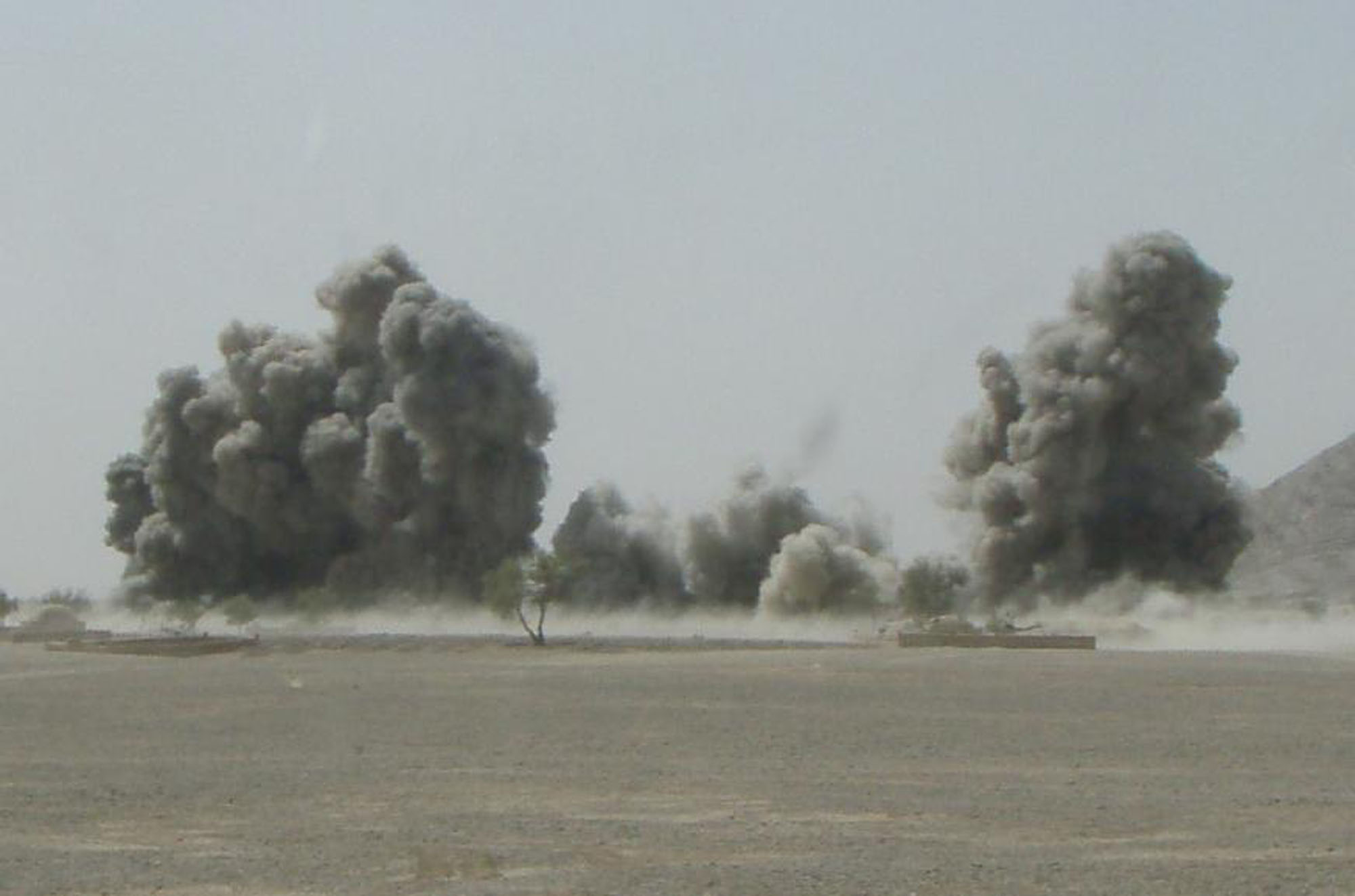
Just before noon, Force Recon began taking heavy small arms and RPG fire from a fortified trench line on the village's southern edge. The Marines had already covered miles on foot in full protective gear under a sun that was pushing the air temperature toward 120 degrees. The platoon drove toward a berm running parallel to the village, firing crew-served weapons as they advanced. Taliban mortar teams answered with 82mm rounds. Golf 2 dismounted behind the berm and returned fire, but the incoming RPG and machine gun fire only intensified. Hours into the engagement, convoys carrying an estimated 100 Taliban reinforcements rolled into Shewan with fresh weapons and supplies. The Marines responded with mortars, airstrikes, and Force Recon assaults directly into Taliban fighting positions, grinding through the fortifications one by one.
The Fight Turns
Under sustained pressure from ground fire and air attacks, the Taliban began retreating into buildings to escape the coalition barrage. The Marines spotted a mortar team operating from the mountains and called an 81mm strike onto their position, eliminating it. With their indirect fire silenced and their reinforcements shattered, the Taliban's resistance began to fracture. The Marines pulled back and established a perimeter around the village, sealing off escape routes and continuing to engage fighters with crew-served weapons. A final bombing run destroyed a damaged Humvee to deny it to the enemy. During the lull that followed, the remaining Taliban fighters attempted to flee into the mountains, but Golf 2 cut them down before they reached cover.
What the Numbers Do Not Say
The official count: over 50 Taliban killed, zero Marines killed. The battle lasted more than eight hours, making it the longest engagement of 2nd Battalion, 7th Marines' entire deployment. The numbers, though, flatten the human reality. They do not capture the corpsman warning exhausted Marines that continuing to fight in that heat could kill them, or those Marines choosing to fight anyway. They do not capture the weight of body armor in 120-degree air, or the sound of 82mm mortar rounds walking closer, or what it takes to assault a trench line when the people inside it outnumber you eight to one.
Valor Recognized, Road Reopened
The commendations told part of the story. Gunnery Sergeant Brian Blonder received the Navy Cross, one of the highest honors a Marine can earn. Sergeant Franklin Simmons and Captain Byron Owen each received the Silver Star. Five Bronze Stars with V for valor and six Navy-Marine Corps Commendation Medals with V were awarded to Marines and Navy corpsmen. But the most immediate result was strategic: the Taliban did not attack the area again for months. Route 517 reopened. Coalition forces to the west were no longer cut off. Shewan, the village that had served as an insurgent stronghold, had been broken open by a handful of Marines who refused to stop fighting until the job was finished.
From the Air
Located at 32.63°N, 62.49°E near the village of Shewan in the Bala Buluk district of Farah Province, Afghanistan. The terrain is arid with mountains to the north and east. Route 517, the east-west road that was the strategic objective of the battle, is visible from altitude. Nearest airport: Farah Airport (OAFR), approximately 30 km southwest. Best viewed at 5,000-8,000 feet AGL. The village sits in a valley with surrounding high ground that the Taliban used for mortar positions.