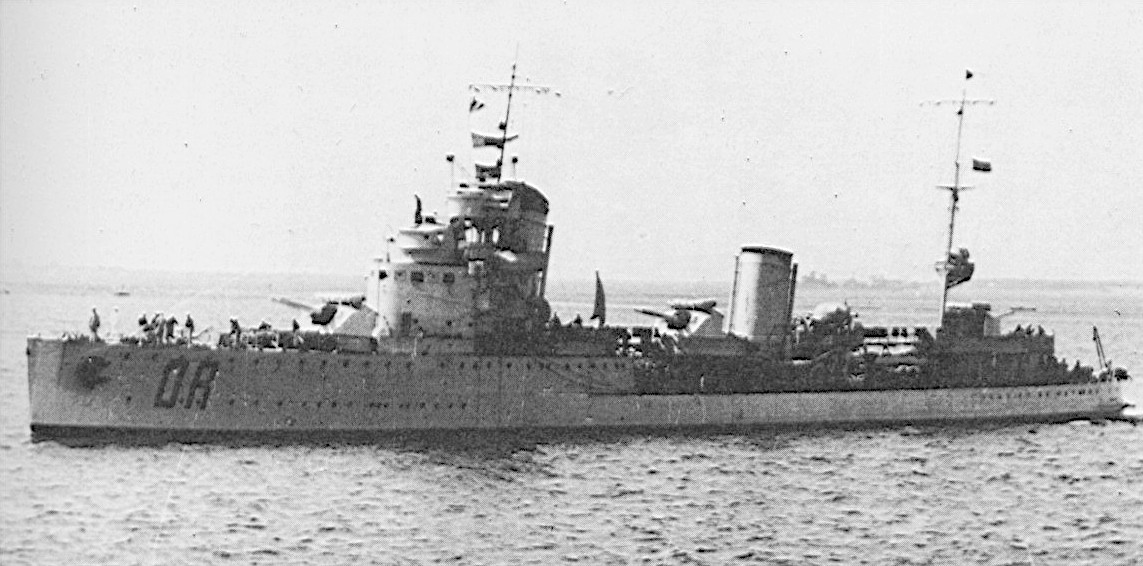
Battle of Skerki Bank
Puccini rammed Aspromonte in the dark. It was after midnight on 2 December 1942, and the Italian Convoy H was already in trouble before the British even opened fire. One ship had missed a turn signal, another had no wireless radio at all, and the formation that was supposed to be tight and disciplined was scattered across the waters near Skerki Bank in the Sicilian Channel. When Force Q -- three Royal Navy cruisers and two destroyers -- appeared on radar and began shooting, the convoy never had a chance.
The Lifeline Under Siege
By December 1942, the Axis supply route from Italy to Tunisia had become a gauntlet. Operation Torch had put Allied forces in Algeria, and British naval commanders were intensifying their campaign to sever the flow of men and materiel to Rommel's forces. On 30 November, once Allied fighter cover from newly captured airfields could provide protection, Force Q was established at Bone, a port on the northeast Algerian coast. Under Rear Admiral Cecil Harcourt, the flotilla comprised the light cruisers Aurora, Sirius, and Argonaut, along with the destroyers Quiberon and Quentin. Their mission was simple: find and destroy Italian convoys.
A Convoy in Chaos
Convoy H carried 1,766 troops, ammunition, four tanks, 32 vehicles, and twelve artillery pieces aboard four merchant ships: the German transport KT-1, the Italian Aventino, Puccini, and the converted ferry Aspromonte. Captain Aldo Cocchia commanded the escort from the destroyer Nicoloso da Recco, accompanied by two other destroyers and two torpedo boats. On 1 December, four Axis convoys were at sea. Three turned back after being spotted by British reconnaissance aircraft, but Convoy H pressed on toward Tunis. When Cocchia realized hostile ships were nearby, he ordered a series of course changes that went disastrously wrong. Puccini missed the turn order and collided with Aspromonte. KT-1, which lacked a wireless, wandered off to the northwest. The tight formation Supermarina had demanded disintegrated.
One Hour of Destruction
Force Q picked up the Italian ships on radar at 00:30, northeast of Bizerta. At 00:38, the leading British ships opened fire on KT-1, which exploded almost immediately. What followed was a systematic dismantling of the convoy. Aurora, Sirius, and Argonaut swept through the scattered formation, engaging targets with guns and torpedoes. The Italian escort fought back -- Camicia Nera launched six torpedoes, Folgore fired all six of hers -- but none found their mark. After more than two years of war, the Regia Marina remained unable to aim torpedoes accurately at night, a failing that Supermarina's uncritical acceptance of hit claims had masked. Folgore took nine shells from Argonaut, listed 20 degrees, and capsized. Aventino caught fire and sank after a torpedo hit. Puccini burned. Aspromonte went down.
The Cost of the Night
In a single hour, Force Q sank all four merchant ships and the destroyer Folgore. Two hundred crewmembers from the merchant and naval vessels were killed, along with 1,527 of the embarked troops. The destroyer Nicoloso da Recco, hit by shells that killed 118 of her crew, was left dead in the water and had to be towed to port. On the British side, the ships suffered only minor splinter damage during the battle itself. The bill came at dawn: as Force Q sailed back to Bone, Luftwaffe torpedo bombers attacked at 06:30, sinking the destroyer Quentin with a single torpedo and killing 20 of her crew. It was a bitter postscript to what the British official history called a "spectacular success." Italian naval historian Giorgio Giorgerini was blunter, writing that the battle demonstrated the Regia Marina's persistent inability to fight effectively at night -- a failing that no amount of courage could compensate for.
From the Air
Located at approximately 37.75N, 10.95E near Skerki Bank in the Sicilian Channel between Tunisia and Sicily. The battle took place in open water northeast of Bizerta. From altitude, the Sicilian Channel is the narrow passage between the Cap Bon peninsula of Tunisia and western Sicily. Nearest airports include Tunis-Carthage International (DTTA) to the south and Pantelleria Airport (LICG) on Pantelleria island.