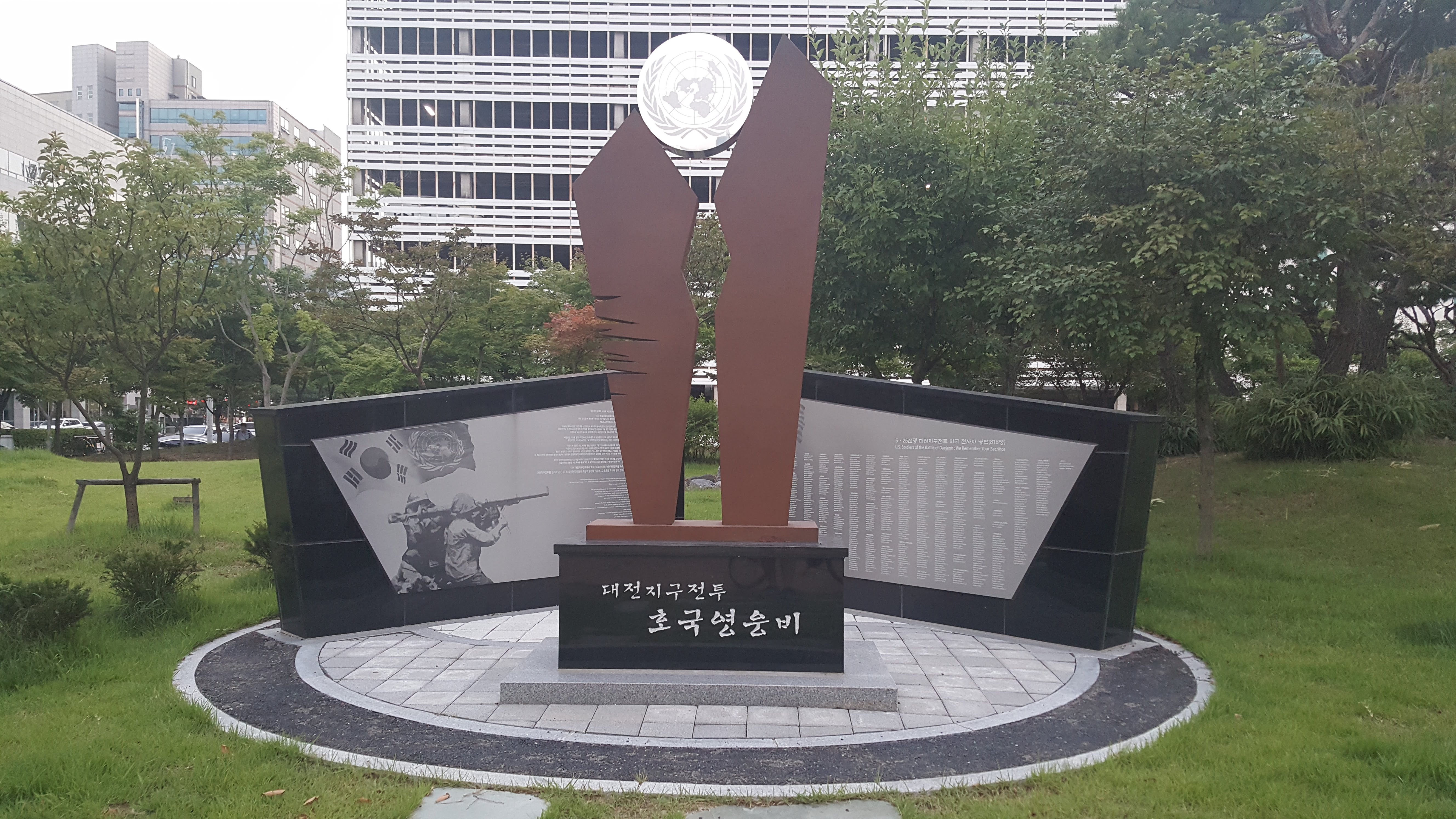
Battle of Taejon
Major General William F. Dean was last seen firing a bazooka at a North Korean T-34 tank in the burning streets of Taejon. It was July 20, 1950, and the commander of the U.S. 24th Infantry Division had spent three days in a battle he knew he could not win. His mission was not victory but delay: hold the city long enough for other American divisions to establish a defensive perimeter around Pusan, 200 kilometers to the southeast. Dean accomplished that mission, but the cost was staggering. He became the highest-ranking American prisoner of the Korean War, spending three years in captivity, and his division was shattered.
The Line Along the Kum
By mid-July 1950, less than a month after North Korean forces crossed the 38th parallel, the situation for American troops in Korea was desperate. The 24th Infantry Division had been rushed from occupation duty in Japan with inadequate equipment and almost no combat experience. For two weeks, its regiments had fought a series of delaying actions against the advancing Korean People's Army, trading ground for time in a withdrawal that felt more like a rout. Now the entire division gathered at Taejon, a major transportation hub, to make a stand along the Kum River east of the city. They were outnumbered, underequipped, and exhausted. Their opponent, the KPA's 3rd and 4th Divisions, had tanks, artillery, and the momentum of an army that had swept through most of South Korea in three weeks.
Three Days of Urban Combat
The North Koreans crossed the Kum River on July 16, overwhelming defensive positions that lacked the heavy weapons needed to stop armor. What followed was a grinding urban battle that lasted until July 20. Communication between American units broke down repeatedly. Companies were cut off, surrounded, and forced to fight their way out or surrender. The KPA used their numerical superiority to encircle the city while pressing the attack from multiple directions. General Dean personally led counterattacks, at one point stalking a T-34 tank through city streets with a bazooka, trying to demonstrate to his shaken troops that the enemy's armor could be destroyed at close range. The gesture was brave to the point of recklessness, but it reflected the reality that senior officers were filling gaps ordinarily held by platoon sergeants.
A General Lost
On July 20, Dean ordered the withdrawal from Taejon. Attempting to escape the encircled city with a small group of soldiers, he became separated from his party after falling down a steep slope while searching for water for a wounded man. For thirty-six days he evaded capture, hiding in the Korean countryside and losing nearly sixty pounds. He was finally betrayed to the North Koreans by civilians and spent the rest of the war as a prisoner. Back home, not knowing whether Dean was alive or dead, the Army awarded him the Medal of Honor for his actions at Taejon. He did not learn of the award until after his release in 1953.
The Delay That Mattered
The 24th Infantry Division lost Taejon, but the battle achieved its strategic purpose. The days bought at the Kum River and in Taejon's streets gave the 1st Cavalry Division and the 25th Infantry Division time to deploy around Pusan, where they would establish the perimeter that held through August and September of 1950. Without the delay imposed at Taejon, military historians believe the North Korean advance might have pushed UN forces off the peninsula entirely. The cost was severe: the 24th Division suffered heavy casualties and lost much of its remaining equipment. The city of Taejon, today known as Daejeon, was left in ruins. But the perimeter held, MacArthur's Inchon landing reversed the war's momentum in September, and the sacrifice of the men who fought in Taejon's burning streets was not forgotten.
From the Air
Taejon (modern Daejeon) sits at approximately 36.33N, 127.43E in central South Korea. The city is a major transportation hub where highways and rail lines converge. The Kum River to the east and north provides a prominent visual reference. The nearest airports are Cheongju International Airport (RKTU) approximately 50 km to the north and Daejeon Airport (closed, former military). Seoul Incheon (RKSI) is roughly 160 km north. Recommended viewing altitude is 5,000-8,000 feet AGL.