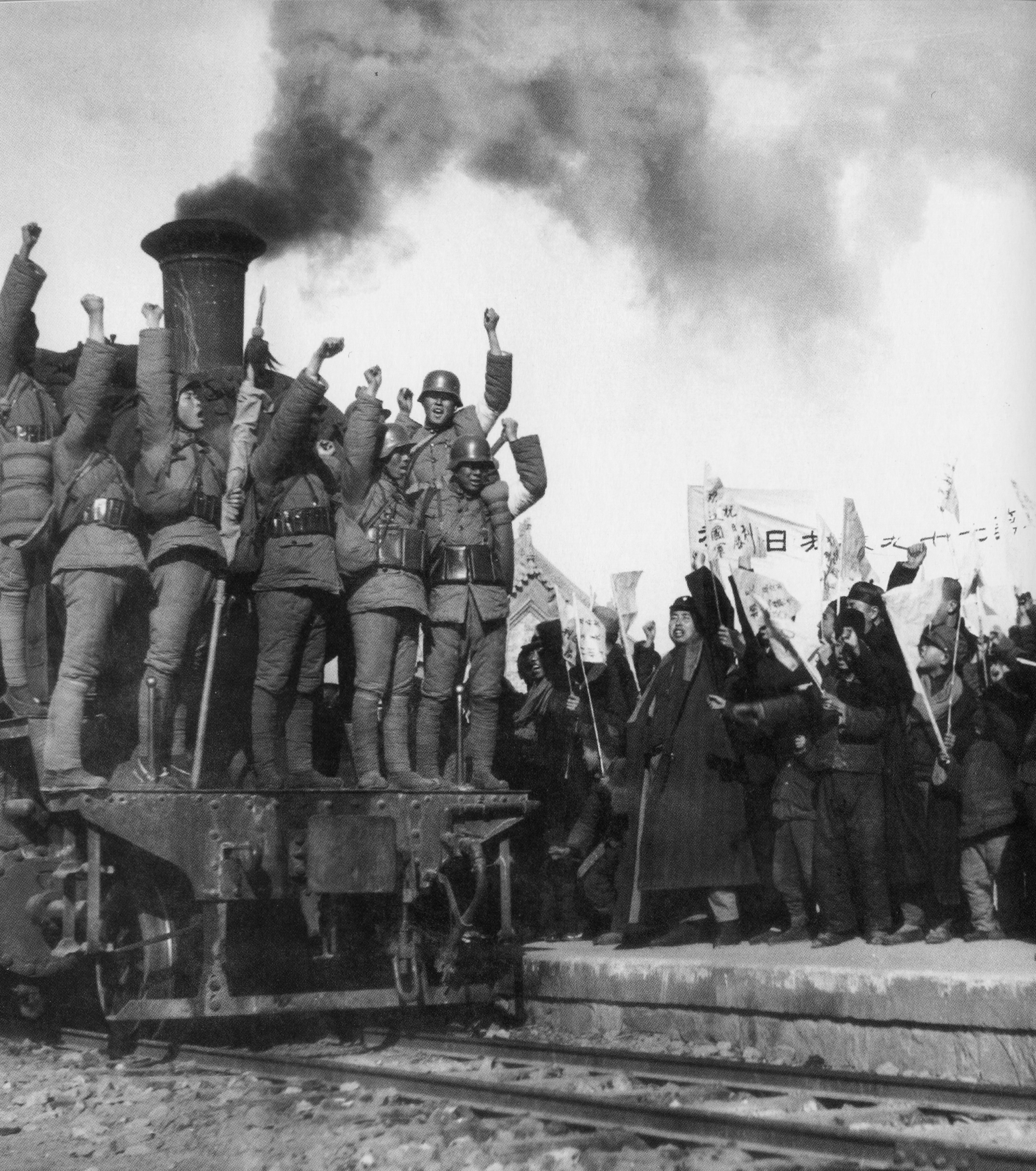
Battle of Taiyuan
On November 2, 1937, Japanese engineers tunneled beneath the Tungshan fort on Blue Dragon Ridge and detonated a series of charges. The explosion obliterated the fortress and its entire garrison in an instant, collapsing the eastern anchor of the Chinese defensive line north of Taiyuan. Within a week, the capital of Shanxi Province -- one of the most important cities in northern China -- would fall. The Battle of Taiyuan was the final major engagement in Japan's conquest of North China, and it ended with the city in ruins, some 30,000 of Yan Xishan's troops dead in the hills alone, and tens of thousands of civilians killed or injured in the fighting and its aftermath.
The Road Through the Mountains
The battle's roots lay in the Marco Polo Bridge Incident of July 1937, which ignited full-scale war between China and Japan. As the Japanese North China Area Army swept south and west from Beiping, Shanxi Province and its capital Taiyuan became a strategic prize. The province's coal deposits at Datong were valuable, but more critically, Taiyuan housed a major arsenal of the National Revolutionary Army. Chinese forces were commanded by a coalition that would have been unthinkable months earlier: Yan Xishan, the warlord of Shanxi; Wei Lihuang's 14th Army Group; Fu Zuoyi's 7th Army Group; and Zhu De's Eighth Route Army, the Communist forces deployed under the fragile Second United Front alliance between the Nationalists and Communists. Against them came the Japanese Northern China Area Army under Hisaichi Terauchi, elements of the Kwantung Army, and Inner Mongolian forces led by Demchugdongrub.
The Ambush at Pingxing Pass
The campaign's most famous engagement came in September, when the Communist 115th Division under Lin Biao ambushed Japanese supply units near Pingxing Pass. While Chinese forces under Fu Zuoyi counterattacked the Japanese 21st Infantry Brigade at the pass itself, Lin Biao's troops attacked a logistics convoy and a baggage train between Xiaohan Village and Guankou Village, nearly annihilating both. The Japanese recorded 150 to 240 casualties in the ambush alone, and the loss of supply units created critical ammunition shortages for the frontline troops. The battle at Pingxing Pass became one of the war's most celebrated Chinese victories, though its strategic impact was limited. Reinforcements from the Kwantung Army eventually broke the Chinese positions, and by the end of September, the defenders had retreated south toward Wutai Mountain, having lost approximately 1,506 Japanese casualties in exchange for a much larger but unrecorded Chinese toll.
Blue Dragon Ridge
The decisive fighting occurred in late October and early November along the defensive lines north of Taiyuan. Chinese forces dug into prepared fortifications and fought the Japanese to a standstill for ten days in fierce hand-to-hand combat. Both sides suffered thousands of casualties. When the Japanese broke through on October 23, the Chinese fell back to Blue Dragon Ridge, 20 miles north of the city. For five more days, they endured air strikes, artillery bombardment, and tank attacks, clinging to the high ground with a tenacity that cost Yan Xishan's forces dearly. The Tungshan fort, a massive fortification commanding the eastern half of the defensive line, held until the Japanese tunneled beneath it and destroyed it with explosives on November 2. The loss of the fort broke the defense. Some 30,000 soldiers had been lost holding the hills.
A City Consumed
By November 7, most Chinese troops had evacuated Taiyuan in disarray. Local commanders refused the Japanese demand for surrender. On the morning of November 8, the Japanese attacked with bombs, heavy artillery, and tanks, blasting through the city walls and gates. The 5th Division's assault troops crashed into the city and were met by defenders who fought hand-to-hand through the streets and alleyways. The battle raged through the night. By evening, half the city had fallen and much of it lay in ruins. That night, the last Chinese units attempted to flee over the Fen River bridge, joining crowds of panicked refugees. In the chaos, desperate soldiers shoved civilians off the bridge to make room. By morning, Japanese planes strafed the people still jammed at the southwest gate and the sole bridge. By November 9, Taiyuan had fallen. The Chinese had lost 20,000 soldiers and 80 artillery pieces in the city's defense. The civilian toll was devastating, though no precise count was ever established.
From the Air
Taiyuan is located at 37.85°N, 112.55°E, the capital of Shanxi Province in northern China. The city sits in a basin surrounded by mountains, with the Fen River running through it. Blue Dragon Ridge, where some of the fiercest fighting occurred, lies approximately 30 km north of the city center. Nearest airport: Taiyuan Wusu International Airport (ZBYN), located approximately 15 km south of the city center. The surrounding terrain is mountainous, with the Taihang Mountains to the east and the Luliang Mountains to the west. The Pingxing Pass battlefield is approximately 200 km northeast.