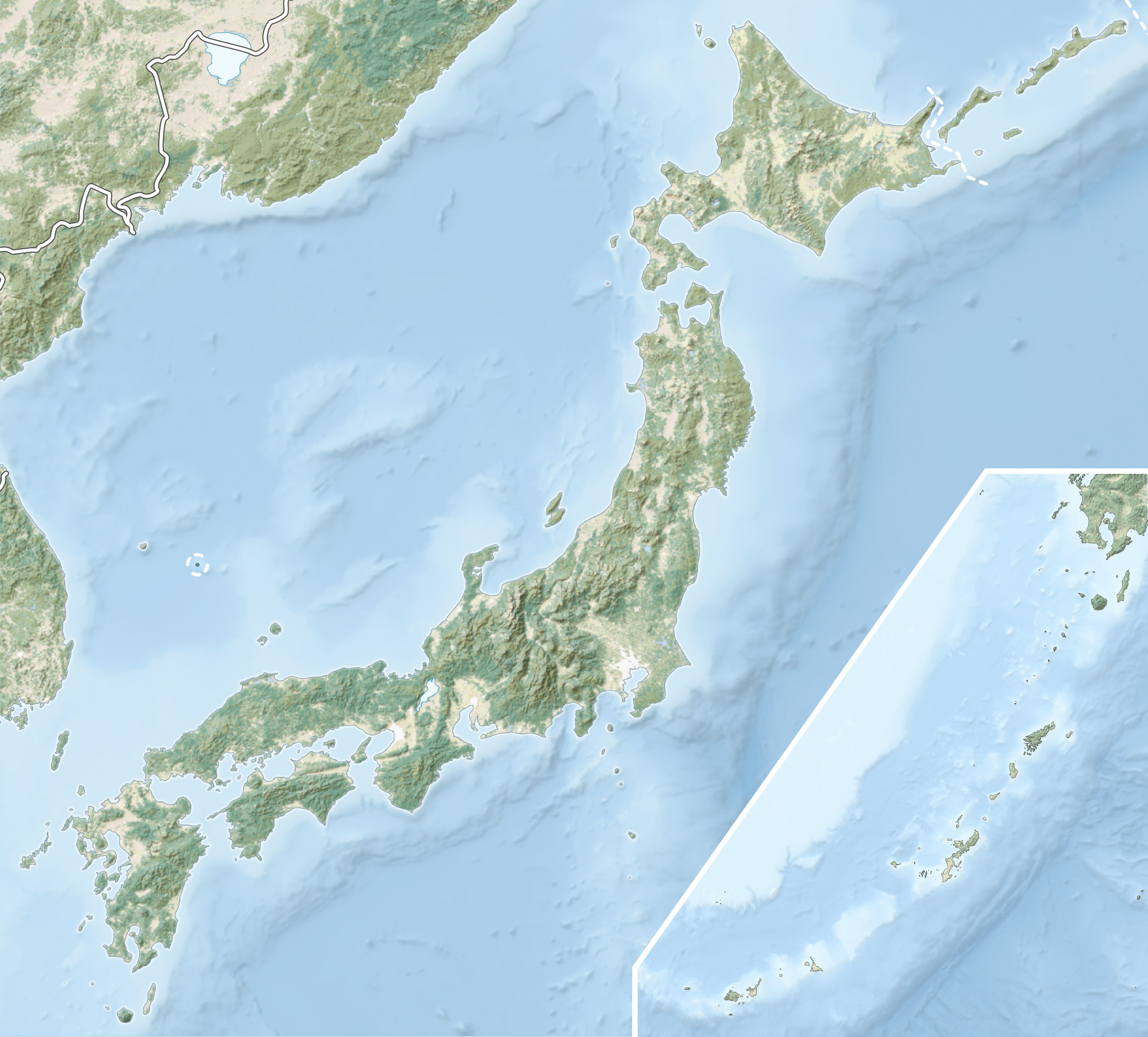
Battle of Tedorigawa
Uesugi Kenshin had a river, and he knew exactly how to use it. In the autumn of 1577, along the banks of the Tedori River in Kaga Province, the legendary warlord lured one of Oda Nobunaga's finest armies into a frontal charge -- then opened the floodgates and let the water do the killing. A thousand of Nobunaga's soldiers died in the current, their arquebuses and cannons rendered useless by the surging river. It was Kenshin's last great battlefield triumph, a masterwork of deception fought in what is now Ishikawa Prefecture, where the Tedori still carves its way from Mount Hakusan toward the Sea of Japan.
The Web of Alliances
The battle grew from the shifting alliances that defined the Sengoku period. After Nobunaga's decisive victory at Nagashino in 1575, Uesugi Kenshin broke his alliance with both Nobunaga and Tokugawa Ieyasu. He pivoted dramatically, forging new ties with the Ishiyama Honganji warrior monks -- the Ikko-ikki -- and with Takeda Katsuyori, a former rival. When the pro-Oda general Cho Shigetsura orchestrated a coup in Noto Province, killing the lord Hatakeyama Yoshinori and installing a puppet ruler, Kenshin saw his opening. He mobilized his forces and marched into Noto. Nobunaga responded by dispatching an army under some of his most capable commanders: Shibata Katsuie, Maeda Toshiie, and Sassa Narimasa. The stage was set for a confrontation at the Tedori River, where the fate of northern Japan's power balance would be decided.
The Trap at the River
Kenshin moved first. While Nobunaga's generals marched toward Noto, Kenshin encircled Cho Shigetsura's forces and trapped them in Nanao Castle. The castle fell, Shigetsura was killed, and the Hatakeyama of Noto switched their allegiance to Kenshin. The Oda army, unaware of Nanao's fall, crossed the Tedori River and prepared to continue into Noto. When news of the castle's collapse reached them, they halted and pulled back across the river. Kenshin, now reinforced with Noto troops, advanced on the Oda position. Nobunaga's generals planned to use their cannons and arquebuses to bombard the Uesugi from across the water -- a stand-off tactic that had served Nobunaga well before. But Kenshin understood the weakness of gunpowder in wet conditions. He launched a night-time feint, making it appear he had divided his forces. Nobunaga took the bait and ordered Katsuie to charge across the river.
Water as a Weapon
The moment the Oda troops were committed to their charge, Kenshin gave the order: open the floodgates. The Tedori River surged, and the battlefield transformed. The powerful current swallowed arquebuses and rendered cannons useless. The ashigaru foot soldiers making up the bulk of Nobunaga's army were no match for Kenshin's warriors in close-quarters combat, and the rising water pushed them backward into the river itself. A thousand men fell in the fighting and more drowned attempting to retreat back across the swollen Tedori. Nobunaga ordered a full withdrawal south into Omi Province. It was a humiliation for the most powerful warlord in Japan -- one of the few outright battlefield defeats Nobunaga ever suffered.
Victory Without a Tomorrow
Kenshin returned to Noto, ordered the repair of Nanao Castle, and withdrew to his home province of Echigo. The victory shifted the power balance across the northern Hokuriku region firmly in his favor, extending Uesugi influence as far as Kaga Province. Letters written by Kenshin suggest he planned to turn east next, launching an offensive against the Hojo clan in the Kanto region rather than marching on Kyoto. Nobunaga, for his part, wrote letters indicating willingness to cede all the northern provinces to avoid an Uesugi advance on the capital. But the future Kenshin was planning never arrived. In 1578, less than a year after his triumph at the Tedori River, Kenshin died. The succession crisis that followed -- the Siege of Otate -- tore the Uesugi clan apart. By 1582, Nobunaga's forces had pushed the Uesugi all the way back to Echigo, erasing every gain Kenshin had made.
The River Remains
Today the Tedori River flows through Ishikawa Prefecture much as it did in 1577, descending from the slopes of Mount Hakusan through a broad alluvial fan to the coast. The battlefield where Kenshin unleashed the floodwaters has long returned to rice paddies and small towns. No castle walls or fortifications mark the site. But the river itself -- fast, cold, and prone to sudden surges from mountain snowmelt -- tells the story of why Kenshin chose this ground. He understood the terrain the way a general must: not as scenery, but as arsenal. The Tedorigawa remains one of the most tactically brilliant engagements of the Sengoku period, a battle won not by superior numbers or firepower, but by a commander who turned the landscape into his most devastating weapon.
From the Air
Located at 36.47°N, 136.48°E along the Tedori River in southern Ishikawa Prefecture. The river is clearly visible from altitude, descending from Mount Hakusan to the west into a broad alluvial fan reaching the Sea of Japan. The battlefield area lies in the river plain between the mountains and the coast. Nearest airport is Komatsu Airport (RJNK), approximately 15 km south. From 5,000 feet, the Tedori River's course through the flat agricultural plain gives a clear sense of why the river was so tactically significant -- the open ground offers no cover for a retreating army.