Battle of Teruel
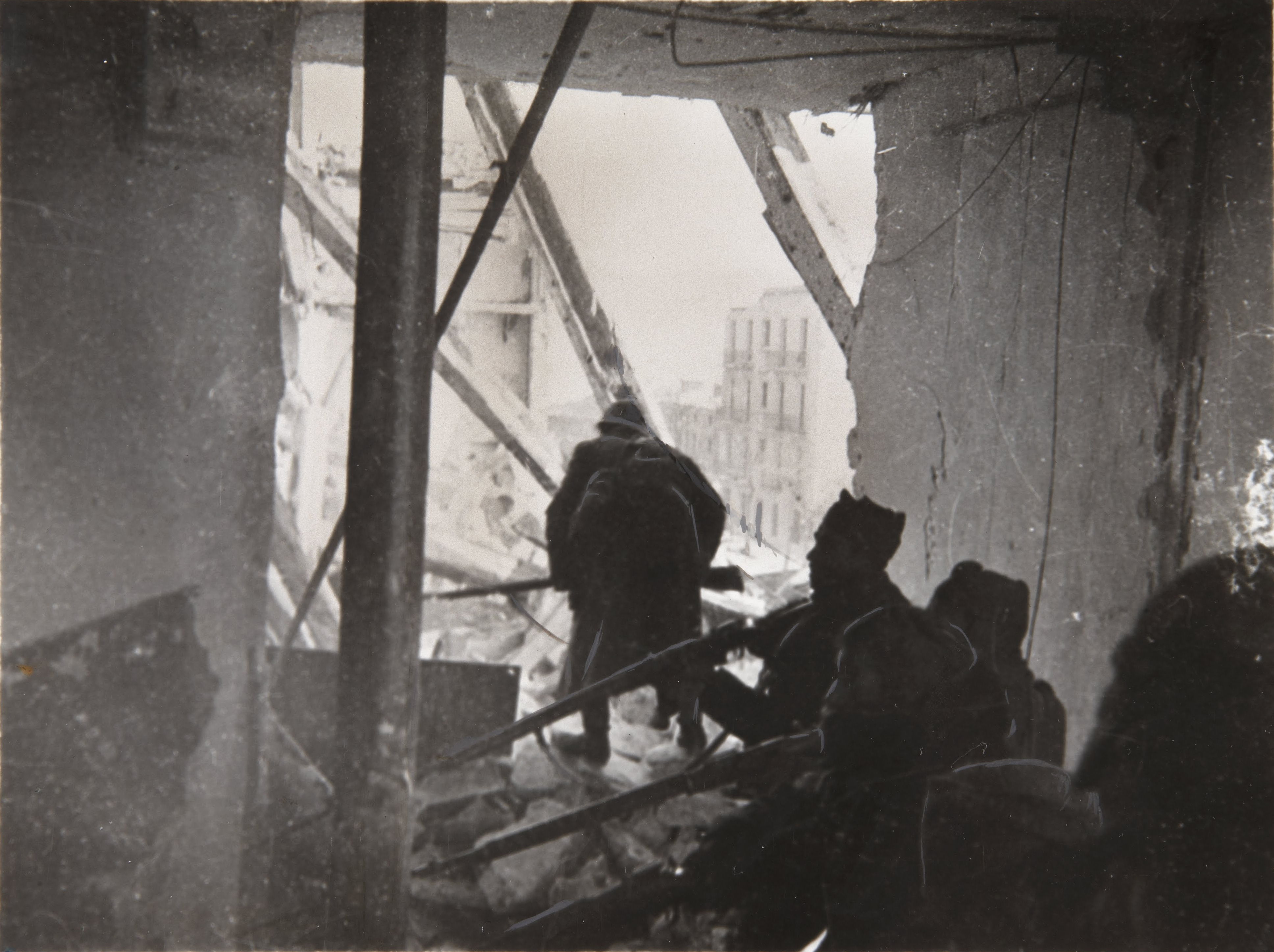
The temperature dropped to minus 18 degrees Celsius. Four days of blizzard dumped 120 centimeters of snow on the battlefield. Guns froze. Machines froze. Soldiers lost fingers and feet to frostbite, and field surgeons performed amputations in conditions that belonged to the Napoleonic Wars, not the 20th century. The Battle of Teruel, fought between December 1937 and February 1938, became the Spanish Civil War's bloodiest engagement and its military turning point, a two-month ordeal that produced 110,000 casualties and left the Republican cause fatally weakened.
The Fingernail on the Map
Teruel sat at the tip of a Nationalist salient that jutted into Republican territory like a fingernail. Surrounded on three sides by Republican Spain, it was the remote capital of a poor mountain province, perched at 3,050 feet in elevation where winter temperatures routinely fell lower than anywhere else in the country. The Republic's war minister, Indalecio Prieto, wanted a spectacular victory to validate his military reorganization. Republican strategists believed Teruel was weakly held, and its capture would shorten communication lines between central Spain and the coastal capital of Valencia. On December 15, 1937, General Lister's division attacked without preliminary bombardment as snow fell. By evening, the city was encircled. Colonel Domingo Rey d'Harcourt, commanding a garrison of roughly 4,000 that included civilians, pulled his defenders into the town center for a last stand.
Christmas in the Ruins
By Christmas Day, Rey d'Harcourt's garrison held only four buildings: the Civil Governor's headquarters, the Bank of Spain, the Convent of Santa Clara, and the seminary. Radio Barcelona announced that Teruel had fallen, but the announcement was premature. Fighting was hand to hand, building to building. Republicans would bombard a structure with artillery, then advance with bayonets. Franco, forced to cancel a separate offensive at Guadalajara, sent Generals Aranda and Varela with a relief force backed by the German Condor Legion. They reached the heights of La Muela, the ridge west of town, by New Year's Eve. Then the blizzard hit. For four days, combat ceased as men simply tried to survive. The Nationalists suffered worst, lacking warm clothing. Many who kept their lives lost limbs.
Surrender and Slaughter
When the storm broke, fighting resumed with desperate intensity. The convent's defenders were dead by New Year's Day 1938. On January 3, the Civil Governor's Building fell. Rey d'Harcourt fought on from a structure where attackers and defenders occupied different floors, firing at each other through holes smashed in the ceilings. Without water, medicine, or food, the garrison held out until January 8, when Rey d'Harcourt surrendered alongside the Bishop of Teruel. The city had fallen to the Republic, but at enormous cost. Just over a year later, in one of the war's final acts of retribution, Republican forces executed Rey d'Harcourt, the bishop, and 41 other prisoners. Their deaths added another layer of tragedy to a battle already saturated with it.
The Poisoned Toy
After the garrison's surrender, roles reversed. The Republicans became the besieged, the Nationalists the besiegers. Franco poured in reinforcements, and on February 7, a massive cavalry charge north of Teruel, one of the last great cavalry charges in the history of warfare, shattered Republican lines. By February 22, the Nationalists recaptured the city and found 10,000 Republican dead within its ruins. The battle exhausted the Republic's military resources. Its air force could not replace lost aircraft, and the armaments industry in anarchist-controlled Catalonia could not produce enough weapons. British poet Laurie Lee, who served with the International Brigades, later wrote: "The gift of Teruel at Christmas had become for the Republicans no more than a poisoned toy. It was meant to be the victory that would change the war; it was indeed the seal of defeat." Franco launched the Aragon Offensive two weeks later. By April, the Nationalists had reached the Mediterranean, splitting the Republic in two.
From the Air
Located at 40.35N, 1.10W in the mountainous interior of Aragon, eastern Spain, at approximately 3,050 feet elevation. Teruel sits in a natural bowl surrounded by ridges, including La Muela to the west. The terrain is rugged and semi-arid. Nearest airports include Valencia (LEVC) approximately 145 km southeast and Zaragoza (LEZG) approximately 170 km north. Winter weather in the area can be severe, as demonstrated by the battle itself. Recommended viewing altitude: 4,000-6,000 feet AGL.