Battle of the Bidassoa
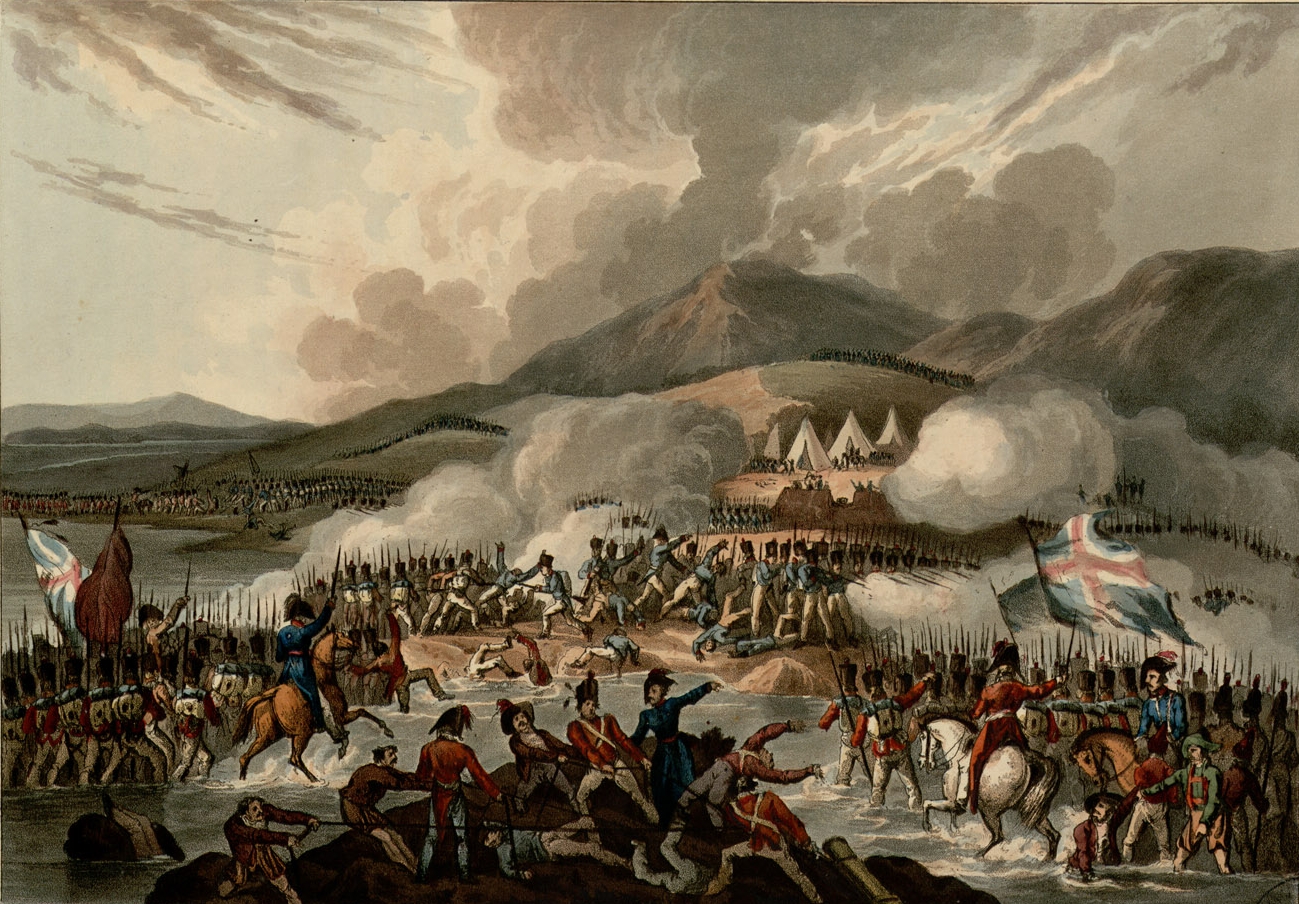
Basque fishermen held the secret that undid Marshal Soult. The Bidassoa estuary, where the river meets the Bay of Biscay between Irun and Hendaye, appeared to be an impregnable barrier - 910 metres wide and six metres deep at high water. The French were so confident in its defensive value that they posted only 4,000 men to guard six kilometres of riverbank. What Soult never suspected was that at certain low tides, the lower fords held barely four feet of water. Allied intelligence, gleaned from local fishermen who knew every sandbar and channel, identified 7 October 1813 as the next suitable tide. Wellington planned the crossing with meticulous care, and at 7:25 that morning, his troops waded into the estuary and onto French soil for the first time in the Peninsular War.
The Intelligence That Changed Everything
Soult faced an impossible geometry. Napoleon's Minister of War had ordered him to defend a position as close to the frontier as possible, which meant holding a 48-kilometre front through the Pyrenees mountains. The terrain was defensible but lateral communications were poor, making it difficult to shift forces quickly between sectors. Convinced that the coastal sector was his strongest point - who would try to ford a tidal estuary? - Soult concentrated most of his 55,000 men on his left flank in the mountains, where he feared Wellington would thrust over the Maya Pass and down the Nivelle River to the sea. He posted General Reille with just 10,550 men along the coast and lower river. It was a reasonable calculation based on available information. The problem was that Wellington had better information.
Seven Twenty-Five in the Morning
British engineers had built a turf wall near the lower fords to shelter Andrew Hay's 5th Division before the crossing. Wellington positioned five field batteries and three 18-pound siege cannon to cover the infantry. At 7:25, the 5th Division launched from near Hondarribia into water that barely reached their waists. The French were completely surprised. Hay's men gained a foothold at Hendaye and swung two brigades right to assist the 1st Division's crossing at Behobie. Three Spanish brigades from Manuel Freire's divisions forded farther upstream. Within hours, the British had overrun the Croix des Bouquets position and the Spanish captured Mont Calvaire. The entire ridge on the French side fell into allied hands at a cost of only 400 casualties. That morning, Soult was miles away, absorbed in watching a diversionary advance from the Maya Pass. By the time he realized the coastal attack was the real assault, it was too late.
The Fight for La Rhune
The toughest combat occurred in Clausel's central sector around La Rhune, the mountain that anchored the middle of the French line. John Colborne's brigade of the Light Division attacked the La Bayonette redoubt. Initially the French charged downhill and drove back the green-jacketed skirmishers of the 95th Rifles, but the 52nd Regiment appeared suddenly from the trees and turned the tables, following the retreating French so closely that they overran the redoubt with surprising ease. On the spurs of La Rhune itself, Spanish divisions under Pedro Giron launched repeated assaults against the summit. Though the Andalusian troops were beaten back each time, their persistence served a strategic purpose: the next day, the French abandoned the position rather than risk encirclement.
The First Victory on French Soil
The allies had achieved something unprecedented in the Peninsular War: victory on French territory. Total French losses across both sectors amounted to roughly 1,650 killed, wounded, and captured, plus seventeen cannon. Allied casualties totaled about 1,600, with the Spanish bearing the heaviest share from their costly assaults on La Rhune. The defeat devastated French morale. General Villatte, surveying the performance of his troops, commented bitterly: "With troops like these we can expect only disgrace." Soult made Maucune his scapegoat, dismissing the general from his division and sending him to the rear. But the real problem was deeper than any single commander. French soldiers, worn down by years of retreating and watching their empire contract, no longer fought with conviction.
Looters and the Next Act
Victory brought complications. Some allied troops, finding themselves on French soil for the first time, indulged in looting French homes and towns. Wellington punished British soldiers caught plundering harshly, understanding that provoking a guerrilla war on French territory would be catastrophic. He was more sympathetic toward the Spanish, who had watched French armies ravage their homeland for five years, but he tolerated no exceptions. In the battle's aftermath, Spanish forces seized the Sainte-Barbe Redoubt south of Sare, though the French recaptured it on 12 October in a sharp counterattack. The next major engagement would be the Battle of Nivelle on 10 November, when Wellington would drive Soult from his final defensive line and push deeper into France.
From the Air
The Bidassoa River estuary at 43.31N, 1.70W forms the Franco-Spanish border where it meets the Bay of Biscay between Irun (Spain) and Hendaye (France). La Rhune (905 meters) rises prominently to the southeast. Best viewed at 2,000-4,000 feet AGL to see the estuary crossing points and the relationship between the coastal and mountain positions. San Sebastian Airport (LESO) is approximately 12 nautical miles southwest; Biarritz-Anglet-Bayonne (LFBZ) is about 15 nautical miles northeast. Tidal patterns remain visible in the estuary. Coastal weather can deteriorate quickly.