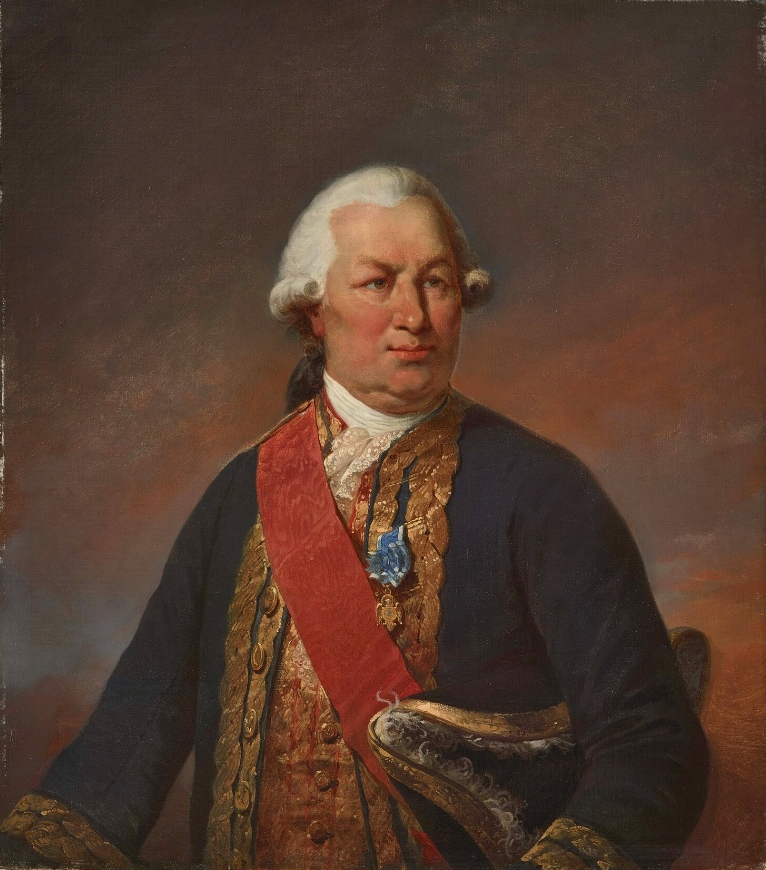
Battle of the Chesapeake
King George III did not yet know that Cornwallis had surrendered when he wrote the words: "After the knowledge of the defeat of our fleet, I nearly think the empire ruined." He was reacting to news of a naval battle fought on September 5, 1781, near the mouth of the Chesapeake Bay -- a two-hour exchange of broadsides between nineteen British ships of the line and twenty-four French vessels that had barely managed to cut their anchor lines and scramble out of the bay in time to fight. The Battle of the Chesapeake was not the bloodiest engagement of the war, nor the longest. But it was the one that mattered. By denying the Royal Navy access to the bay, the French fleet sealed Lord Cornwallis inside his fortifications at Yorktown and handed George Washington the siege he needed to end the war.
A Private Note to de Grasse
The chain of decisions that led to the battle began on May 21, 1781, at the Vernon House in Newport, Rhode Island. Generals Washington and Rochambeau met to discuss their options: attack the principal British base at New York City, or move against the British army concentrating in Virginia. Both plans required the French fleet, then operating in the West Indies. A ship was dispatched to meet Admiral de Grasse at Cap-Francais (now Cap-Haitien, Haiti). Washington favored New York; Rochambeau quietly preferred Virginia. In a private note to de Grasse, Rochambeau made his preference clear. De Grasse chose Virginia. He sailed from Cap-Francais on August 15 with his entire fleet -- twenty-eight ships of the line and 3,200 troops -- taking an unusual route outside normal shipping lanes to avoid detection. He arrived at the mouth of the Chesapeake Bay on August 30, trapping two British patrol frigates inside the bay and preventing New York from learning the full strength of his force until it was too late.
Conflicting Signals
British Rear Admiral Thomas Graves sailed south from Sandy Hook, New Jersey, with nineteen ships of the line, arriving at the Chesapeake early on September 5. He found de Grasse's fleet already at anchor. The French cut their cables and sailed out on the noon tide -- twenty-four ships forming a line in order of speed rather than normal battle formation, leaving behind officers, men, and boats who had been ashore. Hours of maneuvering followed as both fleets sailed east, away from the bay. Graves faced a tactical dilemma. He hoisted two signals simultaneously: one for "line ahead," directing ships to close the gap gradually, and one for "close action," which normally meant turn directly toward the enemy. Rear Admiral Samuel Hood, commanding the British rear squadron, interpreted the line-ahead signal as taking precedence. His squadron never fully engaged. The result was piecemeal: only the British van and center fought, while Hood's aggressive ships sat back and watched. The conflicting signals ignited a controversy between Graves and Hood that produced recriminations, formal inquiries, and debate that has persisted among naval historians ever since.
Two Hours of Broadsides
The guns opened at about four in the afternoon, more than six hours after the fleets first sighted each other. The British van, led by Admiral Francis Samuel Drake, suffered the heaviest damage. The angle of approach exposed his ships to raking fire while only their bow guns could bear on the French. Captain de Boades of the French ship Reflechi was killed in the opening broadside from Drake's Princessa, and the four ships of the French van fought what one observer described as seven or eight vessels at close quarters. Around five o'clock, the wind shifted to British disadvantage. De Grasse signaled his van to pull ahead so more of his fleet could engage, but Admiral Bougainville, locked in combat at musket range, held his position rather than risk exposing his stern. The center lines exchanged fire at longer range. The rear squadrons barely participated. By sunset, the battle was over. Graves assessed the damage that night and found five of his ships either leaking or crippled. The French, he noted, appeared to have suffered far less. Total French casualties were about 209. The British lost more men and more ships.
The Trap Closes on Yorktown
For several days after the battle, the two fleets sailed within sight of each other without re-engaging. De Grasse was playing a deliberate game: luring the British away from the bay while Admiral de Barras, carrying vital siege equipment, sailed in from Newport. On September 9, French scouts spotted Barras's fleet, and de Grasse turned back toward the Chesapeake, arriving on September 12 to find Barras already safely inside. The combined French force now numbered thirty-six ships. Graves, unaware of the junction because a frigate captain had failed to count the ships, returned to New York. In a council of war on September 13, his admirals concluded they were in "the truly lamentable state we have brought ourself" and voted against another attack. Graves did not sail again until October 19 with twenty-five ships and 7,000 troops -- two days after Cornwallis surrendered at Yorktown. The war would formally end two years later with the Treaty of Paris and British recognition of an independent United States.
A Hurricane's Hidden Hand
According to historian Eric Jay Dolin, a catastrophe the previous year may have tilted the odds before a single gun was fired at the Chesapeake. The Great Hurricane of 1780 -- perhaps the deadliest Atlantic hurricane on record -- killed an estimated 22,000 people across the Lesser Antilles and destroyed countless ships of all nations. The Royal Navy lost fifteen warships outright and nine more severely damaged. That deficit in available hulls carried into 1781, limiting the number of ships Britain could field in North American waters. Today, a monument at the Cape Henry Memorial, located at Joint Expeditionary Base Fort Story in Virginia Beach, commemorates de Grasse and his sailors. The memorial is part of the Colonial National Historical Park, maintained by the National Park Service. The waters where the fleets clashed are quiet now, crossed by cargo ships and pleasure boats entering the Chesapeake -- but the outcome of those two hours of cannon fire in September 1781 shaped the map of the world.
From the Air
The Battle of the Chesapeake took place near the mouth of the Chesapeake Bay, approximately 36.97°N, 75.54°W -- just off the Virginia Capes where the bay meets the Atlantic Ocean. From the air, Cape Henry (the southern entrance point) is clearly visible, marked by the Cape Henry Lighthouse complex. The Cape Henry Memorial at Joint Expeditionary Base Fort Story sits on the cape's northern tip. Virginia Beach stretches to the south along the coast. The Chesapeake Bay Bridge-Tunnel is a prominent visual landmark crossing the bay's mouth. Nearest airports: Norfolk International (KORF) approximately 15 nm southwest, and NAS Oceana (KNTU) about 10 nm south. Best appreciated at medium altitude where the full scope of the bay's entrance -- and the tactical challenge both fleets faced -- becomes apparent.