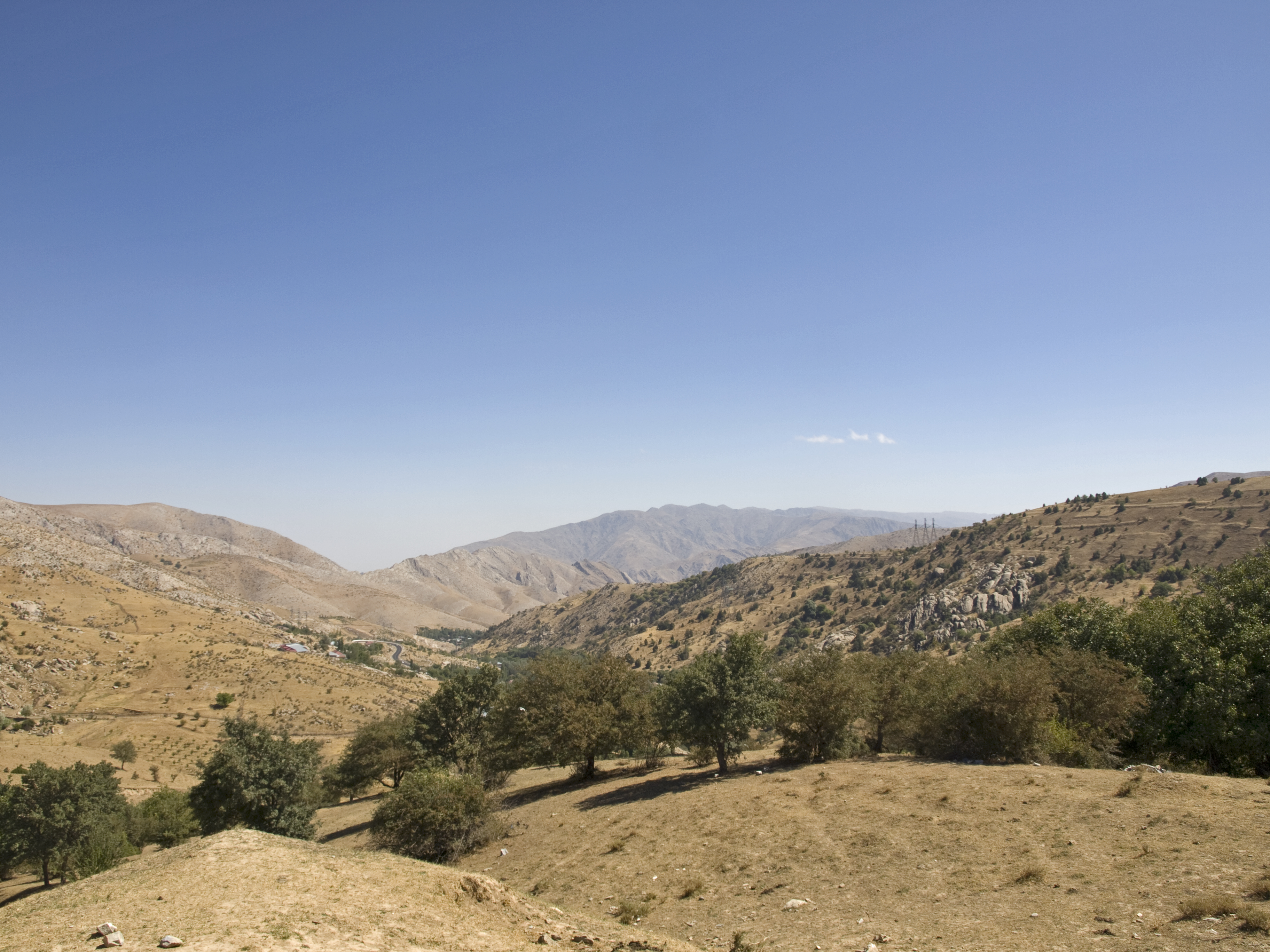
Battle of the Defile
Eighteen standard-bearers of the Azd tribe died in succession, each picking up the fallen banner of the man before him. That detail, preserved in al-Tabari's 10th-century history, captures the ferocity of what happened in the Takhtakaracha Pass in July 731 CE. A 28,000-strong Umayyad army under the governor Junayd ibn Abd al-Rahman al-Murri was marching to relieve the besieged city of Samarkand when the Turkic Tuergesh cavalry attacked them in the defile. The battle lasted three days. The Arabs survived, barely. The Tuergesh proved that the seemingly unstoppable expansion of the Caliphate had found its limit in the mountains of Central Asia.
The Road Junayd Should Not Have Taken
Junayd faced an impossible decision. Samarkand was under siege by the Tuergesh, and its commander, Sawra ibn al-Hurr al-Abani, was begging for relief. The veteran Khurasani Arab commanders advised Junayd to wait until he could assemble at least 50,000 men before crossing the Oxus River. Junayd, newly appointed and eager to prove himself, ignored them. He marched with 28,000 troops. The direct road from Bukhara to Samarkand was held by the Tuergesh, so Junayd swung south to Kish. From there, his counselors debated two routes around the Zarafshan Range. One led west through open grassland, but a Khurasani officer named al-Mujashshir warned that the Tuergesh would simply set the grass on fire. The alternative was the Takhtakaracha Pass -- steep, narrow, but short. Al-Mujashshir argued it might catch the enemy by surprise. Junayd took the gamble.
Three Days in the Pass
The Tuergesh were not surprised. Supported by troops from Sogdia, Shash, and Ferghana, they struck on a Friday while the Arab army had stopped to eat. The vanguard was overwhelmed immediately. Junayd scrambled to deploy his main force by tribal affiliation -- Tamim and Azd on the right, Rabi'ah on the left. The Arabs dug earthworks and fought the Tuergesh cavalry to a standstill through the first day. By nightfall, both sides were exhausted. The second day brought renewed Tuergesh attacks, repelled by Arab countercharges whenever the horsemen came close. The Tuergesh khagan then shifted tactics, surrounding the Arab camp in a siege. Junayd, desperate, sent messengers ordering Sawra to break out of Samarkand with 12,000 men and attack the Tuergesh from behind.
Sawra's Doomed Charge
Sawra knew it was a suicide mission. The Samarkand garrison knew it too. But Junayd's threats left no choice. Sawra led 12,000 men out of the city, crossed the mountains with a local guide, and closed to within striking distance of Junayd's camp. The Tuergesh, reportedly on the advice of the Sogdian king Ghurak, set fire to the grasslands between the two Arab forces. Sawra's officers counseled a slow infantry advance behind a spear wall -- the standard Umayyad tactic against cavalry. Sawra rejected it. His men were exhausted, thirsty, desperate. He ordered a cavalry charge straight through the Tuergesh line, hoping to break through and link up with Junayd. The charge punched through the enemy front, but smoke, dust, and flame turned the battle into chaos. The Arab force lost cohesion and was destroyed piecemeal. All but a thousand of Sawra's 12,000 men died, Sawra among them.
Pyrrhic Survival
Junayd used Sawra's sacrifice to break free of the pass. His battered army reached Samarkand, but the cost was staggering. The historian Khalid Blankinship estimates Arab losses at between 25,000 and 30,000 out of a combined force of roughly 40,000 to 48,000. Junayd himself publicly equated the outcome with the disastrous Battle of Marj Ardabil against the Khazars a year earlier. He remained in Samarkand for four months while his army recovered, then retreated to Merv, leaving only 800 men to garrison the city. The consequences rippled outward for decades. To replace his shattered army, the Caliph was forced to send 20,000 Iraqi troops to Khurasan -- soldiers notoriously hostile to Umayyad rule. The bitterness of the Khurasani Arabs, forced into "continuous, unrewarding campaigns for vainglorious generals," as Blankinship describes it, festered into the revolutionary movement that would topple the Umayyad Caliphate entirely and launch the Abbasid dynasty.
From the Air
The Battle of the Defile took place in the Takhtakaracha Pass at approximately 39.29N, 66.91E, in the Zarafshan Range of modern Uzbekistan. The pass is visible from altitude as a narrow cut through the mountain ridge between the Kashkadarya valley (south) and the Samarkand basin (north). Terrain is rugged with peaks exceeding 3,000 meters. Nearest airports: Samarkand Airport (UTSS) approximately 50 km north, Karshi Airport (UTSL) approximately 60 km southwest. Expect mountain turbulence and variable weather. The pass connects the historic cities of Shahrisabz (south) and Samarkand (north).