Battle of the Java Sea
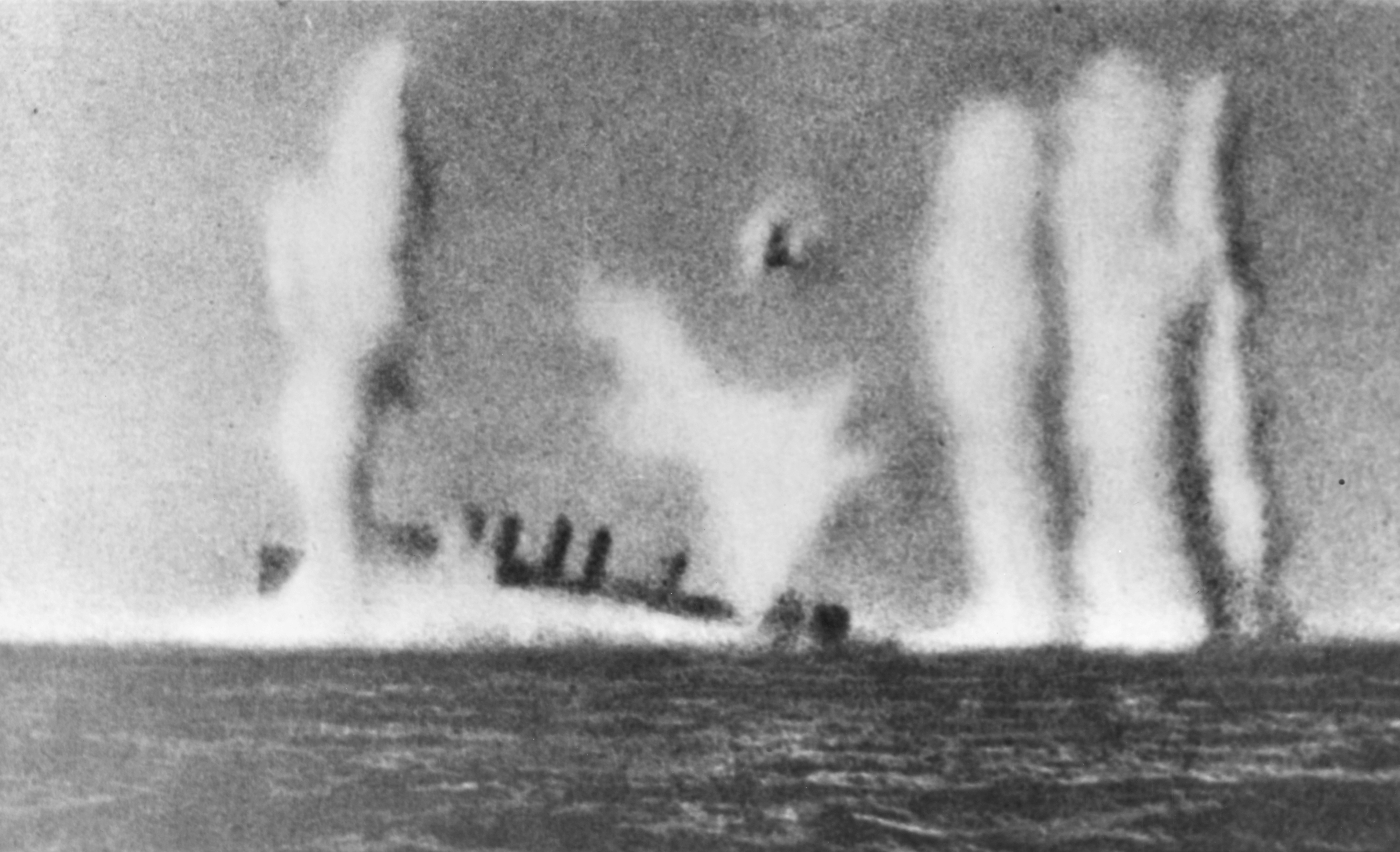
The ships that sailed from Surabaya on 27 February 1942 belonged to four different navies, spoke at least three languages, and had never trained together. Rear Admiral Karel Doorman of the Royal Netherlands Navy commanded this Combined Striking Force -- two heavy cruisers, three light cruisers, and nine destroyers flying the flags of the Netherlands, Britain, the United States, and Australia. Their mission was to intercept a Japanese invasion convoy approaching Java from the Makassar Strait. What followed was not a battle plan so much as a catastrophe of miscommunication, technological mismatch, and extraordinary courage spent against impossible odds.
A Fleet That Could Not Talk to Itself
On paper, Doorman's force looked capable. HMS Exeter, the heavy cruiser that had helped corner the Graf Spee in 1939, led the British contingent. USS Houston, a Northampton-class heavy cruiser, represented American firepower. The Dutch light cruisers De Ruyter and Java, along with the Australian light cruiser HMAS Perth, rounded out the capital ships. Nine destroyers provided the screen. But the force's weakness was invisible from the outside: it had no common tactical doctrine, no shared signal codebook, and no time to develop either. Doorman issued orders in Dutch; his British, American, and Australian captains received them through an improvised relay chain. When a Japanese floatplane spotted the allied fleet departing Surabaya, the element of surprise was lost before the battle began. Waiting for them was Rear Admiral Takeo Takagi with two heavy cruisers, two light cruisers, and fourteen destroyers -- a force that had trained together, communicated seamlessly, and carried a weapon the Allies had not yet learned to fear.
The Long Lance
That weapon was the Type 93 torpedo, known to history as the Long Lance. Japanese cruisers and destroyers carried these oxygen-fueled torpedoes, which could travel over 20 kilometers at high speed -- more than twice the range of any Allied torpedo. The Allies did not know this, and they maneuvered accordingly, believing they were safely beyond torpedo water when they were not. The battle opened in the late afternoon with an exchange of gunfire at long range. For nearly an hour, salvos traded back and forth without decisive effect. Then the heavy cruiser Haguro changed everything. Engaging HMS Exeter at 22,000 yards, Haguro scored a devastating hit: an eight-inch shell penetrated Exeter's engine room, destroying six of her eight boilers and killing 40 men. Exeter's speed dropped to five knots, and Doorman's formation shattered as Houston, Perth, and Java all turned to follow the stricken cruiser, assuming they had missed a command.
Darkness and Disaster
With Exeter crippled and withdrawing under destroyer escort, Doorman tried to regroup. British destroyers laid smokescreens while Electra charged toward the Japanese line in a close-range gunfight with the destroyer Asagumo -- an action that ended with Electra sinking and Asagumo damaged. The Dutch destroyer Kortenaer took a Long Lance torpedo and broke in half. As dusk fell, Doorman broke off the engagement and turned south, then circled back north under cover of darkness to find the Japanese convoy. It was a brave decision and a fatal one. His four remaining American destroyers, out of torpedoes, were detached to return to Surabaya. HMS Jupiter struck a Dutch mine and sank. Then, around 23:00, Japanese cruisers Nachi and Haguro found Doorman's reduced force. Torpedo spreads from Haguro and Nachi hit both De Ruyter and Java. Both Dutch cruisers sank within minutes. Karel Doorman went down with his flagship, having signaled his last order: "All ships proceed to Surabaya." Only Perth and Houston escaped the night action.
No Way Out
Perth and Houston reached the port of Tanjung Priok on 28 February, but there was no sanctuary waiting. Ordered to escape through the Sunda Strait to the south coast port of Tjilatjap, neither ship could fully rearm or refuel. Departing that evening, they stumbled by chance into the main Japanese invasion fleet for West Java in Bantam Bay. What followed was a chaotic night action against overwhelming force. Japanese heavy cruisers Mogami and Mikuma, supported by a light cruiser and multiple destroyers, closed in from all sides. Houston absorbed 30 shell hits and two torpedo strikes before sinking. Perth, dueling the destroyer Harukaze at close range, took a torpedo that destroyed her forward engine room and eventually capsized and sank. HMS Exeter, attempting her own escape the following day, was caught and sunk along with destroyers Encounter and USS Pope. The Battle of the Java Sea was over. Of Doorman's original force, only four American destroyers survived by reaching Australia.
What the Sea Took
The Allied losses were staggering: two heavy cruisers, three light cruisers, and five destroyers sunk, with over 2,100 sailors killed. Karel Doorman became a national hero in the Netherlands, his name given to the Dutch navy's flagship for decades afterward. The battle ended Allied naval resistance in Southeast Asian waters and cleared the way for Japan's conquest of Java, completing the fall of the Dutch East Indies. The Java Sea became a graveyard. In 2016, divers discovered that the wrecks of De Ruyter, Java, and Kortenaer had been illegally salvaged -- their steel stripped from the seabed by commercial scrappers. The Dutch government called it a desecration of war graves. For the sailors of four nations who died here, the Java Sea was both battlefield and tomb. That even the wrecks could not rest undisturbed adds a bitter coda to a battle defined by what its participants lacked: time, coordination, and any margin for error.
From the Air
The Battle of the Java Sea took place across a wide area of the Java Sea, centered approximately at 5.00S, 111.00E, north of the island of Java. From cruising altitude, the Java Sea appears as open water between Java to the south and Borneo (Kalimantan) to the north. Juanda International Airport (WARR) at Surabaya, from which Doorman's fleet departed, lies on Java's northeastern coast. The Sunda Strait, where Perth and Houston were lost, is visible to the west between Java and Sumatra. The Makassar Strait to the northeast was the Japanese approach route. No surface features mark the battle site, but the geographic chokepoints that shaped the engagement remain clearly visible.