Battle of the Lys (1918)
On April 11, 1918, Field Marshal Douglas Haig issued an order that would echo through history: "With our backs to the wall and believing in the justice of our cause, each one of us must fight on to the end." The British Expeditionary Force was reeling. German forces had smashed through the lines along the Lys River in Flanders, threatening to cut off British armies from their lifeline to the sea. What began as Operation Georgette, a scaled-down version of a grander German plan, had become an existential crisis for the Allied cause.
The Gambler's Opening Move
General Erich Ludendorff had chosen his target with cold precision. The front line near the Lys River, running from east of Ypres in Belgium to Bethune in France, was held by exhausted and undermanned formations, including two divisions of the Portuguese Expeditionary Corps already scheduled for replacement. The Portuguese Second Division, lacking nearly half its officers and suffering from low morale, held a crucial section of the line when the German bombardment opened on the evening of April 7, 1918. By dawn on April 9, eight German divisions, spearheaded by elite stosstruppen trained in infiltration tactics, struck with devastating effect. The Portuguese were overrun. The German advance punched through ten miles of front and drove forward nearly five miles on the first day.
Twenty-Two Days of Crisis
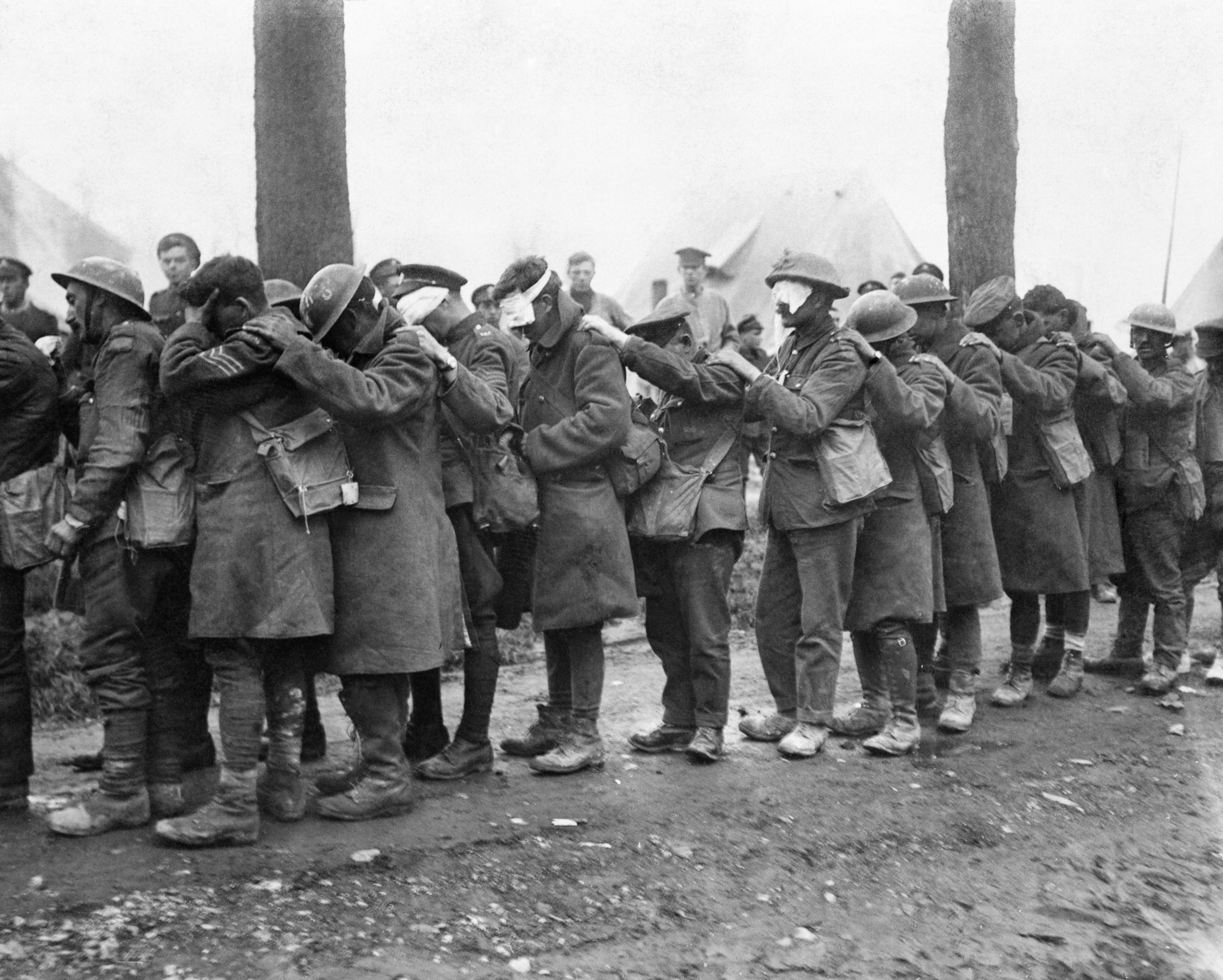
The fighting unfolded across the sodden Flanders landscape in a cascade of named engagements. Estaires fell on April 9. Armentieres was captured on April 10. At Messines that same day, British troops blinded by poison gas stumbled through a nightmare as German forces broke through the line. Hazebrouck, a vital supply center, came under direct threat. The First Australian Division arrived on April 13 to halt the German advance at Merville. Yet the crisis deepened. By mid-April, General Herbert Plumer ordered the abandonment of the hard-won Passchendaele salient, giving up ground purchased with hundreds of thousands of casualties the previous year. The Kemmelberg, a commanding height between Armentieres and Ypres, fell to a surprise German attack on April 25.
The Tide Refuses to Turn
Ludendorff's objective had been audacious: capture Ypres, push the British back to the Channel ports, and knock them out of the war. At its deepest, the German penetration reached nearly twelve miles. But Hazebrouck never fell. French reinforcements under the newly appointed supreme Allied commander, Ferdinand Foch, began arriving in late April. The German stosstruppen, those elite shock troops who had led the breakthrough, suffered irreplaceable casualties. By April 29, the German high command recognized that their objectives were beyond reach. The offensive was called off. The Belgians had repulsed attacks from Houthulst Forest. The British lines, though bent, had not broken.
The Price of Survival
The casualty figures from those April weeks remain contested by historians. British official records suggest roughly comparable losses for both sides during the battle, though total casualties since the Spring Offensive began on March 21 ran into the hundreds of thousands. Among the fallen was Manfred von Richthofen, the Red Baron, Germany's greatest ace, killed in action during the battle. The human cost was staggering on both sides, but the strategic calculus had shifted decisively against Germany. The Channel ports remained in Allied hands. The BEF, though mauled, remained intact. Ludendorff had spent his best troops in a gamble that yielded territory but not victory.
The Turning Point Disguised
What seemed like near-catastrophe for the Allies in April 1918 would prove to be the beginning of the end for Imperial Germany. The Spring Offensive had created salients that were difficult to supply and defend. The German army had exhausted its strategic reserves of trained assault troops. When the Allies launched their Hundred Days Offensive in August, they would push through these overextended German lines toward final victory. The Flanders fields that witnessed such desperate fighting in April would see the war's end by November. Haig's order to fight with backs to the wall had been more than rhetoric; it had defined the moment when Germany's last chance for victory slipped away.
From the Air
Located at 50.71N, 2.90E in the Flanders region of Belgium and northern France. The battlefield stretches from Ypres in the north to Bethune in the south along the Lys River valley. Visible landmarks include the modern town of Armentieres and the Kemmelberg hill. Nearby airports include Kortrijk-Wevelgem (EBKT) approximately 20nm northeast. Best viewed at 3,000-5,000 feet AGL to appreciate the flat terrain that made this area so difficult to defend.