Battle of the Menin Road Ridge
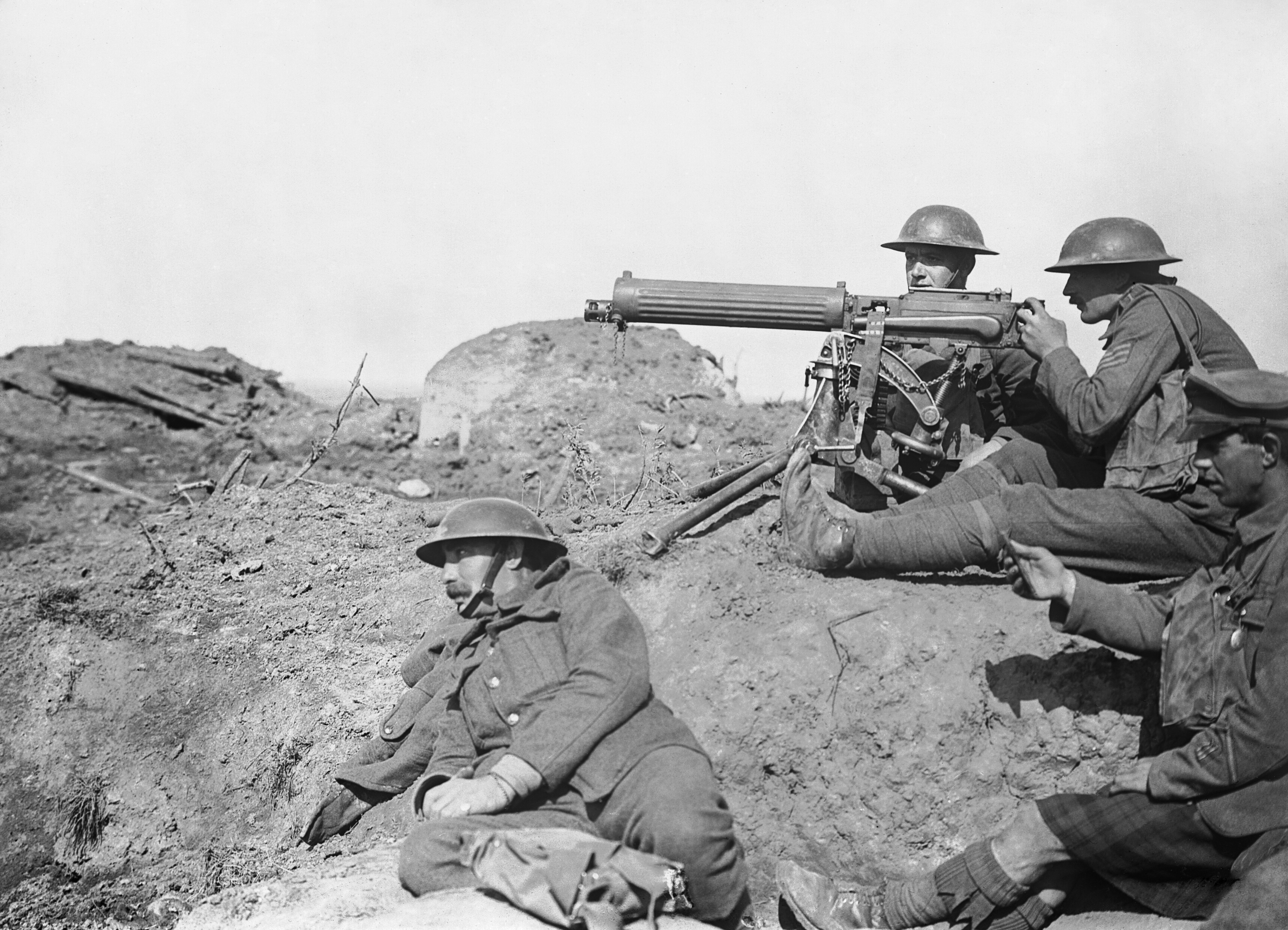
After the disasters of August 1917, when rain and German counter-attacks had clawed back nearly everything the British won on the Gheluvelt Plateau, something had to change. The Third Battle of Ypres had stalled in a quagmire of mud and blood. But on September 20th, 1917, the British Second Army demonstrated a new approach: the leap-frog method, with limited objectives, overwhelming artillery, and defenses prepared to defeat the inevitable German counter-attacks. The Battle of the Menin Road Ridge would become the template for the victories that followed.
The Lessons Written in Blood
The attacks of August had revealed a pattern. British troops could capture German positions, but they could not hold them. The German defensive system placed much of its strength not in the front lines but in counter-attack divisions held back specifically to retake lost ground. By the time exhausted British infantry had advanced to their objectives, disorganized and spread thin, fresh German troops would strike. Without prepared defenses and coordinated artillery support, the attackers became the vulnerable ones. General Herbert Plumer, commanding the Second Army, understood the solution: advance only as far as you can defend. Set objectives on reverse slopes where you can dig in before German observers can see you. Bring overwhelming firepower, then stop and prepare to receive the counter-attack as if it were the main assault.
A Plateau Drowning in Metal
The Gheluvelt Plateau east of Ypres had become the critical terrain. Whoever held it could observe the other's rear areas. The British massed artillery on a scale not seen before: one gun for every few yards of front on the assault sectors. Ammunition had been stockpiled throughout the pause in major operations since late August. Field artillery, medium guns, heavy howitzers, and Vickers machine guns firing overhead would combine to create a curtain of destruction advancing at a pace the infantry could follow. Counter-battery fire targeted German artillery positions. Practice barrages were fired daily so gunners could refine their techniques. The Germans knew an attack was coming. They did not know when, or with what intensity.
Skirmishers and Swarmers
The infantry tactics had evolved as well. Gone were the dense waves of men walking into machine gun fire. The new formations called for lines of skirmishers, spread wide, followed by small groups ready to flow around strong points. Dedicated mop-up parties would ensure that bypassed Germans could not emerge from dugouts and pillboxes to fire into the backs of advancing troops. Each unit kept reserves close: brigades held back battalions, battalions kept companies, companies retained platoons. Every level was prepared to exploit success or reinforce against setback. Most crucially, every unit was trained to establish defensive positions immediately upon reaching objectives, expecting the counter-attack that would surely come.
The Morning of September 20th
At 5:40 AM, the barrage fell. The advance followed on a front stretching from near Polygon Wood in the south to beyond Langemarck in the north. The Australian 1st and 2nd Divisions, attacking in the center, encountered stubborn resistance from German pillboxes but systematically reduced them with the new tactics: smoke to blind the occupants, flanking movements by small groups, then grenades through the firing slits. By mid-morning, most objectives had been taken. The troops immediately began digging in, establishing fields of fire, positioning machine guns to cover the approaches from the east. They did not pursue the retreating Germans. They waited.
The Counter-Attacks That Broke
Throughout the afternoon and into the following days, the German counter-attack divisions advanced. The 236th Division, the 3rd Reserve Division, the 50th Reserve Division, and others pushed forward according to doctrine, expecting to find disorganized attackers ripe for ejection. Instead they met prepared positions, coordinated artillery fire directed by observers who could see them coming, and infantry ready with rifles and machine guns. The counter-attacks failed, and failed again. By September 25th, the British had consolidated a line averaging nearly a mile beyond their starting positions, and held it. German casualties were severe among both the defending divisions and the counter-attack forces. Wolfgang Foerster, editor of the German official history, would later write of the "weights and pressures" of this battle that strained German defensive capabilities. The methods proven at Menin Road would be repeated at Polygon Wood on September 26th and Broodseinde on October 4th, a sequence of blows that pushed German commanders to the edge of despair.
From the Air
Located at 50.93N, 3.014E on the Gheluvelt Plateau east of Ypres (Ieper), West Flanders, Belgium. The Menin Road (N8) still runs from Ypres toward Menen as it did in 1917, providing a clear ground reference. The plateau rises gently from the Ypres basin, and from altitude the pattern of Commonwealth War Graves Commission cemeteries marks the extent of the fighting. Key landmarks include Polygon Wood to the south, Zonnebeke to the northeast, and the Passchendaele ridge beyond. Nearest airports: Kortrijk-Wevelgem (EBKT) 18km south, Ostend-Bruges International (EBOS) 38km northwest.