Battle of the Persian Gate: Persia's Thermopylae
Alexander the Great had conquered everything in his path for four years. Granicus, Issus, Gaugamela -- each battle a decisive Macedonian victory, each defeat another crack in the Achaemenid Empire. By the winter of 330 BC, he had taken Babylon and Susa and was marching toward Persepolis, the ceremonial heart of the Persian world and home to the largest concentration of wealth on earth. Between him and that treasure stood a narrow mountain pass in the Zagros range, a gap only a few meters wide at its tightest point. Here, a Persian commander named Ariobarzanes was waiting. For an entire month, with a force that may have numbered no more than a few thousand, Ariobarzanes stopped Alexander cold.
The Trap in the Mountains
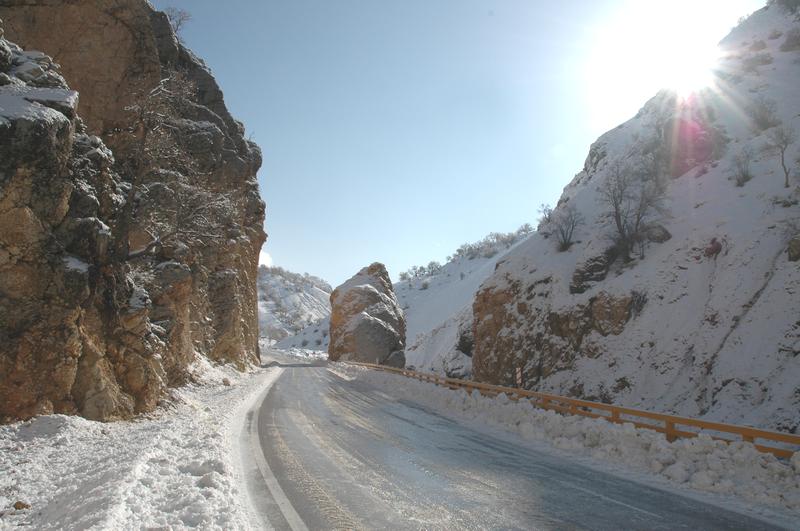
Alexander split his army after taking Susa. His general Parmenion took half the force along the Royal Road, the safer route. Alexander chose the direct path into Persis, through the Persian Gates. He had just subdued the Uxii hill people, who had demanded tribute for safe passage, and he met no resistance as he entered the pass. Confidence turned to carelessness. He sent no scouts ahead. The valley leading to the Persian Gate is wide at first, and the Macedonians marched in at full speed. Near the modern village of Cheshmeh Chenar, the road curves southeast and narrows sharply. Ariobarzanes had chosen his ground perfectly. The Persians waited on the slopes above.
Boulders and Arrows
Once the Macedonians pushed deep enough into the pass, the ambush began. From the northern slopes, Persian soldiers rolled boulders down onto the column below. From the southern ridge, archers loosed volleys into the packed formation. Entire platoons were destroyed at once. The Macedonians tried to retreat, but their own rear guard was still advancing into the narrows, blocking any orderly withdrawal. Alexander was forced to abandon his dead on the field, a profound disgrace in Greek military culture, where the recovery and proper burial of fallen soldiers was considered a sacred obligation. Some historians believe this engagement cost Alexander his heaviest casualties in the entire Persian campaign.
A Month of Defiance
Ariobarzanes held the pass for roughly thirty days. He had reason to hope the stand could change the war. If Alexander could not break through, he would be forced onto longer alternate routes through the Zagros, buying time for King Darius III to raise a new army at Ecbatana. But Alexander found a way around. Ancient sources disagree on exactly how. Curtius and Arrian say captured prisoners of war revealed a mountain path that led behind the Persian position. Other accounts credit a local shepherd. Either way, Alexander left a token force under Craterus at the main camp and led his elite troops on a flanking march through the mountains. With Ptolemy and Perdiccas, he struck from above in a surprise attack.
The Last Charge
When the Persians realized they were surrounded, the fighting turned desperate. Ancient sources describe Persian soldiers, disarmed and cornered, seizing Macedonian soldiers in their arms, dragging them to the ground, and stabbing them with their own weapons. Ariobarzanes and his surviving companions refused to surrender. According to one account, they charged directly into the Macedonian lines and died fighting. Arrian's version is different: Ariobarzanes escaped north and eventually surrendered. A third account, from historian J. Prevas, claims Ariobarzanes retreated to Persepolis only to find the city gates shut against him by Tiridates, the treasury guardian who had already been in secret contact with Alexander.
What Fell With the Gate
Ancient and modern writers have recognized the parallel with Thermopylae. In 480 BC, a small Greek force held a narrow pass against a vastly larger Persian army. At the Persian Gate, 150 years later, the roles reversed. A small Persian force held a narrow pass against the Macedonian invaders. Like Thermopylae, the pass eventually fell. With Ariobarzanes defeated, nothing stood between Alexander and Persepolis. He seized the treasury, the richest in the ancient world. Four months later, he allowed his soldiers to loot the city, kill its men, and enslave its women. Then he ordered the great terrace of Persepolis burned. Whether this was calculated revenge for the Persian burning of the Athenian Acropolis, a drunken impulse, or political frustration remains debated. What is certain is that the last military defense of the Achaemenid heartland ended here, in a cold mountain pass, among the boulders Ariobarzanes had rolled down upon the world's most famous conqueror.
From the Air
Located at 30.71N, 51.60E in the Zagros Mountains of western Iran, in modern Kohgiluyeh and Boyer-Ahmad Province near the Fars Province border. The Persian Gate is a narrow mountain pass visible from altitude as a sharp constriction in the valley near the village of Cheshmeh Chenar. The terrain is rugged Zagros range with elevations exceeding 2,000 meters. Persepolis lies approximately 80 km to the southeast. The nearest major airport is Shiraz International Airport (OISS), about 150 km to the south-southeast. Winter conditions can bring snow and reduced visibility to the pass area.