Battle of the Pinal Mountains
Captain Pablo Romero never received his royal commission. In mid-June 1788, deep in the Pinal Mountains of what would one day become Arizona, Romero led 208 Sonoran troops against Apache warriors defending their homeland. The engagement would be counted as a Spanish victory - six Apache warriors killed, captives taken, two Pima prisoners recovered. But within days of his triumph, as he rode to Arizpe to report his success, Apache fighters caught Romero on the hill of San Borja and exacted their revenge. The King of Spain had already signed the commission granting him 2,400 pesos in salary. The captain left behind a widow, Dona Luisa Bojorquez, and at least two sons.
The Sweep Across Apacheria
The expedition began on May 31, 1788, as Captain Romero departed with his Sonoran forces on a punitive sweep through Apache territory. For nearly a month, his troops moved through the rugged mountains and desert valleys of Apacheria - the vast homeland of the Apache people that stretched across present-day Arizona, New Mexico, and northern Mexico. By the campaign's end on June 24, Romero's men had killed eleven Apache warriors along with four women and children. Thirty-four Apache men, women, and children were captured. Among the dead was a chieftain named Quilcho. The expedition also recovered two Pima captives from Tucson and eleven animals. Romero lost two men. By the brutal arithmetic of colonial warfare, it was a successful expedition.
Ambush in the Mountains
The campaign's defining moment came in the Pinal Mountains, a rugged range rising from the desert floor in what is now east-central Arizona. Ensign Jose Moraga, leading about ten men from the pack-train escort, decided to scout ahead of the main column. Riding through the mountain terrain, his small force spotted an Apache rancheria - a settlement protected, according to Spanish accounts, by 'no more than 100 enemies.' Moraga ordered an attack. In the fighting that followed, he killed one Apache warrior himself in hand-to-hand combat. Captain Romero, commanding the main force, heard the gunfire echoing through the mountains and raced to the scene, arriving as the skirmishing wound down. When the smoke cleared, six Apache warriors lay dead. The Spanish had lost one man.
A Captain's Reward
After the campaign ended, Romero immediately departed to report his success to the commandant of arms in Arizpe, the colonial capital of Sonora. His report evidently impressed the Spanish authorities. Word traveled across the Atlantic to the court of King Charles III, who granted Romero a commission and an annual salary of 2,400 pesos - a substantial sum that recognized his service in pacifying the frontier. But Romero would never learn of his reward. On June 30, 1788, barely a week after his campaign ended, a band of Apache warriors intercepted him on the hill of San Borja, somewhere between Sonora and the mining town of Bacoachi. They killed him there, perhaps in retaliation for the Pinal Mountains battle, perhaps simply because a Spanish captain made a valuable target.
Forgotten Frontiers
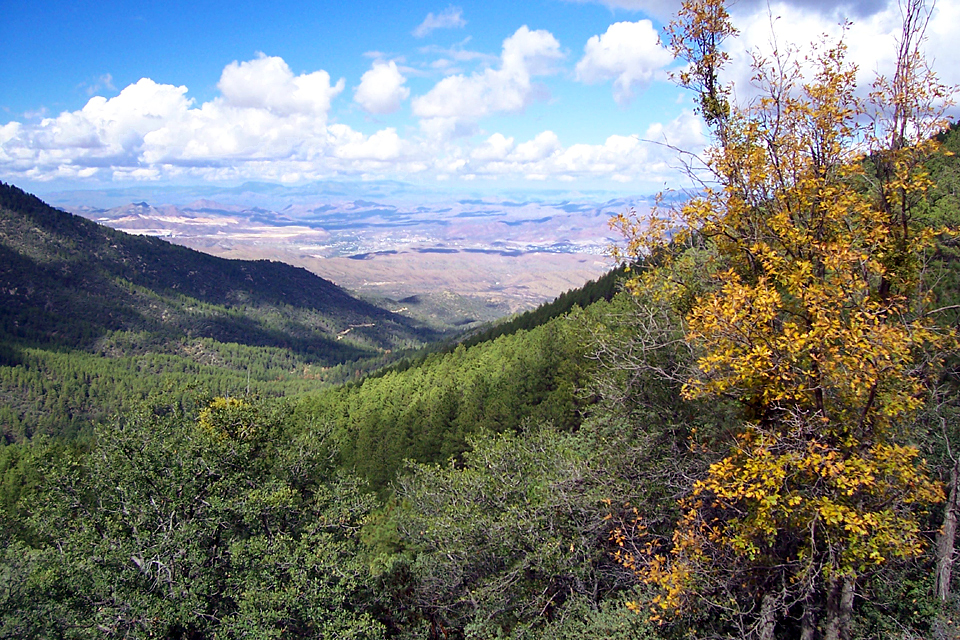
The Battle of the Pinal Mountains was one of countless small engagements in a conflict that would span three centuries. Spanish, Mexican, and eventually American forces all fought the Apache peoples for control of the Southwest. The Apache Wars would not truly end until Geronimo's surrender in 1886, nearly a century after Romero's expedition. Today, the Pinal Mountains remain a rugged wilderness northeast of Superior, Arizona, their steep canyons and pine forests little changed from the day Moraga's scouts spotted that distant rancheria. No monument marks the battle site. The only record of Captain Pablo Romero's final campaign comes from Spanish colonial archives and the widow he left behind - Dona Luisa Bojorquez, who never received her husband's promised salary.
From the Air
The Pinal Mountains lie at approximately 33.28°N, 110.82°W in east-central Arizona, northeast of Superior. The range reaches elevations above 7,800 feet, with Signal Peak as its highest point. From the air, the mountains appear as a forested island rising from the surrounding Sonoran Desert. Look for the dramatic elevation change from desert scrub to ponderosa pine. Phoenix-Mesa Gateway Airport (KIWA) lies 45 nautical miles to the west. The terrain is rugged with limited emergency landing options - maintain adequate altitude when crossing this area.