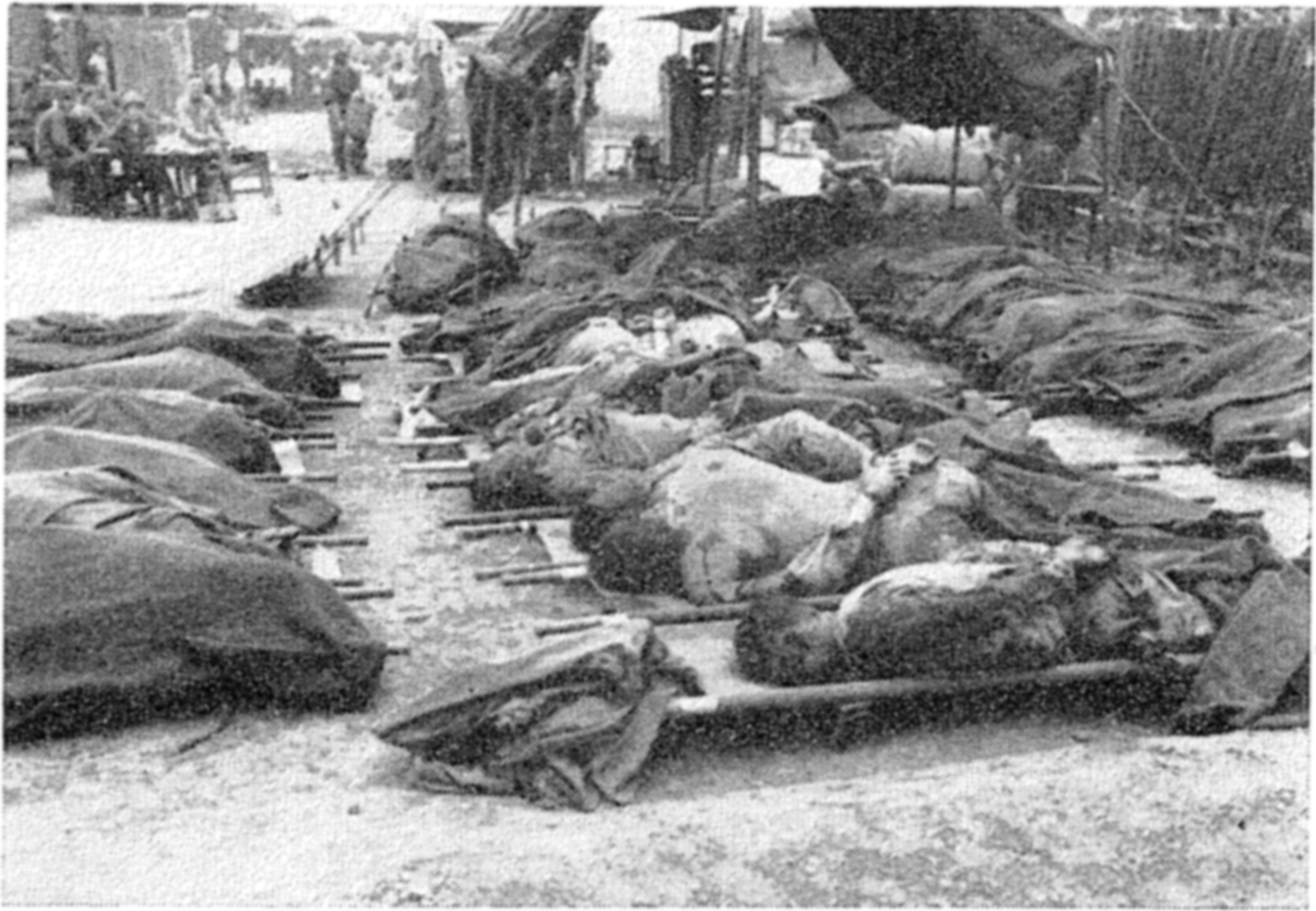
Battle of the Pusan Perimeter
By early August 1950, the Korean War was six weeks old and nearly over. North Korean forces had swept south with stunning speed, capturing Seoul in three days and pushing the remnants of the South Korean army and their hastily deployed American allies into a shrinking pocket around the port city of Busan. What followed was one of the twentieth century's great defensive stands -- six weeks of unrelenting combat along a 140-mile perimeter that would determine whether South Korea survived at all.
Backs to the Sea
The Pusan Perimeter was not a planned defensive position so much as the place where retreat finally stopped. To the west, the Naktong River provided a natural barrier -- about 1,300 feet wide and six feet deep in most places, fordable by infantry but impassable for vehicles without bridges. To the north, the rugged mountains above Waegwan and Andong created terrain so difficult that movement through it was nearly impossible. To the south and east lay the Sea of Japan. Inside this rectangle, 140,000 UN troops -- Americans, South Koreans, and a growing contingent of British Commonwealth forces -- faced 98,000 soldiers of the Korean People's Army. The summer of 1950 brought a severe drought to the region, with only five inches of rain instead of the usual twenty, and temperatures reaching 105 degrees Fahrenheit. The unconditioned American troops suffered heavily from heat casualties in a landscape stripped of shade and clean water.
Holding the Line at Every Point
The North Korean strategy was to attack all four entry points into the perimeter simultaneously. In the south, they probed the pass through Masan. In the west, they crossed the Naktong at its great westward bend in an area known as the Naktong Bulge. In the north, they drove toward the critical city of Daegu. In the east, three divisions pushed through the mountains toward the coastal town of Pohang-dong and its vital airfield. Each axis of attack became its own brutal campaign. At the Naktong Bulge, 800 North Korean soldiers waded across the river on the night of August 5, carrying weapons above their heads, and nearly split the American lines before the 1st Marine Provisional Brigade counterattacked and destroyed the North Korean 4th Division in savage fighting around Cloverleaf Hill and Obong-ni. In the east, the battle for Pohang-dong seesawed for weeks as Korean and American units fought North Korean infiltrators in the mountains, with the ROK 3rd Division at one point surrounded and evacuated by sea.
The Lifeline and the Stranglehold
What ultimately decided the battle was logistics. Busan's port was the UN's lifeline, and it functioned brilliantly. Hundreds of ships arrived each month -- 230 in July, steadily increasing thereafter -- bringing tanks, artillery, ammunition, and fresh troops. A supply system modeled on World War II's Red Ball Express rushed material from the docks to the front lines. By contrast, the North Korean supply chain was collapsing. UN air superiority forced the KPA to move supplies only at night, relying on railroads, ox carts, and porters on foot. Trucks were desperately scarce. By September, North Korean soldiers at the front were eating one or two meals a day at best, scavenging from the civilian population, and showing visible loss of stamina. Their ammunition arrived in ever-smaller quantities. The Fifth Air Force's bombing campaign against bridges and rail yards north of the 37th parallel had not completely severed the enemy's supply lines, but it had bled them to the point of crisis.
Breakout
While Walker's Eighth Army held the perimeter, General MacArthur planned the stroke that would end the siege. On September 15, UN forces launched an amphibious assault at Inchon, far behind the North Korean lines. The following day, the Eighth Army broke out of the perimeter. The effect was catastrophic for the KPA. Cut off from their supply lines and facing a two-front war, North Korean divisions that had battered the perimeter for six weeks simply disintegrated. The army that had nearly conquered South Korea retreated in disorder, abandoning equipment and prisoners as it fled north. The Pusan Perimeter marked the farthest the North Korean army would ever advance. From here, the war would grind into years of stalemate along the 38th parallel -- but the question of whether South Korea would exist at all had been answered in the drought-scorched hills around Busan.
From the Air
The Pusan Perimeter encompassed the southeastern tip of South Korea, centered around modern-day Busan at 35.10N, 129.04E. The Naktong River, which formed the western boundary, is visible from altitude as a wide watercourse curving past Daegu. Gimhae International Airport (RKPK) sits within the former perimeter. Key battle sites include the Naktong Bulge area west of Miryang, the approaches to Daegu (RKTN), and the Pohang area (RKTH) to the northeast. Best viewed at 10,000-15,000 ft to appreciate the full scale of the 140-mile defensive line.