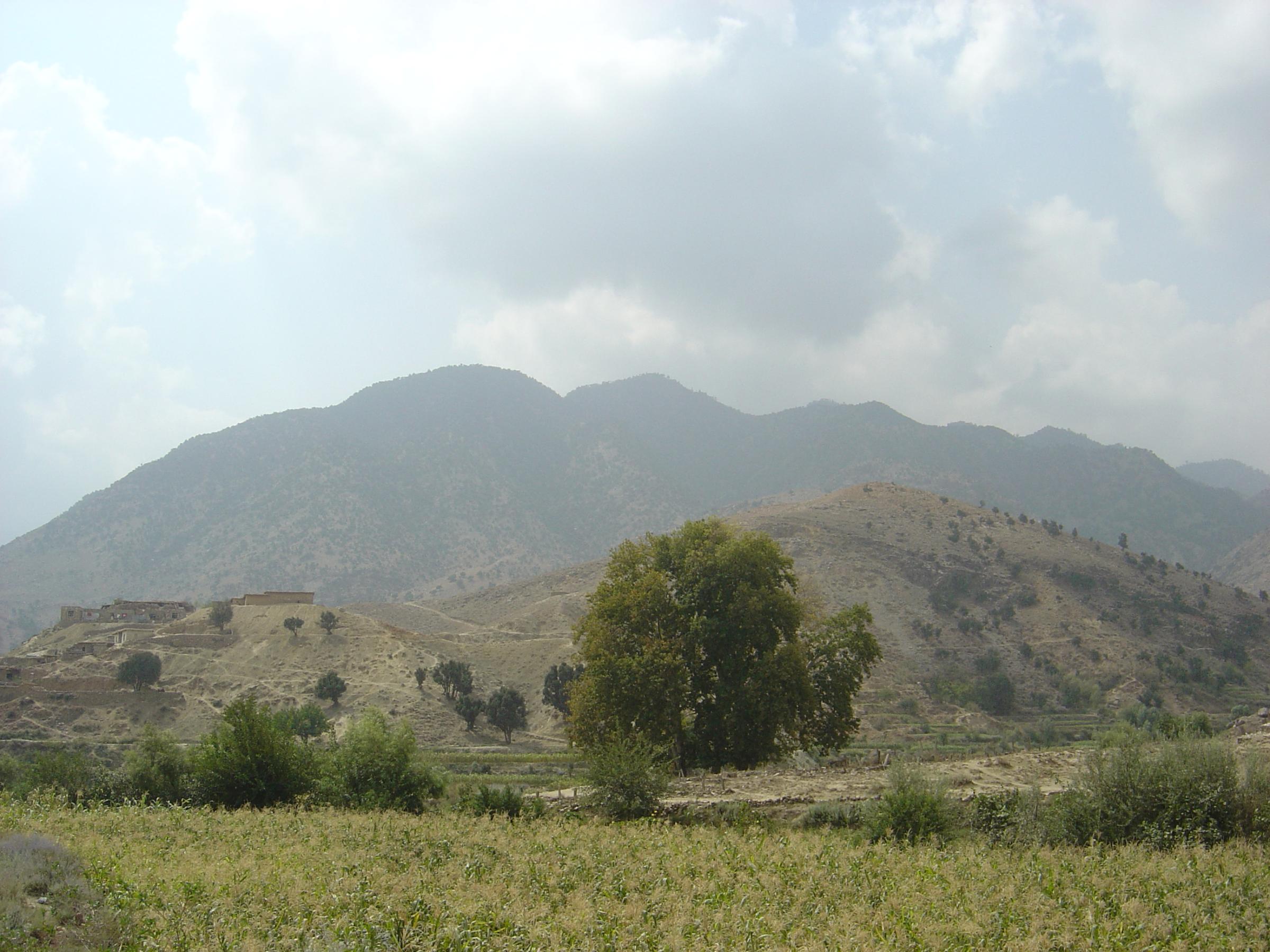
Battle of Tora Bora
The name means 'Black Cave' in Pashto, and it fits. Tora Bora is a labyrinth of natural and man-made tunnels bored into the Spin Ghar mountains of eastern Afghanistan, near the Pakistani border. During the 1980s, CIA officers helped mujahideen fighters extend and fortify these caves for use against the Soviets. Two decades later, in December 2001, the United States found itself trying to root out a different enemy from the same tunnels it had helped build. Osama bin Laden was inside, surrounded by several hundred al-Qaeda fighters -- and for 18 days, a small force of American special operators, CIA agents, and unreliable Afghan militias tried to get him out. They failed.
Closing the Trap
By late November 2001, the Taliban had lost Kabul to the Northern Alliance and U.S.-backed forces. Bin Laden, spotted near Jalalabad on November 10 traveling in a convoy of 200 pickup trucks, headed for Tora Bora -- the mountain redoubt where he had fought the Soviets during the Battle of Jaji in 1987. On November 29, Vice President Dick Cheney publicly confirmed that bin Laden was believed to be in the area, surrounded by loyal fighters. The next day, a coalition of U.S. Special Forces, Joint Special Operations Command soldiers, and a CIA detachment codenamed 'Jawbreaker' -- led by officer Gary Berntsen -- linked up with Afghan tribal militias and began calling in airstrikes on al-Qaeda positions. The aerial bombardment was devastating. It included BLU-82 'daisy cutter' bombs, some of the largest conventional weapons in the American arsenal. British SBS commandos and German KSK special forces also joined the assault.
The Request That Was Denied
On December 1, Gary Berntsen made a request that would haunt the campaign for years. He asked General Tommy Franks to deploy a battalion of 800 Army Rangers to block the mountain passes leading into Pakistan and seal off bin Laden's escape routes. Franks denied the request. The Bush administration argued that Pakistani forces on the other side of the border would catch bin Laden if he tried to flee. Berntsen, who was on the ground and could see how the battle was unfolding, would later call this the critical failure -- the moment the war on terror's most wanted target was allowed a way out. The decision to rely on Afghan tribal militias as the primary ground force compounded the problem. The two principal Afghan commanders, Hazrat Ali and Mohammed Zaman, distrusted each other so deeply that their factions sometimes fired on one another instead of the enemy. Because the battle fell during Ramadan, the Afghan fighters left the mountains each evening to break their fast, abandoning positions that al-Qaeda immediately reoccupied.
Eighteen Days on the Mountain
On December 8, a Delta Force team led by Major Tom Greer -- who later wrote under the pen name Dalton Fury -- arrived at Tora Bora. They wore traditional Afghan clothing, had grown bushy beards, and carried the same weapons as the local fighters. Greer proposed attacking bin Laden's suspected position from the rear, over a 14,000-foot mountain ridge separating Tora Bora from Pakistan. Higher headquarters rejected the plan. He then suggested dropping GATOR mines in the escape passes. Also denied. On December 12, al-Qaeda negotiated a ceasefire with a local militia commander, ostensibly to surrender weapons. Berntsen was furious -- he grabbed his phone and screamed, 'No cease-fire! No negotiation! We continue airstrikes!' The Americans honored the truce only partially, bombing al-Qaeda positions hours before it was set to expire. That afternoon, Greer's team intercepted bin Laden's radio transmissions. His final words to his fighters that night: 'I'm sorry for getting you involved in this battle. If you can no longer resist, you may surrender with my blessing.'
The Escape
Bin Laden is conventionally believed to have left Tora Bora around December 15, 2001, though accounts diverge. Journalist Peter Bergen wrote that bin Laden slipped out during the December 12 ceasefire, riding north on horseback to the forested mountains of Kunar Province -- a place so remote it did not appear on any maps. Delta operators reported seeing Pakistani military Mi-17 helicopters making quick landings on the Afghan side of the border, raising suspicions of outside assistance. By December 17, the last cave complex had fallen. About 200 al-Qaeda fighters were estimated killed; roughly 60 were captured. No coalition fatalities were reported. But bin Laden was gone. He would not surface again until 2004, when a video appeared on Al Jazeera. The Pentagon did not publicly acknowledge that bin Laden had been at Tora Bora until the spring of 2005, when it released a document confirming what Berntsen and others had been saying for years. The al-Qaeda leader was not found and killed until May 2, 2011, in Abbottabad, Pakistan -- nearly a decade after the night he vanished from the Black Cave.
From the Air
Located at 34.117N, 70.217E in the Spin Ghar mountain range of eastern Afghanistan, near the Pakistani border and the Khyber Pass. The cave complex sits at high elevation in extremely rugged terrain. Nearest significant airport is Jalalabad Airport (OAJL). The White Mountains rise above 14,000 feet in this area; maintain safe altitude above the ridgeline. Mountain weather is unpredictable with severe turbulence possible near the passes.