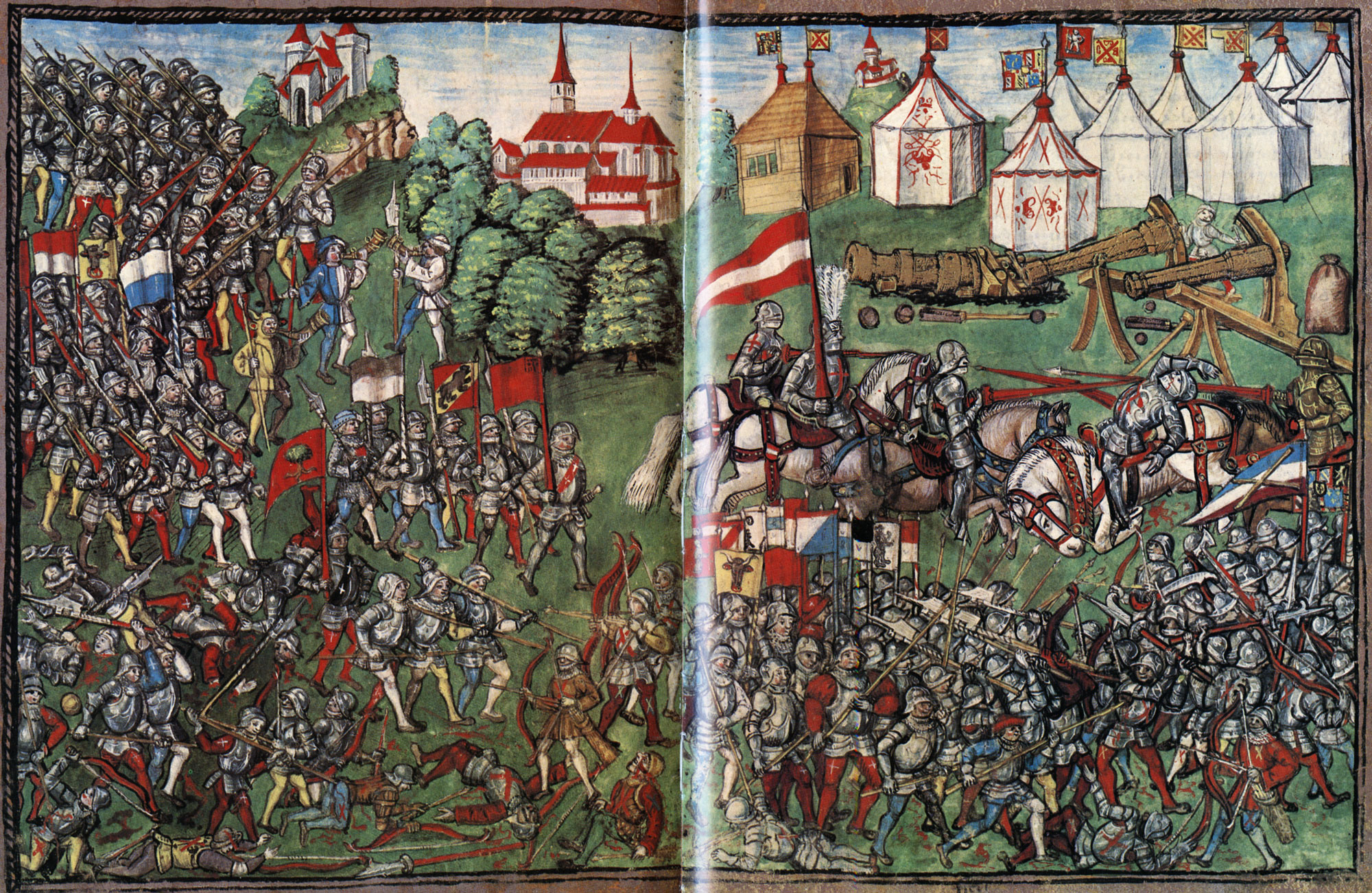
Battle of Toro
Both sides claimed victory, and both had reason to. On the evening of 1 March 1476, near the city of Toro on the windswept Castilian plateau, two armies fought to a draw that changed the course of European history. The Castilian-Aragonese forces of Ferdinand and Isabella battered the Portuguese center and left, while Prince John of Portugal routed Ferdinand's right wing and held the field. Militarily, it was a stalemate. Politically, it was the moment that made Isabella queen of Castile -- and set in motion the unification of Spain.
A Kingdom Without a Clear Heir
The death of Henry IV of Castile in 1474 opened a succession crisis that divided the kingdom. On one side stood Isabella, the king's half-sister, supported by most of Castile's nobility, clergy, and urban elites. On the other stood Juana de Trastamara, the king's daughter, whose paternity was widely questioned -- she was nicknamed 'la Beltraneja' after the courtier many believed was her true father. King Afonso V of Portugal intervened on behalf of his niece Juana, marrying her and invading Castile with the aim of uniting the two crowns. What had been a Castilian family dispute became an Iberian war, with the future of the entire peninsula hanging on the outcome.
The Armies at Toro
Ferdinand's Castilian-Aragonese army arrayed itself in three divisions. The center, under Ferdinand himself, comprised his royal guard and militia forces from cities like Zamora, Ciudad Rodrigo, and Valladolid. The right wing fielded six divisions of light cavalry. The left wing, the strongest formation, was commanded by the Duke of Alba and Cardinal Mendoza -- two of the most capable military leaders in Castile. Across the field, Afonso V led the Portuguese center and left, while his son Prince John, a gifted young commander, took the right with his elite knights, arquebusiers, and javelin throwers. The armies were roughly comparable in size, though the Portuguese held an advantage in the quality of their right-wing cavalry.
A Split Decision
The battle unfolded as two separate engagements. On the Portuguese right, Prince John's forces smashed into Ferdinand's right wing with devastating effect. The Castilian light cavalry broke and fled, pursued by the Portuguese across the darkening plain. Prince John, displaying the tactical discipline that would later earn him the epithet 'the Perfect Prince,' halted his men rather than let them scatter in pursuit. Meanwhile, on the opposite flank, the Duke of Alba and Cardinal Mendoza crushed Afonso V's center and left. The Portuguese king's standard fell, his formation collapsed, and Afonso himself barely escaped the field. By nightfall, each army had won on one side and lost on the other.
The Victory That Mattered
Both courts rushed to declare triumph. Isabella ordered a thanksgiving procession at Tordesillas and commissioned the construction of the Monastery of San Juan de los Reyes in Toledo -- a magnificent Gothic temple designed to dispel any doubt about who had won. Afonso retreated to Portugal and eventually sailed to France seeking support from Louis XI, who was uninterested. The political reality was clear: the nobles who had backed Juana now switched their allegiance to Isabella. Cities that had wavered fell into line. The battle had not destroyed either army, but it had destroyed Juana's cause. Within a few years, Isabella and Ferdinand had consolidated their rule over Castile, married their children into the royal houses of Europe, funded Columbus's voyage, and completed the Reconquista. The meseta outside Toro, where nothing was clearly decided on a March evening in 1476, turned out to be the ground on which modern Spain was born.
From the Air
Located at 41.496N, 5.444W near the city of Toro on the Castilian meseta in the province of Zamora. The terrain is flat, open agricultural land along the Duero River valley, with the walled town of Toro visible on a bluff above the river. Nearest airport is Zamora (no ICAO), with Valladolid (LEVD) approximately 65 km to the east. The battlefield area is open farmland south of the town at roughly 700 m elevation. Best viewed at 3,000-5,000 ft AGL to appreciate the broad, flat landscape where cavalry charges decided the engagement.