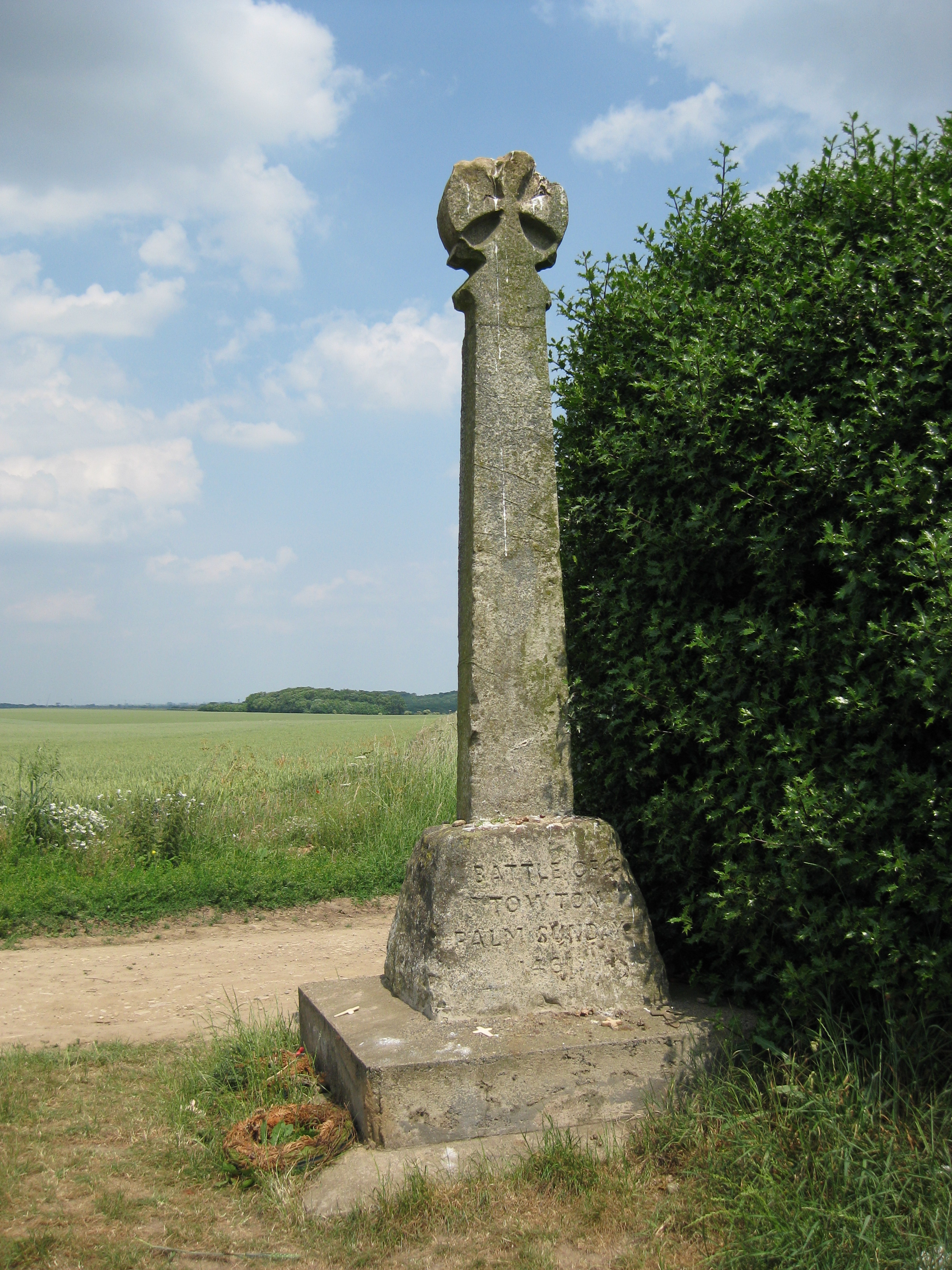
Battle of Towton
Palm Sunday fell on 29 March in 1461, and the snow was blowing from the south. Somewhere between 50,000 and 75,000 men faced each other in the fields between the villages of Towton and Saxton in North Yorkshire, and by nightfall the shallow valley between them would become what historians call probably the largest and bloodiest battle ever fought on English soil. The Wars of the Roses had been simmering for years. At Towton, they boiled over.
The Road to Towton
Henry VI was a weak and mentally unstable king, and his inability to govern had fractured the English nobility into factions. In October 1460, Parliament named Richard, Duke of York, as Henry's successor, disinheriting the king's own son, Edward of Westminster. The Lancastrians refused to accept this, and in December their army killed York at the Battle of Wakefield. His head, wearing a paper crown, was displayed on the gates of York. But York's eldest son, the eighteen-year-old Edward, declared himself king and marched north with a Yorkist army. When he reached the area around Towton, he found the Lancastrians already arrayed on high ground above a shallow valley called the Cock Beck, positioned behind a stream crossing. The Yorkists were outnumbered. The Duke of Norfolk's levies had not yet arrived.
The Wind and the Snow
What saved the Yorkists, at least initially, was the weather. A snowstorm was blowing directly into the faces of the Lancastrian archers, reducing their visibility and shortening their range. Lord Fauconberg, commanding the Yorkist vanguard, recognized the advantage. He ordered his archers forward and had them loose their volleys with the wind at their backs, then step back. The Lancastrian archers, blinded by snow and unable to judge distance, shot their arrows short. When their quivers were empty, Fauconberg's men advanced and collected the spent Lancastrian shafts, shooting them back. The provocation worked. The Lancastrians abandoned their defensive positions and charged. What followed was not a battle of maneuver but a grinding, close-quarters struggle fought with polearms, swords, and daggers across a front hundreds of yards wide. It lasted for hours, perhaps as many as ten.
A River of Blood
The fighting exhausted both sides, but the Lancastrians had committed everything. When the Duke of Norfolk's fresh troops finally arrived on the Yorkist right flank, the balance tipped. The Lancastrian left collapsed, and then the entire army broke. The rout turned into a massacre. Fleeing soldiers tried to cross the Cock Beck, swollen with snowmelt, and drowned in such numbers that later accounts claimed the living crossed on bridges of the dead. Others were cut down in the fields as they ran. Contemporary chroniclers estimated that 28,000 men died, though modern historians debate the exact figure. What is not debated is the scale: mass graves discovered near the battlefield in 1996 contained skeletons showing catastrophic injuries from bladed weapons, multiple wounds to the skull and face, evidence of men killed after they had already fallen. These were not soldiers who died cleanly. Towton was a slaughter.
A Kingdom Won and Lost
Edward IV's victory at Towton secured the English throne for the House of York, though the Wars of the Roses would continue in sporadic outbursts for another two decades. Henry VI fled to Scotland with his queen, Margaret of Anjou, and their son. He would be recaptured, imprisoned in the Tower of London, and almost certainly murdered there in 1471. The battlefield at Towton is quiet now, a stretch of North Yorkshire farmland between gently rolling hills. A stone cross, weathered and plain, marks the approximate center of the fighting. The Cock Beck still runs through the valley below. On a snowy Palm Sunday, it is not difficult to imagine what happened here, though it is difficult to comprehend the scale of it. In a country of perhaps two and a half million people, the losses at Towton represented a catastrophe proportionally greater than the first day of the Somme.
From the Air
Located at 53.87N, 1.27W between the villages of Towton and Saxton, approximately 12 miles southwest of York. The battlefield occupies gently rolling agricultural land bisected by the Cock Beck stream. A stone memorial cross is visible near the B1217 road. Nearest airports: EGNM (Leeds Bradford) approximately 15 miles west; EGCN (Doncaster Sheffield) approximately 25 miles south. The flat to gently undulating terrain of the Vale of York provides good visibility in clear weather.