Battle of Uji (1180)
The planks had been torn from the bridge. On one side of the Uji River stood warrior monks and a ragged Minamoto force, arrows nocked. On the other, the massed army of the Taira clan advanced toward the gap. It was June 20, 1180, and the rebellion had already gone wrong. Prince Mochihito's secret plot to overthrow the Taira had been discovered before his allies could assemble. Now he was running, exhausted and sleepless, sheltering in the Byodo-in temple while his protector, the 74-year-old poet and warrior Minamoto no Yorimasa, tried to buy time at a broken bridge. The battle that followed was a disaster for the rebels. But the edict Mochihito had issued before his death would ripple outward across Japan, summoning forces that the Taira could never contain.
A Prince Twice Denied
Prince Mochihito had been passed over for the imperial throne not once but twice. From his vantage at court, he watched Taira no Kiyomori -- the former chancellor who had become the de facto ruler of Japan -- manipulate the succession and tighten his grip on national politics. Kiyomori's dominance traced back to the Heiji and Hogen rebellions of the 1150s and 1160s, when the Minamoto clan was broken and banished while the Taira consolidated power. Among the few Minamoto figures who survived was Yorimasa, an aristocratic elder who had sided with the Taira during those earlier conflicts and earned a comfortable position at court. But Yorimasa had grown disillusioned. He believed Mochihito was the legitimate heir and convinced the prince to issue a royal edict calling the Minamoto, the great temples, and the shrines of Japan to rise in revolt against the Taira.
A Plot Unraveled
The plan collapsed almost immediately. Minamoto no Yukiie was dispatched to carry the prince's edict across Japan, but a Taira-allied commander intercepted word of the order. After three days of skirmishing that left most of his men dead, the commander sent a courier to Kyoto with news of the rebellion. Kiyomori moved fast, ordering Mochihito arrested and banished to Tosa Province on Shikoku. The prince fled to Mii-dera temple, where the monks welcomed him with devotion. Yorimasa arrived the next evening with his sons and roughly 300 men. The Watanabe clan, vassals of the Minamoto, joined them. But when Mii-dera sent desperate letters to the great monasteries at Nara and Mount Hiei's Enryaku-ji begging for reinforcements, only Nara responded favorably -- and its 7,000 monks would arrive too late. The monks of Enryaku-ji, bribed by Kiyomori, never came at all.
Blood on the Broken Bridge
Knowing they could not hold Mii-dera against a full Taira assault, the rebels marched south to Uji. They crossed the river and tore the planking from the bridge, creating a gap they hoped would stall the pursuing army. The exhausted Prince Mochihito, who had not slept in two days, was brought into the Byodo-in temple to rest. When the Taira arrived, the two sides faced each other across the broken span and unleashed volleys of arrows. The warrior monks proved devastating archers -- their shafts punched clean through the Taira's wooden shields. Fighting raged across the exposed bridge timbers until the structure was slippery with blood. Warriors who crossed to the enemy side returned carrying the heads of those they had killed. Others, badly wounded, disemboweled themselves and threw their bodies into the current. A Taira retainer warned his commanders that fording the rain-swollen river was suicidal, but the 18-year-old Tadatsuna -- later legendary for his supposed strength of a hundred men -- led the Taira cavalry across the churning water.
Death at the Phoenix Hall
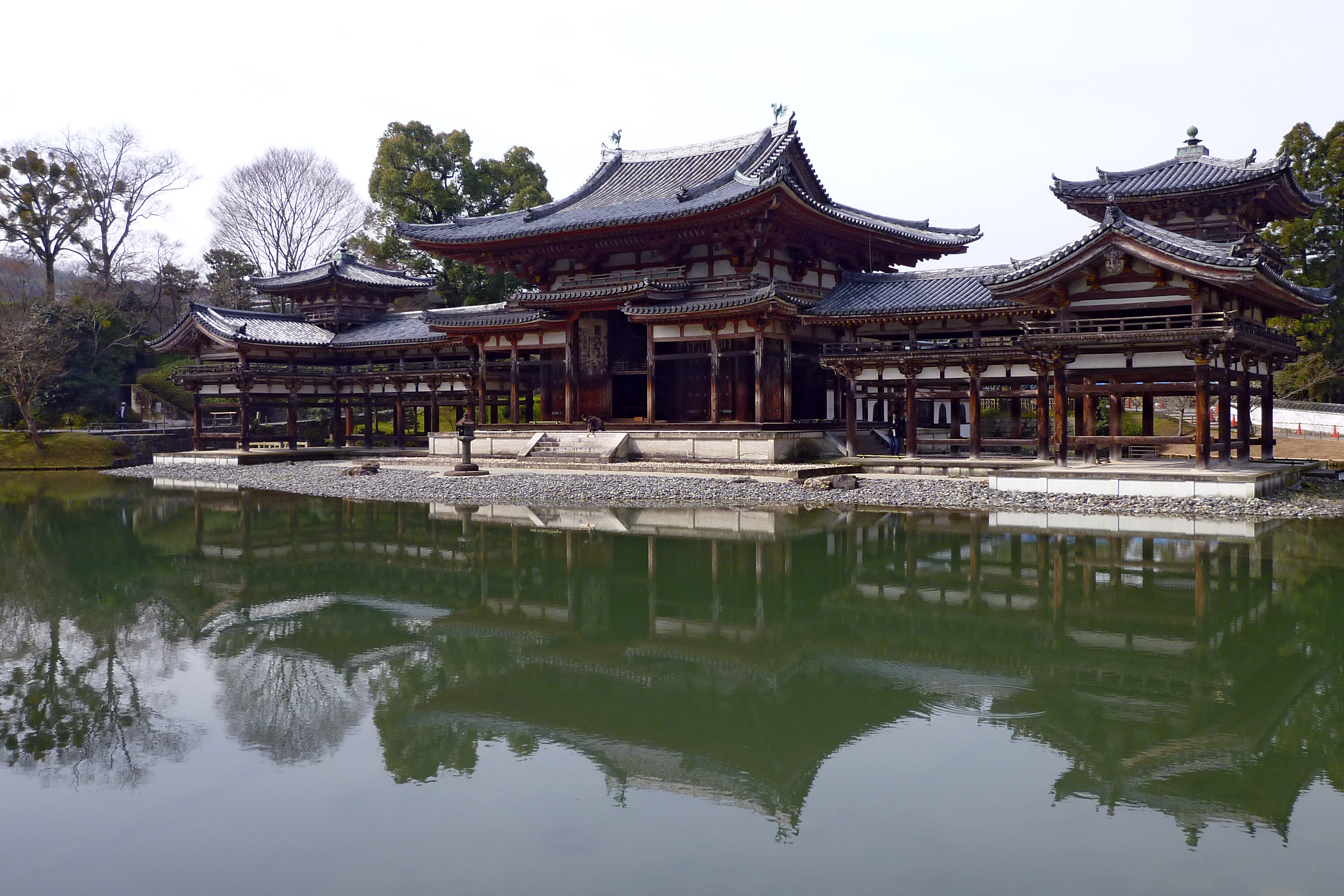
Once the Taira forded the river, the outcome was inevitable. Commander Taira no Tomomori drove his forces toward the gates of the Byodo-in. Yorimasa tried to help the prince escape but took an arrow in his right elbow. The old warrior, knowing the end had come, composed a final poem and took his own life in the garden of the Phoenix Hall -- the building that still stands today, depicted on Japan's 10-yen coin. With the Minamoto leadership gone, the Taira overran the temple. Prince Mochihito fled with a small escort but was overtaken at the Komyozen gate. Caught in a storm of arrows, he was thrown from his horse and beheaded. His rebellion had lasted barely a week.
The Spark That Lit the War
The Taira had crushed the uprising, but they could not recall the edict. Mochihito's call to arms had already reached Minamoto lords across eastern Japan. Within months, Minamoto no Yoritomo raised his banner in Kamakura. His cousin Yoshinaka mobilized in the mountains. The five-year Genpei War -- the great samurai civil conflict that would destroy the Taira, establish the Kamakura shogunate, and transform Japan from a court-centered aristocracy into a warrior state -- had begun. The bridge at Uji where monks and samurai fought and died would see battle again in 1184, this time between rival Minamoto factions. The Byodo-in, scarred by the 1180 fighting, survived. Today it sits beside the same river, surrounded by the tea fields of Uji, its Phoenix Hall reflected in a still pond -- one of the few structures left standing from the age when the fate of empires was decided at a broken bridge.
From the Air
Located at 34.8844N, 135.7997E in Uji, Kyoto Prefecture, Japan. The battle site centers on the Uji River bridge and the Byodo-in temple, which sits on the south bank. From the air, the Uji River is clearly visible winding through the city, with the Byodo-in's distinctive Phoenix Hall identifiable by its symmetric wing corridors beside a reflecting pond. Nearest major airports: Osaka Kansai International (RJBB) approximately 45nm south, Osaka Itami (RJOO) approximately 18nm southwest. The Uji River valley provides a natural visual corridor. Best viewed at 2,000-4,000 feet AGL in clear weather.