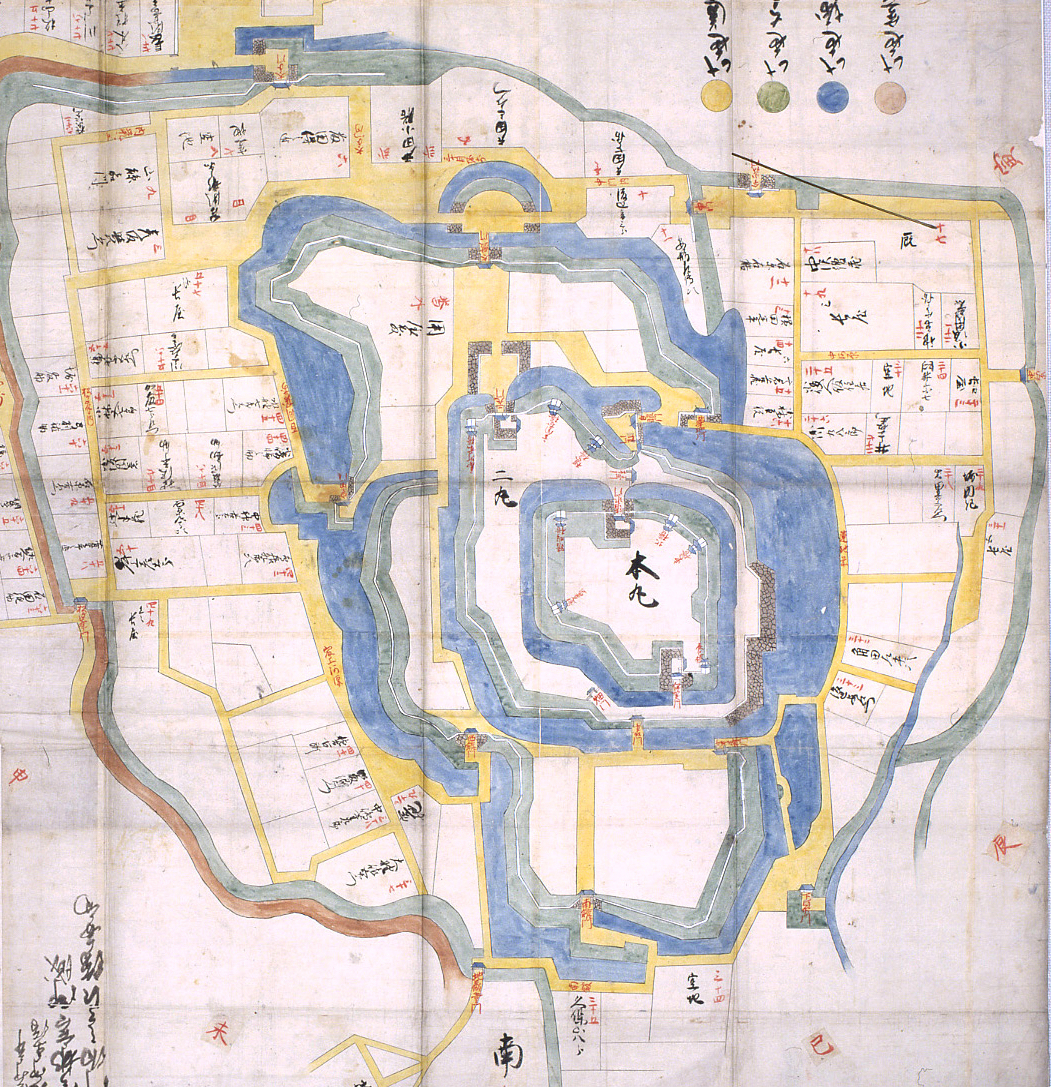
Battle of Utsunomiya Castle
The castle's lord was not even home when they came for it. In early spring 1868, Toda Tadatomo, daimyo of Utsunomiya, was hundreds of miles away, intercepted at Otsu by Satsuma-Choshu forces and placed under confinement before he could deliver Tokugawa Yoshinobu's letter of apology to Emperor Meiji. The imperial alliance had no interest in premature pardons -- they wanted war. Back in Utsunomiya, a peasant riot erupted in the streets, and the former Shogunate forces gathering to the south saw their opening. The castle fell the same day.
An Army of the Dispossessed
The force that marched on Utsunomiya in May 1868 was unlike any conventional army. Its commanders were Otori Keisuke and Hijikata Toshizo, both former retainers of the collapsed Tokugawa regime, who had led their followers out of the shogun's capital of Edo and gathered them at a staging point to the south. Under their banner assembled men from Aizu under Akizuki Noborinosuke, Kuwana domain troops under Tatsumi Naofumi, and a handful of surviving Shinsengumi -- the feared Kyoto police force turned rebel fighters, including Shimada Kai. But samurai made up only part of this army. Many under Otori's direct command came from other social classes: commoners, merchants, and farmers who had thrown their lot in with the dying Shogunate. Their objective was Utsunomiya Castle, a strategic position on the road running north toward Nikko and the Aizu domain stronghold.
A Castle Taken, a Castle Denied
With its lord confined and its garrison in disarray from the peasant unrest, Utsunomiya offered little resistance. Toda Tadayuki, left to defend the castle, fled to Tatebayashi as the Shogunate forces swept in. But holding Utsunomiya was only part of the plan. A contingent pushed north to Mibu, intending to set an ambush -- and arrived to find that Satsuma imperial forces had already occupied Mibu Castle. The Satsuma troops, stunned by the sudden appearance of the enemy at their gates, fell back inside and mounted a defense behind the castle walls. The attackers tried to set fire to the surrounding town, a standard tactic of the era, but a torrential rainstorm turned the streets into rivers and left every surface too soaked to burn. The combined Shogunate unit battered itself against Mibu Castle's defenses and finally withdrew, having suffered 60 men killed and wounded, including eight officers. They retreated back to Utsunomiya to regroup.
The Boshin War Tide
The battle at Utsunomiya was one episode in the broader Boshin War, the civil conflict that ended 250 years of Tokugawa rule and restored imperial power under the young Emperor Meiji. By spring 1868, the old order was collapsing from the south. The Satsuma-Choshu alliance, backed by modern Western weapons and a claim to imperial legitimacy, had already broken the Shogunate at the Battle of Toba-Fushimi in January. The former Tokugawa forces retreating through the Kanto plain were fighting a rearguard action, hoping to consolidate in the northern domains of Aizu and Sendai. Utsunomiya sat at a critical crossroads -- the juncture where the road split toward the mountain sanctuary of Nikko and the Aizu heartland beyond. Whoever held this castle town controlled the northward retreat.
Memory Preserved in Ink
In later years, Otori Keisuke set down his account of the battle in a memoir titled Nanka Kiko, published in Kyu Bakufu, a magazine he helped edit that was devoted to preserving the history of the Bakumatsu -- the turbulent final years of the Tokugawa era. It was a remarkable act of documentation by a man on the losing side of history. The magazine collected firsthand accounts from former Shogunate loyalists at a time when the Meiji government was actively reshaping the narrative of the civil war. Otori's account, alongside sources like Nagakura Shinpachi's Shinsengumi Tenmatsu-ki and Yamakawa Kenjiro's Aizu Boshin Senshi, ensured that the Tokugawa perspective on battles like Utsunomiya survived in the historical record rather than vanishing with the regime that lost.
From the Air
Located at 36.55N, 139.89E in the Kanto plain of Tochigi Prefecture. Utsunomiya is the prefectural capital, easily identifiable from the air as a large urban area on the flat plain north of Tokyo. The castle ruins sit in the city center. To the north, the terrain rises sharply toward the mountains of Nikko. Nearest airports: RJTU (Utsunomiya Airfield, JASDF) approximately 5nm east of the castle site, RJAH (Ibaraki Airport) approximately 30nm southeast, RJAA (Narita International) approximately 55nm south. The Kinugawa River valley runs to the east. Best viewed at 3,000-5,000 feet AGL. The route from Utsunomiya north toward Nikko follows a dramatic transition from plains to mountains.