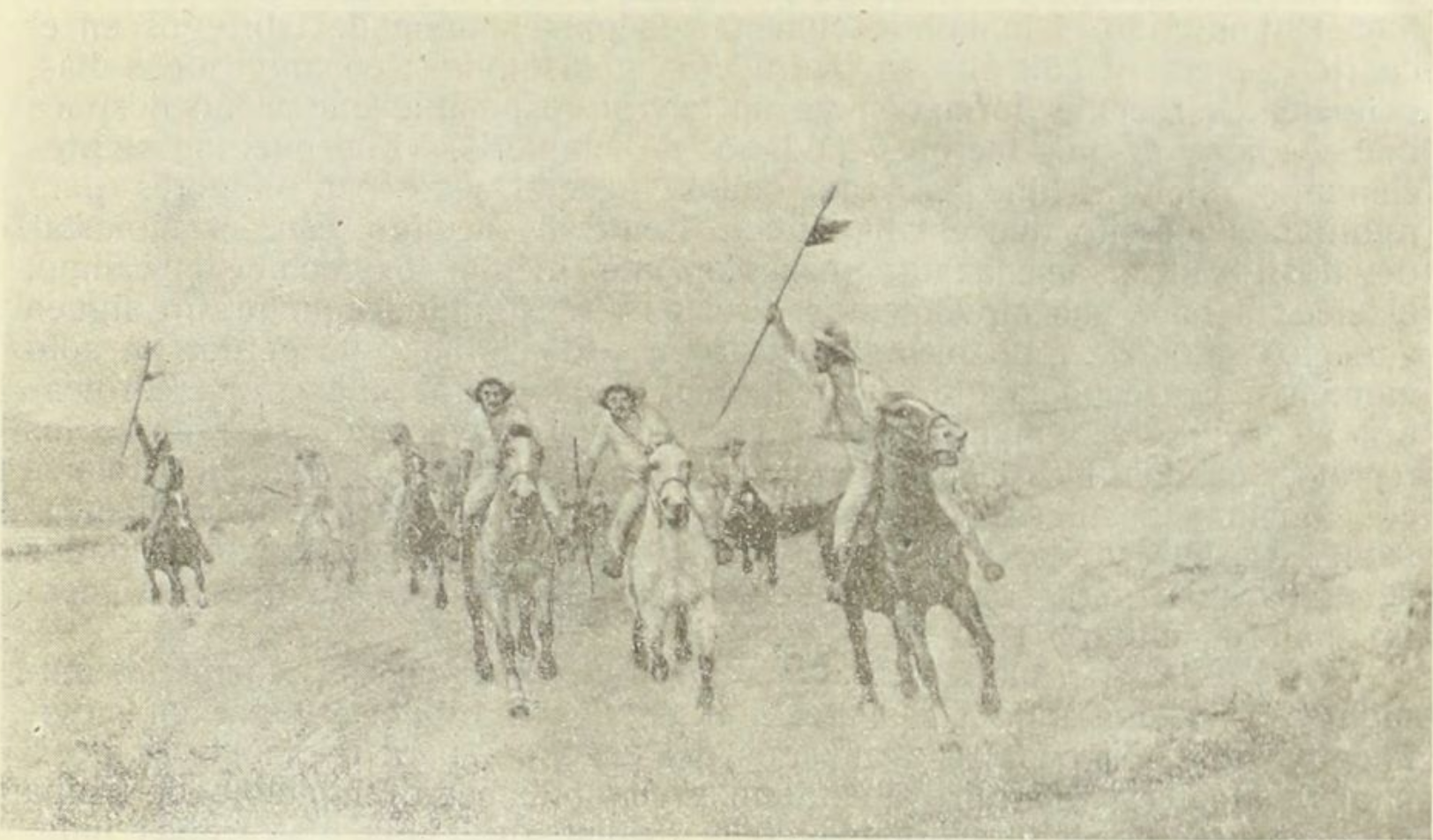
Battle of Vargas Swamp
"I saw the battle lost at five, and won at six." Father Andres Maria Gallo, a local presbyter watching from a distance, condensed six hours of carnage into a single sentence. The Battle of Vargas Swamp, fought on July 25, 1819, between the towns of Paipa and Tibasosa in what is now Boyaca, Colombia, was the bloodiest engagement of Simon Bolivar's campaign to liberate New Granada. By late afternoon, Bolivar's exhausted army was being pushed back toward a swollen river with no place to retreat. What happened next became the founding legend of Colombia's cavalry.
A Naked Army Crosses the Andes
Bolivar's forces arrived in the highlands in sorry condition. They had crossed the Andes through the Paramo de Pisba in early July 1819, choosing a route so punishing that the Spanish commander, Colonel Jose Maria Barreiro, had not bothered to guard it -- no sane general would attempt the pass during the winter rain season. Bolivar did it anyway. By the time his army staggered into the town of Socha, they had lost all their horses and cattle, along with roughly 100 dead and 500 sick. They lacked uniforms and had lost a large portion of their ammunition. The women of the Boyaca villages tore up their own dresses to sew clothing for the naked soldiers. Local farmers provided food and horses. Civilians joined the ranks. From this ragged beginning, Bolivar rebuilt an army capable of challenging the 4,000-strong Spanish III Division -- the main royalist force in the kingdom.
Trapped Between Hills and a River
Bolivar's strategy hinged on a flanking march to capture Tunja, the provincial capital, which would sever Barreiro's supply lines to Bogota. On July 25, starting at five in the morning, the Patriot army began crossing the rain-swollen Chicamocha River on hastily built rafts. Many of the rafts collapsed, and the crossing that should have been quick stretched to five hours. By the time Bolivar reached Vargas Swamp around noon, Barreiro's forces had already seized the high ground -- Picacho and Cangrejo hills -- blocking the only route forward. With the flooded Chicamocha at their backs, the Patriots had nowhere to go but through the Spanish line. What followed was a grinding, uphill assault that the royalists repelled again and again, their superior firepower turning the slopes into killing fields. Wounded men rolled down the hillsides. Hand-to-hand combat erupted at close quarters.
Colonel Rondon, Save the Republic
By five o'clock, after five hours of fighting, the Patriots were falling apart. Barreiro, watching from the Casa de las Seis Ventanas, reportedly shouted "Long live Spain -- not even God can take this victory away from me" as his dragoons planted their standard on Picacho Hill. From across the battlefield, Bolivar muttered to his staff: "The cavalry has been deployed. The battle is lost." He had committed every unit except one: Colonel Juan Jose Rondon's llanero cavalry, horsemen from the Venezuelan plains who fought with lances. Rondon heard Bolivar's despair and answered it directly: "How can the battle be lost, if neither I nor my riders have fought? Let us make an entrance." Bolivar made the only call left to him: "Colonel Rondon, save the republic!" Rondon rode to his men and shouted: "Comrades! Those who are brave, follow me, because at this moment we will triumph!" Only fourteen lancers heard the initial call. Rondon led them uphill anyway.
Fourteen Lancers
The charge of the fourteen lancers up Cangrejo Hill penetrated the royalist line and threw the Spanish dragoons and reserve infantry into chaos. Seeing the breach, Bolivar committed his remaining cavalry under Colonels Mujica, Infante, and Carvajal. The combined assault overwhelmed the Hussars of Ferdinand VII on the main road, killing their commander Lieutenant Colonel Francisco Gongora. At the foot of Cangrejo Hill, Sergeant Inocencio Chinca -- one of the original fourteen -- fought a prolonged lance duel with Spanish Captain Ramon Bedoya. Bedoya wounded him gravely, but Chinca charged with what strength remained and drove his lance through the Spaniard, knocking him from his horse. Inspired by the cavalry's success, the Patriot infantry launched a final bayonet assault up Picacho Hill. A heavy tropical downpour arrived around six o'clock, allowing Barreiro to withdraw his shattered forces under cover of the storm.
The Country That Will Bury Me
The most senior Patriot officer to die was Colonel James Rooke, commander of the British Legion, who had led a bayonet charge earlier in the afternoon. Shot in the left elbow, his arm was amputated the next day. Rooke seized the severed limb with his remaining hand and raised it, shouting in accented Spanish: "Viva la Patria!" When the surgeon asked in English which country -- Ireland or England -- Rooke replied: "The country which will bury me." He died three days later near Tunja. Sergeant Chinca also succumbed to his wounds and was buried in Tibasosa, where his remains still rest. The battle's combined casualties likely numbered between 700 and 1,000 dead and wounded. In 2010, archaeologists from the National University of Colombia found what they believe to be a mass grave holding some 600 bodies. Today a bronze monument stands atop Cangrejo Hill, depicting the fourteen lancers mid-charge. Bolivar's order to Rondon -- "Salve usted la patria" -- is the official motto of the Colombian Army's cavalry branch, and July 25 remains its commemorative day. Thirteen days after Vargas Swamp, the two armies met again at the Battle of Boyaca. This time the victory was decisive, and New Granada's independence was secured.
From the Air
Located at 5.74N, 73.08W between the towns of Paipa and Tibasosa in Boyaca Department, Colombia. The battlefield is in the central Colombian highlands at approximately 2,500 meters elevation on the Altiplano Cundiboyacense. The Vargas Swamp Lancers Monument on Cangrejo Hill is visible from the air as a large bronze sculpture. The nearest significant airport is Juan Jose Rondon Airport (SKSO) in Sogamoso, approximately 30 km to the east. Paipa is also accessible from El Dorado International Airport (SKBO) in Bogota, roughly 190 km to the southwest. Expect clear conditions in the dry season (December-March) with afternoon cloud buildup during the wet season.