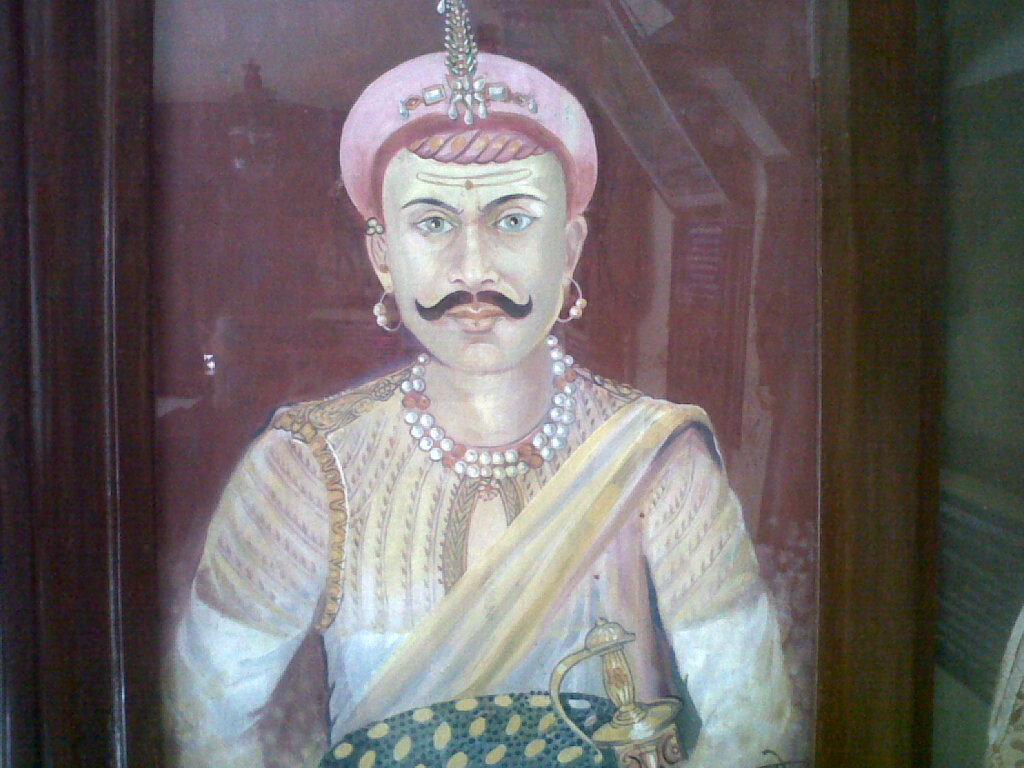
Battle of Vasai
The Portuguese commander surrendered on 16 May 1739, and the terms were unexpectedly generous. The Maratha general ordered that the remaining garrison leave Baçaim with their flags unfurled, muskets at the shoulder, and drums playing. They would be transported by sea to Bombay. One week later, on 23 May, the saffron flag rose over the fort. After more than two centuries of Portuguese dominion over the northern Konkan coast, the Battle of Vasai -- or Bassein, as the Europeans called it -- had ended. What Chimaji Appa's forces accomplished in those months of siege permanently redrew the map of western India.
The Crumbling Northern Province
By the 1730s, Portuguese power along the Indian coast was stretched thin. Their garrison at Baçaim numbered only about 1,200 soldiers, a mix of Portuguese regulars and Indian auxiliaries, bolstered by reinforcements from Goa. The fortress of Thana, under construction since 1732, was plagued by delays; its workers went unpaid and unfed. The Portuguese Viceroy, the Count of Sandomil, recognized the vulnerability and issued orders that only Baçaim, Damão, Diu, and Karanja were to be defended -- all other positions could be sacrificed. This was the calculus of an empire in decline: choosing which walls to man when there were no longer enough soldiers for all of them. Meanwhile, the Maratha Empire under the Peshwa was ascending, and Chimaji Appa, brother of the legendary Peshwa Baji Rao I, had his eyes fixed on the Konkan.
Bhavangad: The Secret Staging Ground
Chimaji Appa built Bhavangad Fort specifically to prepare for the assault on Baçaim. From this staging ground, most of the secret planning and logistics were coordinated. When the campaign opened, the Marathas systematically dismantled the Portuguese defensive network. Every outpost surrounding the main fort was taken. Supply routes from north and south were severed. The English, controlling the sea lanes, made even naval resupply unreliable. When Chimaji Appa arrived at Bhadrapur near Baçaim in February 1739, he brought an army that Portuguese accounts numbered at 40,000 infantry, 25,000 cavalry, and 4,000 soldiers trained in mining. He also had 5,000 camels and 50 elephants. Reinforcements from Salsette soon swelled the total toward 100,000. Alarmed, the Portuguese abandoned Bandra, Versova, and Dongri to concentrate their defense. In March, Manaji Angre captured Uran, and the Maratha victories at the vacated positions came easily. By April 1739, Baçaim stood alone.
Three Days of Fire and Mines
Within the fort, two towers faced the Maratha positions at Bhadrapur: São Sebastião and Nossa Senhora dos Remédios. The main gate opened toward Vasai Creek, offering no escape by land. On 1 May 1739, Appa's sappers laid ten mines against the walls near the tower of Remédios. Four detonated, blasting a breach. Maratha soldiers charged through and immediately came under withering fire from Portuguese guns and muskets. Chimaji Appa, Malhar Rao Holkar, Ranoji Shinde, and Manaji Angre each drove their contingents forward, urging men to scale the walls throughout the day. On 2 May, both towers were attacked repeatedly. More mines opened large gaps between the two towers, and roughly 4,000 Maratha soldiers attempted to pour through, but the Portuguese held. Defenders lit firewood along the parapets to create walls of flame. Then, on 3 May, a Maratha mine demolished the tower of São Sebastião entirely. With one of their two anchor points reduced to rubble, the Portuguese defensive line collapsed.
Terms of Surrender
Chimaji Appa chose diplomacy over slaughter. He sent an envoy to the Portuguese commander with a letter that was blunt: if resistance continued, the garrison would be killed to the last soldier and the fort leveled to its foundations. The Portuguese commander accepted the terms and surrendered on 16 May 1739. The Maratha general's treatment of the defeated garrison reflected a code of martial honor -- the Portuguese were permitted to march out with dignity and were provided transport to Bombay by sea. This was not mere magnanimity; it was a political statement. Chimaji Appa was demonstrating to the European powers watching from Bombay and Goa that the Marathas could take a fortified position and govern the aftermath with discipline. The victory over Baçaim was the culmination of a broader campaign that had already driven the Portuguese from their positions across the northern Konkan.
Bells Across Borders
The aftermath of the battle produced one of its most enduring symbols. Chimaji Appa's soldiers removed the church bells from the churches of Vasai and installed them in Hindu temples across Maharashtra. Some went to the Khandoba Temple at Jejuri, others to the Tulja Bhavani Temple at Osmanabad. These bells still hang in those temples today, ringing for a different faith in a different century. The Battle of Vasai was more than a military engagement. It demonstrated that the Maratha Empire could defeat a European colonial power on its own ground, using a combination of strategic encirclement, siege engineering, and overwhelming force. The Portuguese would never recover their northern territories. The Treaty of Vasai in 1802, signed between the British and a later Peshwa, would eventually be struck in the same place -- further proof that Vasai remained a crossroads of power long after the last mine was detonated beneath its walls.
From the Air
Located at 19.47°N, 72.80°E along the Konkan coast, near the town of Vasai north of Mumbai. The battlefield centers on the ruins of Fort Vasai (Fort Bassein) along Vasai Creek. From the air, the fort's rectangular outline and ruined structures are visible at lower altitudes. Nearest major airport is Chhatrapati Shivaji Maharaj International Airport (VABB), approximately 50 km to the south. The creek and coastline provide good visual references. Best viewed at 2,000-4,000 ft in clear conditions.