Battle of Warbonnet Creek
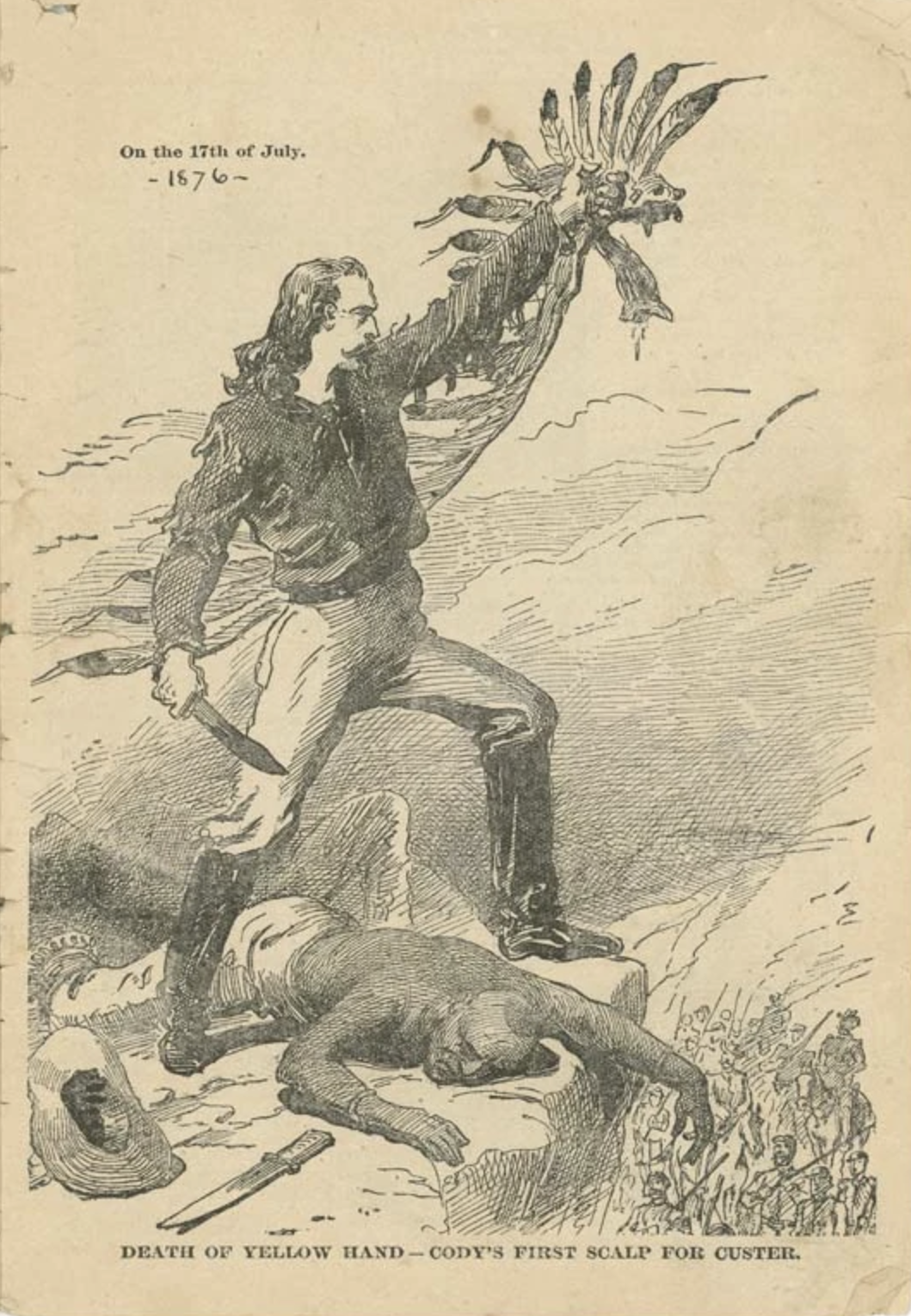
Three weeks after Custer fell at Little Bighorn, Buffalo Bill Cody knelt over the body of a young Cheyenne warrior named Heova'ehe, Yellow Hair, and took his scalp. It was July 17, 1876, in the Nebraska badlands near Warbonnet Creek. The duel had lasted seconds. But Cody, ever the showman, understood that this moment would play forever. By October he was back on the stage in the East, holding Yellow Hair's scalp aloft and calling the killing "The First Scalp for Custer."
After Little Bighorn
The news from Montana hit the nation like a thunderclap. General George Armstrong Custer and over 260 of his men dead at the hands of Sitting Bull and Crazy Horse. Across the Great Plains, Native Americans took heart from the victory. About 200 to 300 Cheyenne warriors led by Morning Star, also known as Dull Knife, left the Red Cloud and Spotted Tail agencies in Nebraska with their families. The U.S. Army scrambled to prevent more tribes from joining the movement. The 5th Cavalry Regiment was ordered from the Cheyenne River in South Dakota to reinforce General George Crook's forces in Wyoming.
The Trap at Warbonnet Creek
Colonel Wesley Merritt, who had just taken command of the 5th Cavalry, received word of the Cheyenne breakout. Guided by Buffalo Bill Cody, who served as a civilian scout, Merritt moved to intercept. He planned an ambush near Warbonnet Creek. Most of his 350 troopers hid inside covered wagons while sharpshooters took concealed positions nearby. When the Cheyenne spotted what appeared to be an unescorted wagon train, six warriors charged forward to divert attention from the main body. They rode directly into the trap.
The First Scalp for Custer
The troopers opened fire, wounding several warriors. But the engagement's defining moment came when Buffalo Bill confronted Yellow Hair directly. Cody shot the Cheyenne warrior with his Winchester carbine, then drew his Bowie knife and scalped him in full view of both armies. The main body of Cheyenne warriors attempted to rescue their comrades but fled when they saw the true strength of the American forces. Not a single trooper was killed or injured. Merritt then led the regiment to join Crook, eventually combining with General Alfred Terry's command to form a force of about 4,000 soldiers.
Showman to the End
Buffalo Bill returned to the theatrical stage in October 1876. His new melodrama featured a reenactment of the duel with Yellow Hair. He displayed the fallen warrior's scalp, feather war bonnet, knife, saddle, and other personal effects to packed audiences. For decades afterward, Cody celebrated the killing in his Wild West shows, performing a piece he called "The Red Right Hand, or, Buffalo Bill's First Scalp for Custer." The skirmish at Warbonnet Creek was minor in military terms, but it became one of the most famous moments in the mythology of the American West.
From the Air
Located at 42.93N, 103.73W in Sioux County, northwestern Nebraska. The battlefield lies in the high plains near the Nebraska-Wyoming border, along the drainage of Warbonnet Creek (also historically called Hat Creek). Nearest airports: Scottsbluff County Airport (KBFF), 50 miles south; Chadron Municipal Airport (KCDR), 40 miles east. The terrain is rolling grassland with few distinguishing features visible from altitude. A marker at the site commemorates the engagement.