Battle of Wyse Fork
The North Carolina Junior Reserves panicked and refused to advance. These were teenage boys, some as young as seventeen, conscripted from the dwindling manpower of a dying Confederacy. General D.H. Hill had just sent them charging into the Union left flank along Southwest Creek, east of Kinston, and they simply stopped. Hill left them where they stood, pushed forward with his veterans, and drove the Federal brigade back. It was March 7, 1865, and the Battle of Wyse Fork was the Confederacy's last credible attempt to prevent three Union armies from converging on Goldsboro, North Carolina. That convergence would seal the fate of the Southern cause within weeks.
Three Armies Closing In
By late February 1865, the war was all but over and everyone knew it. Sherman's forces had burned their way through Georgia and South Carolina and were now crossing into North Carolina. The port city of Wilmington had just fallen to Union troops under Major General John M. Schofield. The plan was simple and devastating: Schofield would move inland and meet Sherman at Goldsboro, where three Union armies would combine into an overwhelming force to crush whatever resistance the Confederacy could muster. Schofield split his approach. He sent Alfred Terry's Expeditionary Corps north from Wilmington while Major General Jacob D. Cox took his XXIII Corps division by sea to New Bern, landing there and organizing a Provisional Corps of three divisions. Cox's job was to repair the New Bern-to-Goldsboro railroad as he advanced, turning it into a supply artery for Sherman's army group. Confederate General Joseph E. Johnston was assembling forces to oppose Sherman, but he was too far away to intercept Schofield's divided columns. General Braxton Bragg, however, was falling back from Wilmington with troops of his own. He saw an opportunity to strike Cox before the Union forces could combine.
The Assault Along Southwest Creek
Bragg positioned his forces along Southwest Creek east of Kinston, blocking Cox's path and threatening the vital crossroads and railroad the Federals needed. Cox recognized the danger and pushed forward the divisions of Brigadier General Innis N. Palmer to guard the railroad and Major General Samuel P. Carter to hold the road network. Then Bragg was reinforced. Veterans from the Army of Tennessee arrived, along with the North Carolina Junior Reserves, all placed under D.H. Hill's command. Bragg sent Robert Hoke's division smashing into the Union left flank. Hoke's North Carolinians hit a New England brigade in Carter's division with devastating effect, capturing the entire 15th Connecticut Volunteer Infantry as a regiment. Hill followed with the Junior Reserves, but the young soldiers broke. Hill continued with his experienced troops and defeated the Federal brigade. The Union flank was crumbling -- and then Bragg made a decision that baffled his own officers. He pulled Hill away from the attack and sent him far to the north to deal with a reported Union threat. When Hill arrived, he found no Federal troops at all. The momentum was gone. Cox, who had been away from the front lines, returned and rushed Major General Thomas H. Ruger's reserve division into the gap between Palmer and Carter, stabilizing the position.
The Last Confederate Push
For three days after the initial clash, skirmishing crackled along the lines. On March 10, Hoke tried once more to turn the Federal left flank. This time, the Union position had been fortified with massed artillery. Hoke's assault was repulsed within an hour. Hill then attacked the Union center, but Federal cannon fire shattered the advance before it could gain ground. The remaining elements of the Federal XXIII Corps, fresh from Tennessee, were already landing at New Bern and moving toward Kinston. Bragg now faced five Union divisions with no realistic hope of reinforcement. He withdrew, leaving the road to Goldsboro open.
The Gathering at Goldsboro
Bragg's attack at Wyse Fork delayed Cox for only a few days. Schofield consolidated his forces into the reconstituted Army of the Ohio, two full corps strong. Sherman's armies, fresh from defeating Johnston at Bentonville on March 19-21, marched into Goldsboro on March 23. For the first time, three Union armies stood together in North Carolina: Sherman's Army of the Tennessee, the Army of Georgia, and Schofield's Army of the Ohio. Johnston had roughly 21,000 men. The combined Union force numbered nearly 90,000. Johnston retreated northward and, on April 26, 1865, surrendered to Sherman near Durham Station in what became the largest troop surrender of the Civil War. The brief, confused fighting at Wyse Fork was among the last offensive actions of the Confederacy -- a desperate gamble by a general whose reputation for squandering tactical advantages followed him from Chickamauga to North Carolina.
Holding Ground, Losing Ground
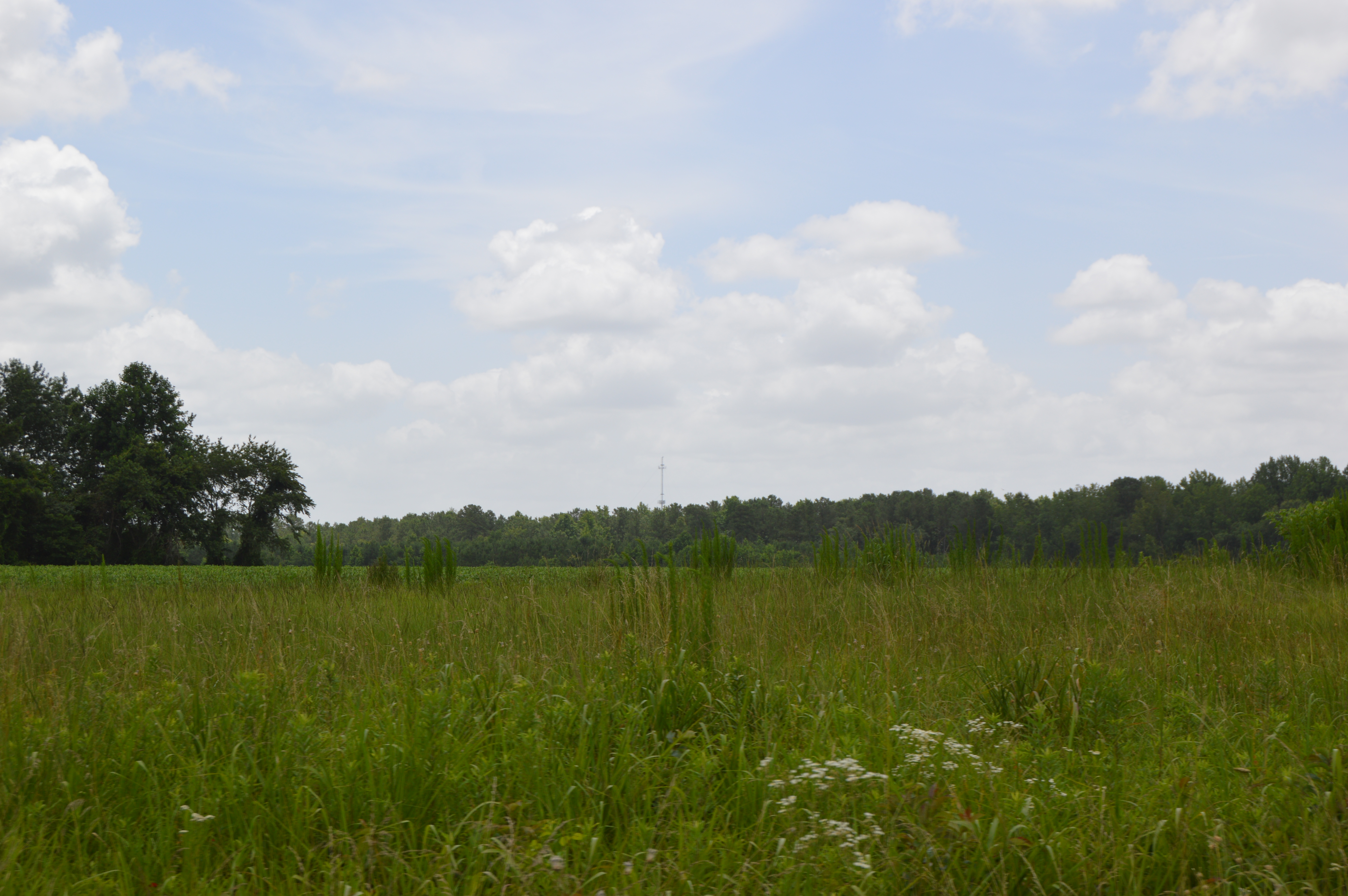
Today, the American Battlefield Trust and its partners have preserved portions of the Wyse Fork battlefield, which is listed on the National Register of Historic Places. The land along Southwest Creek where Hoke charged and the Junior Reserves broke still carries the contours of the engagement -- low ridgelines, creek crossings, and the flat coastal plain terrain that gave artillery such devastating advantage. The battlefield now faces a different kind of advance. The North Carolina Department of Transportation has proposed upgrading US Route 70 through the Kinston area to interstate standards as part of the I-42 project, including an interchange at Wyse Fork Road that would cut through the historic ground. The proposal has drawn opposition from preservationists and local residents. The battle itself is remembered by half a dozen names -- Wyse's Fork, Wise's Forks, Wilcox's Bridge, Kelly's Mill Pond, the Second Battle of Kinston, the Second Battle of Southwest Creek -- a confusion of nomenclature fitting for an engagement where Confederate generals sent their men charging at phantoms while the real threat marched steadily closer.
From the Air
Located at 35.22N, 77.53W east of Kinston, North Carolina, along Southwest Creek on the Coastal Plain. The battlefield stretches across flat agricultural and wooded terrain east of the city. The New Bern-to-Goldsboro railroad line (now the Norfolk Southern rail corridor) runs through the area. Best viewed at 2,000-4,000 feet AGL. Nearby airports: KISO (Kinston Regional Jetport, 5 nm southwest), KEWN (Craven County Regional / New Bern, 30 nm southeast), KGSB (Seymour Johnson AFB / Goldsboro, 25 nm northwest). The Neuse River and its tributary Southwest Creek are the primary visual landmarks. US Route 70 parallels the historic engagement area.