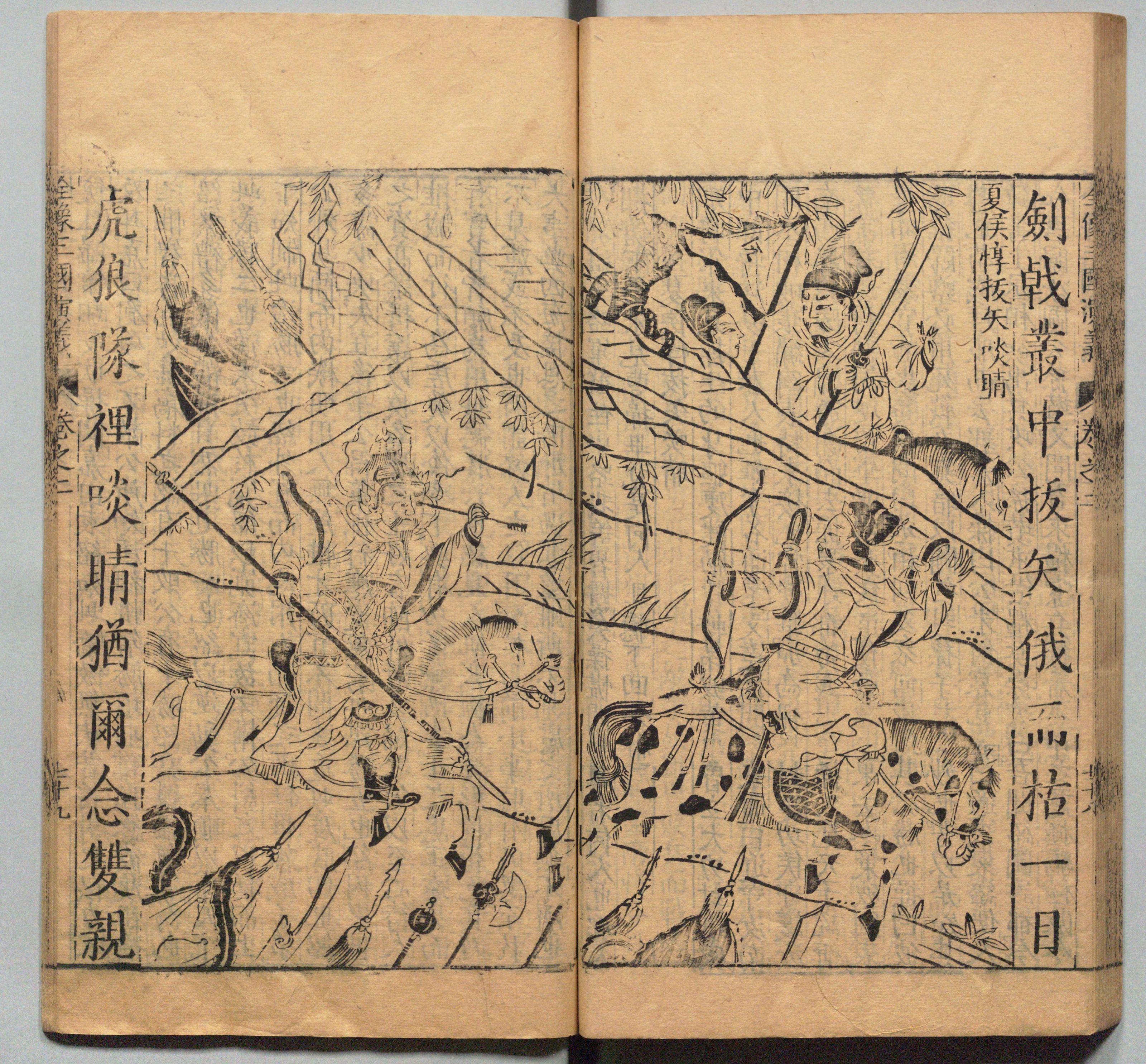
Battle of Xiapi
On 7 February 199, Lu Bu stood atop the White Gate Tower of Xiapi, watching Cao Cao's forces close in. He asked his remaining soldiers to cut off his head and deliver it to his enemy. They refused. The most feared warrior of the late Han dynasty, the man who had betrayed and killed two of his own lords, who fought with a strength that became legendary, surrendered. Within hours he was dead, hanged on Cao Cao's order after Liu Bei reminded Cao of what had happened to the last two men who trusted Lu Bu.
A Province Changes Hands
The roots of the battle stretched back five years. In 194, while Cao Cao was campaigning against Tao Qian in Xu Province, his own subordinates Chen Gong and Zhang Miao betrayed him and invited Lu Bu to seize his base in Yan Province. Cao Cao fought his way back over more than 100 days, eventually driving Lu Bu east by 195. Lu Bu fled to Liu Bei, who governed Xu Province, but in 196 he turned on his host, capturing the provincial capital of Xiapi, present-day Pizhou in Jiangsu. Liu Bei was forced to surrender the governorship and retreat to the nearby town of Xiaopei. When Lu Bu later attacked even there, Liu Bei had no choice but to join Cao Cao, setting up the alliance that would ultimately destroy Lu Bu.
Betrayals Within Betrayals
The politics surrounding the siege were labyrinthine. In 197, Yuan Shu proposed a marriage alliance between his son and Lu Bu's daughter. Lu Bu initially agreed, then changed his mind, pursuing the bridal convoy to retrieve his daughter and sending Yuan Shu's envoy to be executed by Cao Cao. This act earned Lu Bu a generalship from Cao Cao, but it also meant that when he later needed reinforcements from Yuan Shu during the siege, none came. Meanwhile, Cao Cao planted Chen Deng as a spy inside Lu Bu's forces, an infiltration that paid off when Chen Deng defected at a critical moment, bringing his troops from Guangling to help Cao Cao capture Pengcheng. Lu Bu's own advisers were divided: Chen Gong proposed splitting forces inside and outside the city walls, but Lu Bu's wife warned that Chen Gong might himself betray them. The plan was abandoned.
The Waters Rise
By late 198, Cao Cao's army had besieged Xiapi but could not break through. His troops grew weary, and Cao Cao considered withdrawing. His strategists Xun You and Guo Jia argued that Lu Bu's forces were demoralized from repeated defeats and defections, and urged him to press on. Cao Cao ordered his soldiers to divert the Yi and Si Rivers into the city. For over a month, Xiapi flooded. Inside the waterlogged walls, Lu Bu's general Hou Cheng recovered 15 stolen horses and prepared a celebratory feast, but Lu Bu, who had banned alcohol, erupted in fury. Humiliated and afraid, Hou Cheng conspired with two other generals to capture Chen Gong and Gao Shun, then surrendered the city to Cao Cao. The siege ended not with a final assault but with the slow erosion of trust among men trapped together in rising water.
A Tiger Tightly Bound
When Lu Bu was brought before Cao Cao, he complained about his bindings. "A feral tiger should be tightly tied up," Cao Cao replied. Lu Bu offered to serve his captor, and Cao Cao hesitated. It was Liu Bei who sealed Lu Bu's fate with a single question: "Haven't you seen what happened to Ding Yuan and Dong Zhuo?" Both were previous lords Lu Bu had betrayed and killed. Cao Cao had Lu Bu hanged and his body decapitated. Chen Gong, who had once served Cao Cao before defecting to Lu Bu, walked to his execution without looking back. Cao Cao spared Chen Gong's family and was said to have been deeply grieved by his death. Other officers, including Zhang Liao, surrendered and were absorbed into Cao Cao's forces, where several would become famous generals.
The Road to Guandu
With Lu Bu eliminated, Cao Cao controlled Xu Province and removed the last significant threat to his rear. The following year Liu Bei briefly seized the province before Cao Cao crushed him again. This strategic security allowed Cao Cao to face Yuan Shao at the Battle of Guandu in 200, the engagement that established him as the dominant power in northern China and set the stage for the Three Kingdoms era. The events at Xiapi have been immortalized in chapters 18 and 19 of the Romance of the Three Kingdoms, where Luo Guanzhong embellished the history with dramatic duels, including the famous scene of Xiahou Dun swallowing his own eyeball after being struck by an arrow. The historical record is quieter but no less dramatic: a story of flooding, betrayal, and the destruction of a warrior whose strength could not compensate for his inability to trust or be trusted.
From the Air
Located at 34.342N, 118.01E near present-day Pizhou, Jiangsu Province. The ancient site of Xiapi lies in the flat agricultural plain between the Yi and Si Rivers. Nearest airports include Xuzhou Guanyin International Airport (ZSXZ) approximately 80 km west and Lianyungang Baitabu Airport (ZSLG) to the east. The terrain is uniformly flat with rivers and canals visible from altitude.