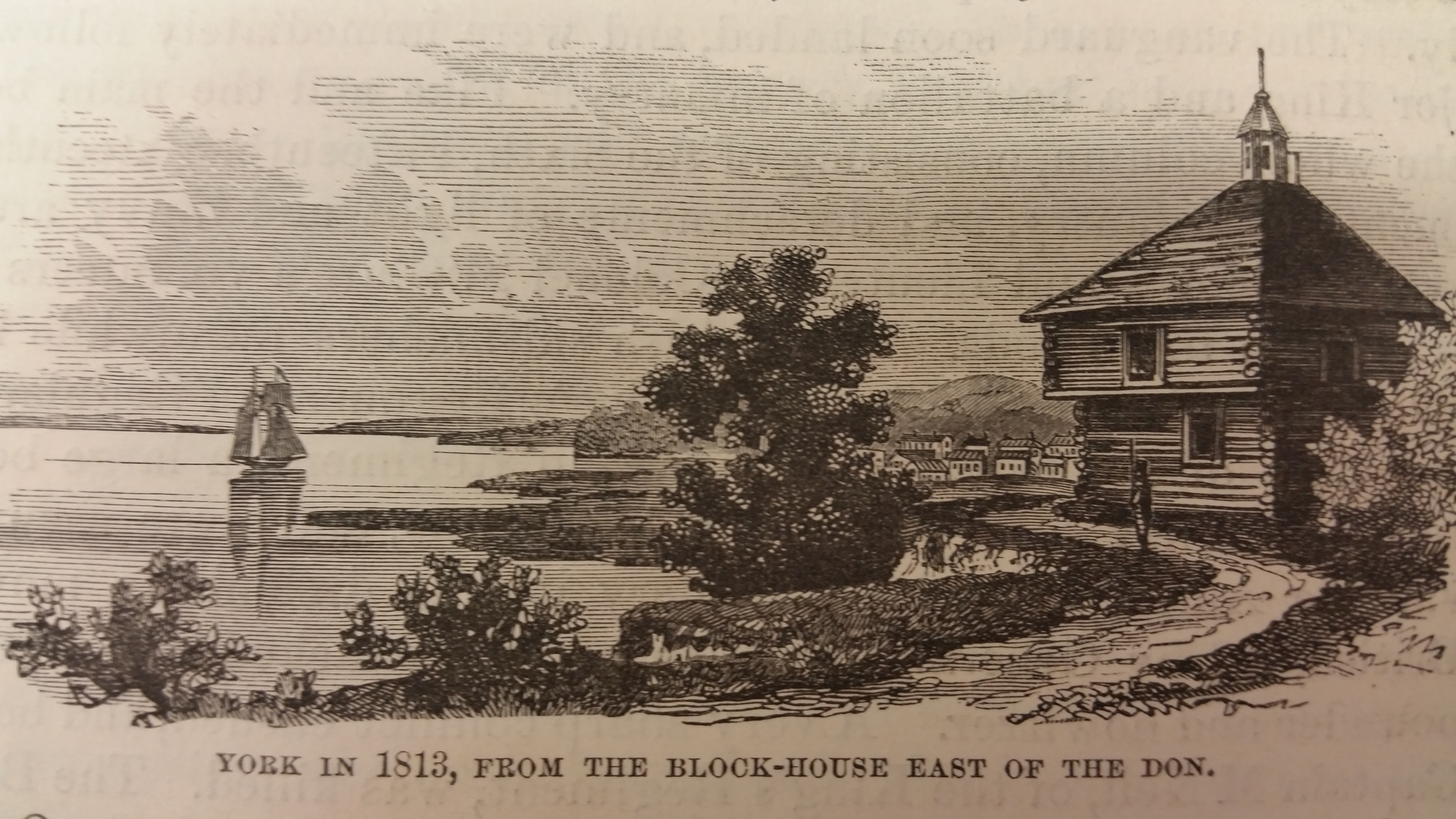
Battle of York
The explosion that killed Brigadier General Zebulon Pike was set by his own enemy's retreating forces, and it was meant to be devastating. The British commander at York had rigged the fort's magazine with over 74 tons of iron shells and 300 barrels of gunpowder. When it detonated on the afternoon of April 27, 1813, the blast hurled debris across a wide radius, killing Pike and 37 American soldiers while wounding more than 200 others. Pike had been questioning a captured British prisoner when the ground erupted beneath him. The explosion was the defining moment of the Battle of York, an American assault on the capital of Upper Canada that was supposed to be a quick, morale-boosting victory. Instead, it became a bloody, politically complicated mess whose consequences rippled all the way to the burning of Washington the following year.
A Capital Worth Taking
York, present-day Toronto, was a modest lakeside settlement in 1813, but it held strategic value far beyond its size. As the capital of Upper Canada, it was home to the provincial legislature, Government House, and a naval shipyard where the British were building warships for Lake Ontario. The Americans also knew that ordnance and supplies stockpiled at York were destined for the British squadron on Lake Erie. Capturing those stores could tip the naval balance on the lakes. The attack was part of a broader American strategy devised by Secretary of War John Armstrong, who also hoped the timing would boost the Democratic-Republican Party's chances in New York's ongoing elections. On April 26, Commodore Isaac Chauncey's squadron of fourteen vessels appeared off York carrying between 1,600 and 1,800 troops under General Henry Dearborn, though Dearborn himself remained aboard the corvette Madison throughout the battle, leaving Pike to lead the assault.
Wind, Woods, and Bayonets
The landings on April 27 went wrong from the start. Strong winds pushed the American boats west of their intended landing zone, driving them toward the wooded shoreline of what is now Humber Bay. Major Benjamin Forsyth's 300 riflemen hit the beach first and immediately faced resistance from Mohawk warriors led by James Givins of the British Indian Department and the grenadier company of the 8th Regiment of Foot. British General Roger Hale Sheaffe dispatched reinforcements, but American cannon fire from the schooners blocked the waterfront roads, forcing the British to hack through forest to reach the fight. A company of Glengarry Light Infantry got lost entirely, misdirected into the town's outskirts. As the American 15th Infantry Regiment landed with bayonets fixed, the British grenadiers charged but were outnumbered and driven back with heavy losses. Pike ordered a methodical advance by platoons, supported by two 6-pounder field guns, steadily pushing Sheaffe's mixed force of regulars, militia, and Fencibles back toward the fort.
The Explosion That Changed the War
By early afternoon, Sheaffe recognized the battle was lost. He ordered the regulars to retreat eastward, burning the bridge over the Don River to prevent pursuit. But before leaving, he gave two fateful orders: set fire to the warship HMS Sir Isaac Brock under construction in the shipyard, and blow the fort's powder magazine. The militia and townspeople were left behind without warning, as one observer wrote, standing in the street like a parcel of sheep. The magazine detonation was catastrophic. American troops had been assembling outside the fort's walls, believing it still defended because the British had left the flag flying as a ruse. The blast killed 38 Americans outright and wounded 222 more. Total American casualties for the day reached 55 killed and 265 wounded. British losses, later recalculated by historian Robert Malcomson, were far higher than initially reported: 82 killed, 43 wounded, 69 wounded prisoners, and 274 captured, totaling 475 casualties.
Three Days of Plunder
What followed the battle damaged American credibility as much as British defenses. Between April 28 and 30, American troops looted homes, vandalized the Printing Office, and set fire to the Legislative Assembly buildings and Government House. American soldiers claimed to have found a scalp hanging in the legislature, though locals insisted it was the Speaker's ceremonial wig. The Parliamentary mace of Upper Canada was carried off to Washington, where it remained until President Franklin Roosevelt returned it as a goodwill gesture in 1934. Officers under Chauncey's command helped themselves to books from York's first subscription library. When Chauncey discovered this, he had the books crated and returned during a second incursion in July, but by then the library had closed and the volumes were eventually auctioned off in 1822. The looting occurred despite General Pike's earlier orders that any soldier caught stealing civilian property would be executed. General Dearborn deplored the destruction in his letters but proved unable or unwilling to stop it.
Seeds of a Deeper Grudge
The Americans occupied York for nearly two weeks before departing for the Niagara Peninsula, so battered they needed weeks to recover. The captured ordnance destined for Lake Erie contributed to the British defeat at the Battle of Lake Erie later that year, though most of the seized naval supplies were never actually used. The deeper consequence was political and cultural. According to historian Pierre Berton, the battle became a watershed for Upper Canada's settlers. Those who fought the Americans became local heroes. Those who collaborated were branded traitors. Historian Charles Perry Stacey noted that before the war, American settlers had flowed freely into Upper Canada with little distinction between citizens of either side. After York, a deep prejudice against the United States hardened among the colony's population. The burning of York's government buildings also set off a cycle of retaliation: British forces would cite it when they burned Washington's public buildings in August 1814. On April 27, 2013, Toronto and the Canadian Armed Forces marked the battle's 200th anniversary with a military parade of 1,500 sailors and soldiers from Queen's Park to the restored Fort York.
From the Air
The Battle of York took place at Fort York in present-day Toronto, at approximately 43.65N, 79.38W, on the north shore of Lake Ontario near today's Exhibition Place and the Gardiner Expressway. Fort York National Historic Site is preserved as a museum surrounded by the modern city. The CN Tower, 1.5km northeast, is the most prominent vertical landmark in the area. The original landing site was further west in what is now Humber Bay. Best viewed at 2,000-4,000 feet AGL. Nearby airports: Toronto Billy Bishop City Airport (CYTZ) on the Toronto Islands 2nm southeast, Toronto Pearson International (CYYZ) 15nm northwest, Buttonville Municipal (CYKZ) 15nm northeast.