Battles of Saratoga
Benedict Arnold had no command on October 7, 1777. General Horatio Gates had stripped it from him after weeks of bitter quarreling in the American camp south of Saratoga. Yet when the second battle erupted on the fields below Bemis Heights, Arnold reportedly mounted his horse and galloped into the fight anyway, rallying troops he had no authority to lead. Whether this story is fully true remains debated by historians to this day, but what happened on these fields is not in doubt: in two engagements fought September 19 and October 7, 1777, an American army destroyed the British strategy to split the colonies in half, forced the surrender of an entire invasion force, and triggered the alliance with France that would ultimately win the Revolutionary War. Historian Edmund Morgan called Saratoga "a great turning point of the war" because it secured the foreign assistance that proved to be the final ingredient needed for victory.
A Three-Pronged Gamble
The British plan for 1777 was elegant on paper: three armies converging on Albany, New York, like fingers closing into a fist around New England's throat. General John Burgoyne would march south from Canada through the Champlain Valley with 7,200 to 8,000 men. Brigadier General Barry St. Leger would push east from Lake Ontario through the Mohawk River valley. A third force under General William Howe was expected to move north from New York City. Where they met, the rebellion would be cut in two. But Howe sailed south to capture Philadelphia instead, never moving north. St. Leger turned back after failing at the Siege of Fort Stanwix. Burgoyne, deep in the forests of upstate New York, found himself utterly alone, his supply lines stretched to breaking, his Native American scouts gone after the disaster at Bennington. He chose to press forward anyway, cutting his own communications to the north and crossing the Hudson River between September 13 and 15, staking everything on reaching Albany.
The Slaying That Swelled an Army
The murder of Jane McCrea changed everything. McCrea was the fiancee of a Loyalist serving in Burgoyne's army, killed by Native Americans under British command. When newspapers across the colonies published the story, outrage swept through New England. Militia volunteers poured into the American camp by the hundreds, answering calls from state governors and responding to a fury that transcended politics. By the time the fighting ended, Burgoyne's army had dwindled to 5,791 men while the American force under General Horatio Gates swelled to roughly 12,000. George Washington strengthened the northern army further by dispatching Benedict Arnold, his most aggressive field commander, General Benjamin Lincoln to rally the New England militia, and Colonel Daniel Morgan with 500 specially selected riflemen from Pennsylvania, Maryland, and Virginia chosen for their sharpshooting skill. Morgan's Riflemen would prove devastatingly effective. The defensive works at Bemis Heights, designed by Polish engineer Tadeusz Kosciuszko, commanded the only road to Albany where it passed through a narrow defile between the heights and the Hudson River.
Freeman's Farm: A Pyrrhic Victory
On September 19, after the morning fog lifted around 10 am, Burgoyne sent his army forward in three columns. The battle that erupted on the farm of Loyalist John Freeman seesawed for hours through alternating waves of musket fire and bayonet charges. Morgan's sharpshooters proved lethal, picking off officers and artillerymen with such precision that the Americans repeatedly seized British field guns, only to lose them in the next countercharge. At one point a sharpshooter was believed to have hit Burgoyne himself, but the victim was an aide riding a richly dressed horse. The British 62nd Regiment was virtually annihilated, reduced to the size of a single company, and three-quarters of the British artillerymen were killed or wounded. Baron Riedesel's last-minute intervention with German troops on the American right flank, and the arrival of darkness, saved Burgoyne's army from complete collapse. The British held the field at a cost of nearly 600 casualties against roughly 300 American losses. It was a tactical victory that tasted like defeat.
Bemis Heights: The Trap Closes
For eighteen days Burgoyne waited on the battlefield, hoping for reinforcements from New York City that never came. His provisions dwindled. American militia continued to arrive. On October 7, he gambled on one more attack. This time the Americans counterattacked with overwhelming force, driving the British back to their original lines and capturing a portion of their entrenched defenses. Arnold's spirited rallying of the troops during this engagement, despite having no official command, became one of the war's most celebrated acts of battlefield leadership. Burgoyne retreated north to Saratoga, now the village of Schuylerville. There, surrounded by an army more than twice the size of his own, he surrendered his entire force to General Gates on October 17, 1777. Sir Henry Clinton had moved up from New York City and captured Kingston on October 13, but the effort came too late. News of Burgoyne's surrender crossed the Atlantic and proved instrumental in formalizing the Franco-American Alliance, though France had already been secretly providing supplies, ammunition, and Valliere cannons that played a key role at Saratoga itself.
The Ground Remembers
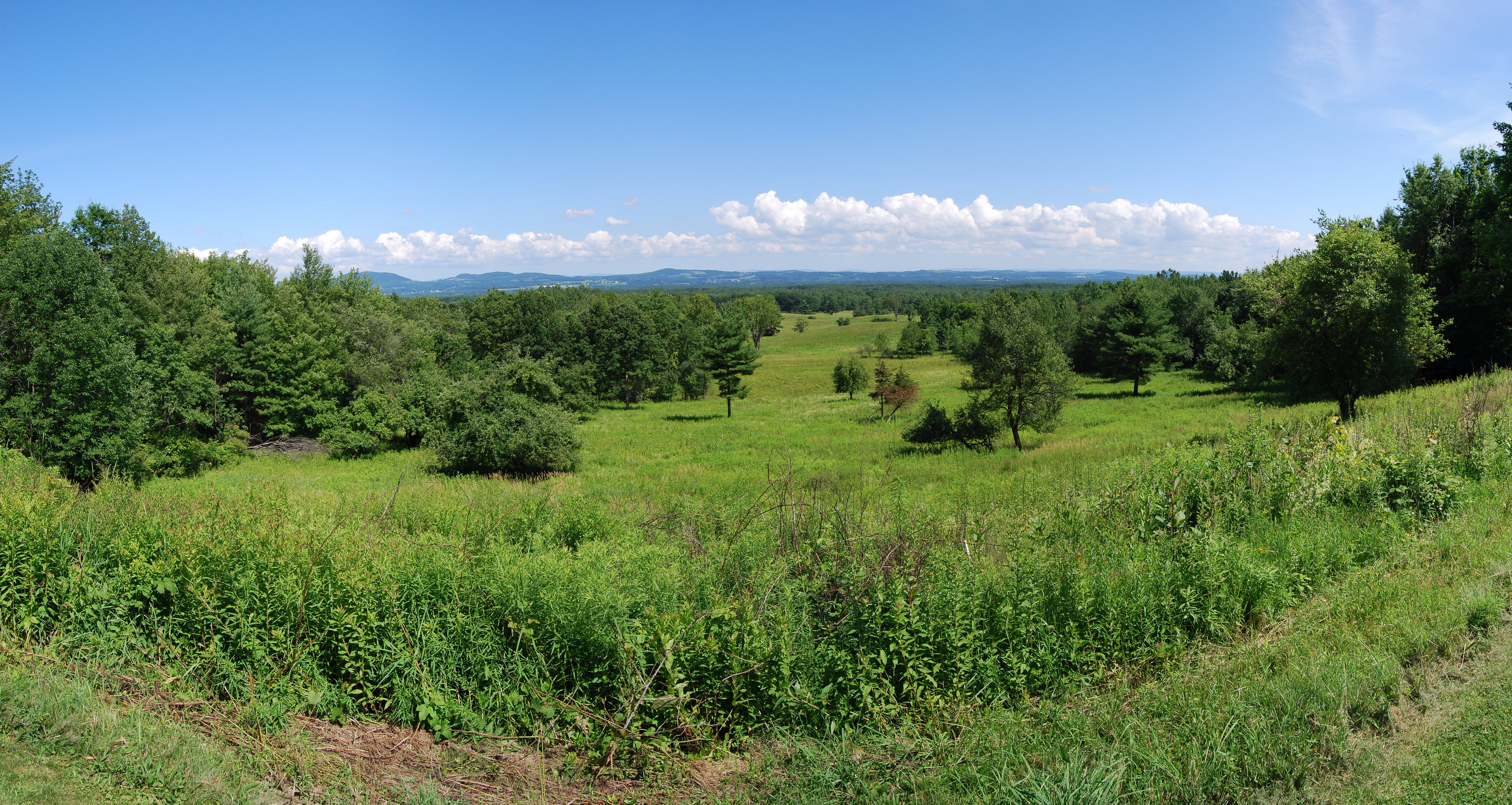
Today the Saratoga National Historical Park preserves the battlefield south of Schuylerville, where the fields and wooded bluffs look much as they did in 1777. The site where Freeman's farmhouse stood, the entrenchments on Bemis Heights, the ground where Morgan's riflemen picked off British officers from the tree line -- all remain as quiet testimony to the eighteen days that changed the course of a revolution. One of the most curious monuments on the battlefield honors Arnold's contribution without naming him: the Boot Monument, erected in tribute to the leg he wounded during the fighting, acknowledges his bravery at Saratoga while refusing to name the man who later betrayed the American cause at West Point. It is perhaps the most conflicted memorial in American history, capturing the paradox of a hero who became the nation's most famous traitor. The battles themselves, fought on the same ground just weeks apart, proved that the Continental Army could destroy a professional European force in the field and that the new nation could attract the foreign allies it needed to survive.
From the Air
Located at 43.00N, 73.64W in upstate New York, approximately 30 miles north of Albany. The Saratoga National Historical Park occupies rolling terrain along the west bank of the Hudson River south of Schuylerville. From the air, look for the open fields of Freeman's Farm against the wooded ridgeline of Bemis Heights. The Hudson River provides a clear visual reference running north-south along the eastern edge of the battlefield. Recommended viewing altitude: 2,000-4,000 feet AGL for battlefield terrain features. Nearest airports: Saratoga County Airport (5B2) approximately 15nm south, Albany International Airport (KALB) approximately 25nm south. Clear weather recommended for best visibility of the terrain features that shaped the battle.