Battleship Memorial Park
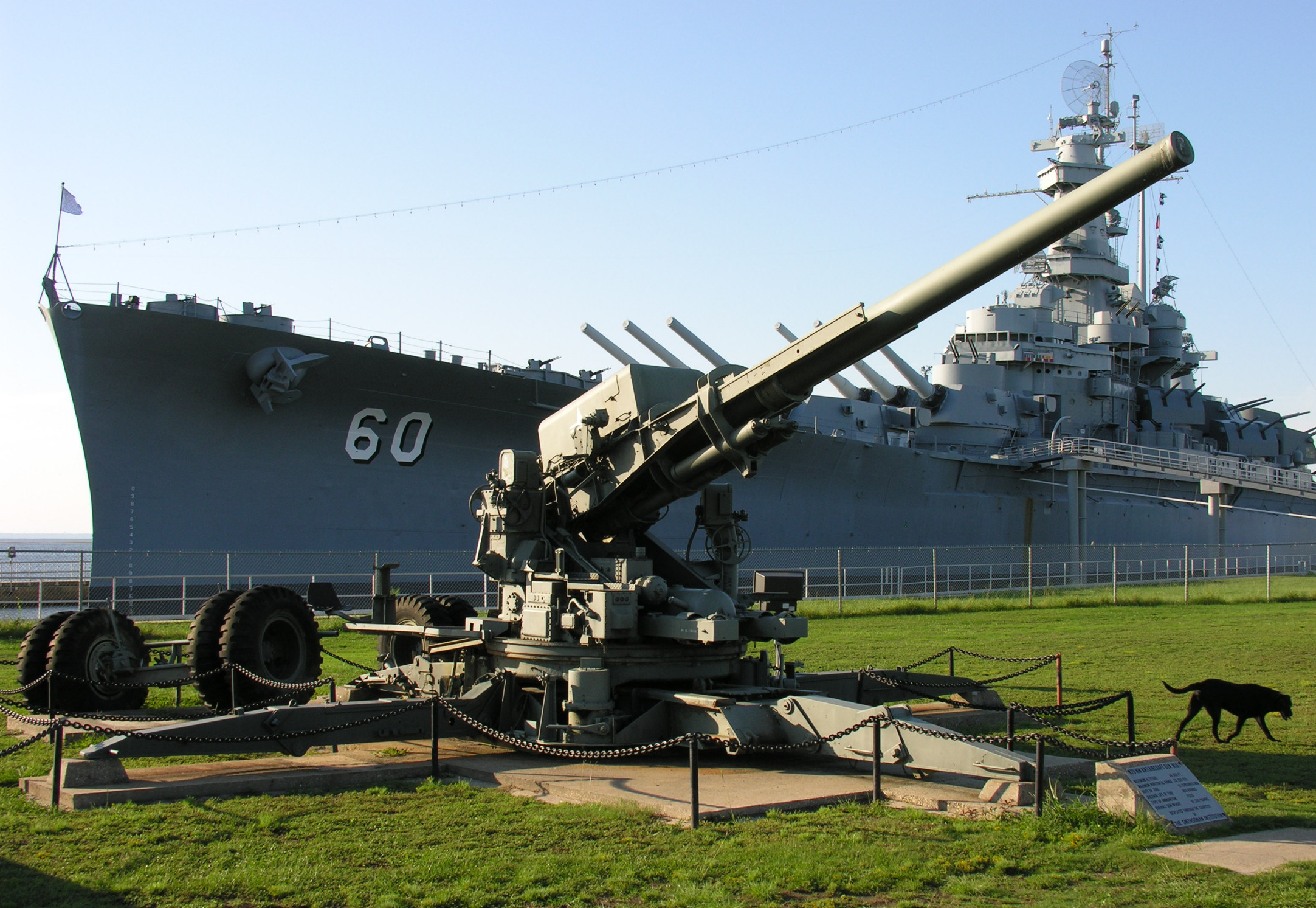
Alabama's schoolchildren did something remarkable in 1964. When the U.S. Navy ordered the battleship USS Alabama scrapped along with her sister ships, more than a million students emptied their pockets -- nickels and dimes from lunch money and allowances -- until they had raised $100,000 to bring the warship home. The 680-foot, 45,000-ton South Dakota-class battleship now rests permanently on the western shore of Mobile Bay, the centerpiece of a military history park that stretches across the Alabama waterfront like a timeline of twentieth-century American warfare.
Nine Battle Stars and 218,000 Miles
USS Alabama (BB-60) was commissioned on August 16, 1942, and spent the next 37 months in continuous combat. She started in the Atlantic, escorting Arctic convoys to the Soviet Union through the frigid waters north of Norway. Then she transferred to the Pacific, where she helped take Japanese-held islands from the Gilberts to Okinawa. By the time the war ended, Alabama had voyaged 218,000 miles, shot down 22 enemy aircraft, and earned nine Battle Stars. Not a single crewmember was lost to enemy action. After decommissioning in 1947, she sat in the Pacific Reserve Fleet for fifteen years before the scrapyard order came -- and Alabama's citizens stepped in to save her.
A Submarine's Deadly Tally
Moored alongside the battleship sits USS Drum (SS-228), a Gato-class submarine that was the first of her class completed and the first to enter combat in World War II. Drum's war record is staggering: she sank 15 Japanese ships totaling 80,580 tons, making her the eighth most successful American submarine by tonnage. She earned 12 battle stars for her service. The submarine arrived at Battleship Memorial Park on July 4, 1969, joining the Alabama as a war memorial and museum ship. Both vessels are designated National Historic Landmarks. Visitors can climb through Drum's cramped compartments to feel the claustrophobic reality of submarine warfare -- the narrow torpedo room, the tight control spaces, the bunks stacked three high.
Wings Over the Park
The park's Medal of Honor Aircraft Pavilion houses more than 30 aircraft spanning multiple conflicts. A P-51D Mustang with its distinctive red tail stands as a tribute to the Tuskegee Airmen, the pioneering African American fighter pilots who flew combat missions over Europe. Nearby, a Lockheed A-12 Blackbird spy plane -- the CIA's predecessor to the SR-71 -- crouches low on its landing gear, all sharp angles and speed. A massive B-52 Stratofortress from the Vietnam War dwarfs everything around it. On the ground, military hardware ranges from an M4 Sherman tank to a PGM-11 Redstone ballistic missile, the same type of rocket that launched America's first astronaut into space.
Weathering the Storm
Battleship Memorial Park has endured its own battles. When Hurricane Katrina slammed into the Gulf Coast on August 29, 2005, the storm surge and winds caused more than $7 million in damage across the park. The repairs kept the gates closed for months, finally reopening on January 9, 2006. But the park rebuilt, just as its ships had weathered combat decades before. Today, six times a year, living history reenactors in period uniforms bring the battleship back to life, conducting weapon briefings, demonstrating wartime drills, and sharing the stories of the crews who served aboard her. The park is entirely self-supporting, funded by admissions and gift shop sales.
A Living Memorial
The park was listed on the Alabama Register of Landmarks and Heritage on October 28, 1977, and continues to serve its original purpose as a memorial to the men and women who served in World War II and subsequent conflicts. Korean War and Vietnam War memorials stand alongside the historic vessels. In 2003, a replica of the CSS Hunley -- a Confederate submarine originally built in Mobile -- was added to the collection, connecting the park to Mobile's deeper naval heritage. The USS Alabama Battleship Commission, an independent state agency of 18 members appointed by the governor, oversees all operations. It is a park built not by government mandate but by the spare change of a million children who decided a warship was worth saving.
From the Air
Located at 30.682°N, 88.015°W on the western shore of Mobile Bay. The 680-foot battleship is clearly visible from altitude, oriented roughly north-south along the waterfront. Best viewed from 2,000-3,000 feet AGL approaching from the east over Mobile Bay. The aircraft collection is visible just south of the battleship berth. Nearby airports: KMOB (Mobile Regional Airport, 10 nm west), KBFM (Mobile Downtown Airport, 4 nm west), KNBJ (Naval Air Station, 6 nm south). Mobile Bay itself is a major visual landmark -- follow it north from the Gulf of Mexico to find the park on the western shore.