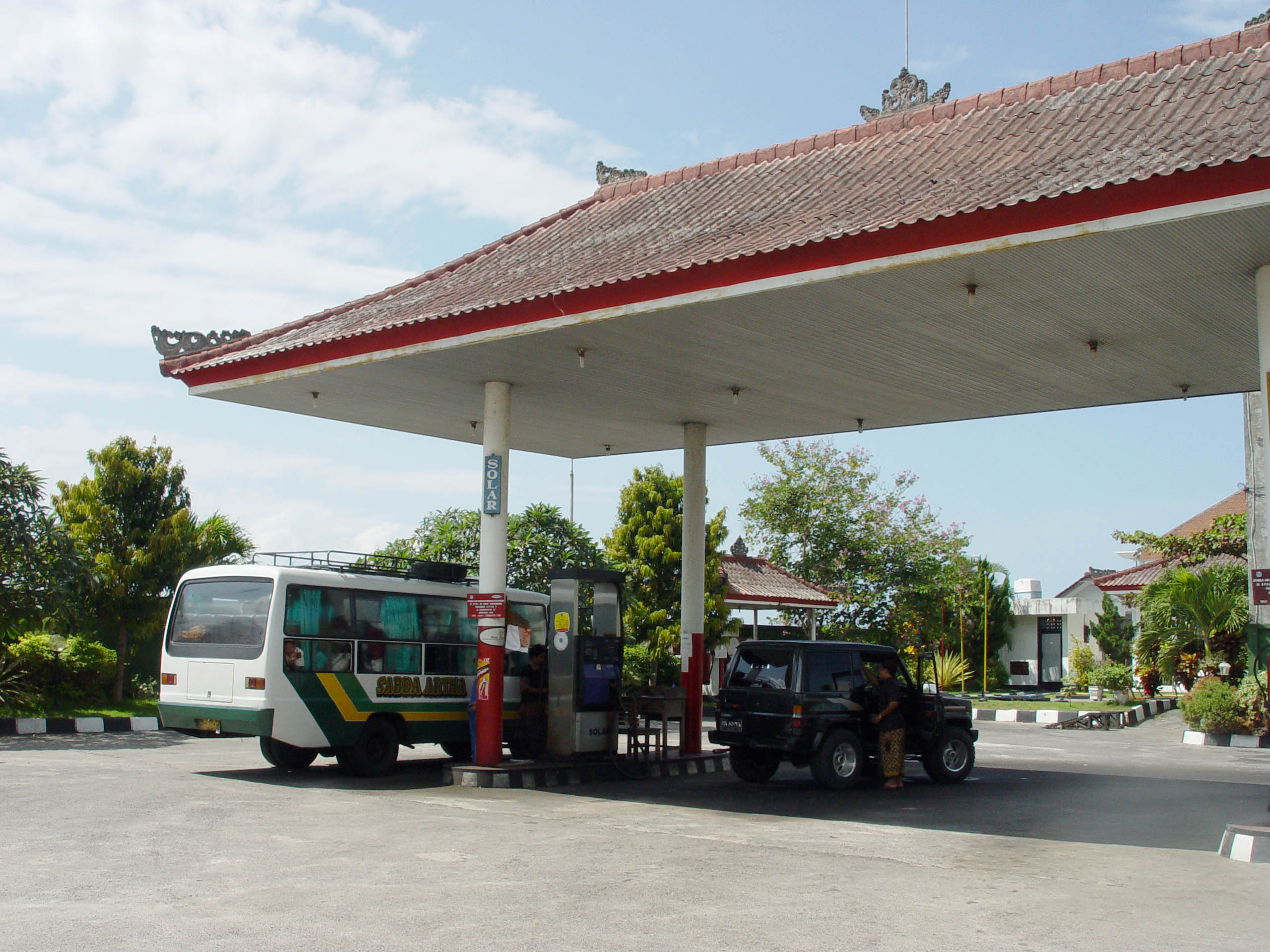
Batuan, Bali
Look closely at a Batuan painting and you will lose yourself. A dog fight erupts in one corner of the canvas. A love affair unfolds in another. Gamblers huddle beneath vegetation so meticulously rendered that each leaf is individually shaded. Scenes emerge and retreat into the dark background like figures glimpsed through jungle -- and that is precisely the point. In this small Balinese village ten kilometers south of Ubud, artists have been painting this way since the 1930s, filling every surface with a teeming, intricate vision of life that anthropologists interpret as nothing less than a visual text of Balinese character itself.
Ink and Sorcery
The Batuan style stands apart from the other major Balinese painting traditions of Ubud and Sanur. Where Ubud paintings tend toward refined mythological narrative and Sanur work absorbed Western influence early, Batuan artists adopted somber palettes -- dominated by black and white -- and filled their canvases with images steeped in mystical religious life, sorcery, and witchcraft. The dark backgrounds were said to evoke the supernatural. Artists paint with extraordinary patience, rendering batik sarong patterns down to the smallest figure, filling even open space with pulsating marks that give the canvas a living, breathing density. Yet the Batuan style is not all darkness and devotion. Unlike the Ubud tradition, Batuan painters folded daily life into their work -- factual scenes camouflaged behind masks, rendered in bolder colors of green and maroon. The canvases still follow a traditional three-tier structure: human activities at the bottom, ritual life in the middle, and the realm of gods above.
The Pita Maha and the Tourists
Batuan's artistic identity crystallized through the Pita Maha, a painters' cooperative founded in the 1930s with encouragement from the European artists who had settled in Bali. The Pita Maha painters combined Buddhist mythology with vivacious, inventive imagery, producing works described as naive-style paintings that depicted daily life with humor verging on caricature. Tourism arrived alongside the art movement and never left. By the 1970s, the relationship between village and visitor had grown so intertwined that local performers devised an entirely new frog dance specifically for tourists -- a dance that then folded back into Balinese social life and began appearing at wedding receptions. The artist I Wayan Bendi took the symbiosis further, painting himself as the central figure surrounded by tourists in various states of leisure, turning the tourist gaze itself into art. His format became a flourishing genre, galleries multiplied, and today the village is dominated by studios where painters work within sight of the visitors who sustain them.
Stone, Inscription, and Sacred Ground
Batuan's artistic fame overshadows an architectural heritage that predates the painting tradition by nearly a millennium. The village temple Pura Puseh, an ancient structure embellished with intricate stone carvings, holds an inscription establishing the founding of Batuan in 1022 CE -- recorded as Saka 944 in the Indic calendar. The temple is a five-tiered gateway tower whose architecture reveals Indian religious influence while its decorative style remains thoroughly Balinese. A Bhoma head guards the main gateway. The god Wisnu sits astride a bull. Elephants march along the central stairway balustrade, and Siwa stands among skulls. Visitors are given vermilion sarongs to wear upon entry, a small ritual that marks the transition from secular to sacred space. Nearby, the Pura Desa Batuan temple anchors the other end of the village's ceremonial life, with a concrete performance pavilion built in front where dance troupes now perform for the tourist audiences that keep these traditions financially viable.
When the Gods Descend
Every 210 days, the Galungan festival transforms Batuan and all of Bali. The Balinese believe that on this day the gods descend to earth, and families mark their arrival by erecting penjor -- tall, curved bamboo poles -- at the entrance to each family compound. The celebration lasts ten days, ending with Kuningan, and includes temple ceremonies, music, dancing, elaborate decorations, and food offerings. During the village's own Odalan festival, held on the same 210-day cycle, child musicians perform alongside adults in a tradition of intergenerational artistic participation that mirrors the village's broader culture. The ancient Gambuh dance, a theatrical form fusing singing, drama, and visual art that reportedly evolved in the 15th century, is still performed in Batuan on full moon days and at ceremonies for marriages, cremations, and other rites. This dance form is said to be declining, though -- one more tradition whose survival depends on whether attention, local or foreign, can sustain it.
From the Air
Batuan (8.59S, 115.28E) lies in central Bali about 10km south of Ubud and 15km northeast of Denpasar. The nearest airport is Ngurah Rai International Airport (WADD/DPS) approximately 25km to the southwest. The terrain is flat in this part of Bali, surrounded by rice paddies. The village is small and may not be individually distinguishable from altitude, but the flat agricultural landscape between the highlands and coast is characteristic. Mount Agung (3,031m) is visible to the northeast. Tropical climate with wet season November-March.