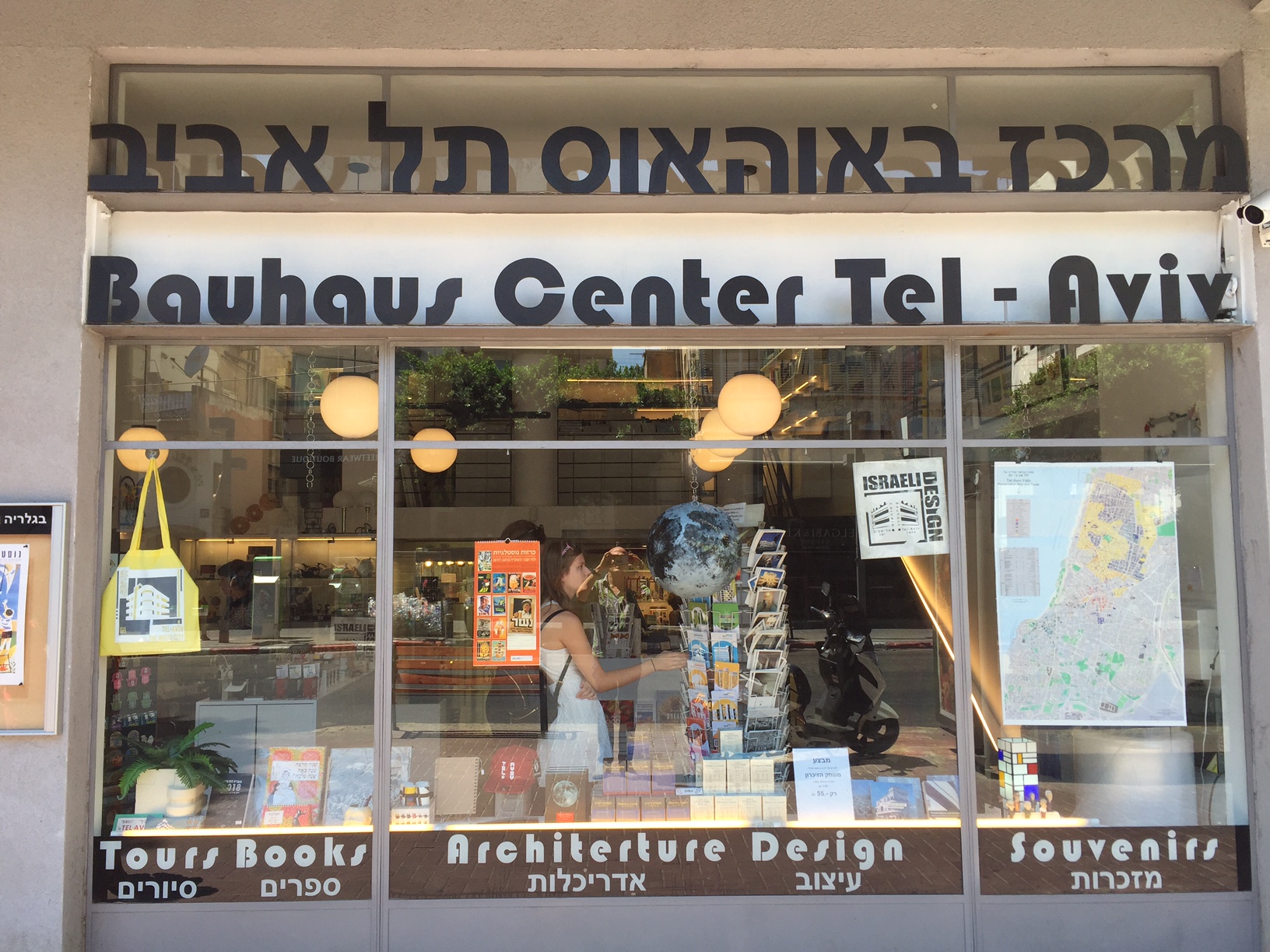
Bauhaus Center Tel Aviv
Walk down Dizengoff Street in central Tel Aviv and you will pass more Bauhaus-influenced buildings in a single afternoon than exist in Dessau, Germany, where the movement was born. Over 4,000 structures built in the International Style line the boulevards of what UNESCO designated a World Heritage Site in 2003 -- a neighborhood known simply as the White City. At number 77, the Bauhaus Center exists to explain how this unlikely architectural concentration ended up on the eastern Mediterranean, thousands of miles from the German school that inspired it.
Refugees and Blueprints
The story begins with persecution. When the Nazis closed the Bauhaus school in 1933, its graduates scattered across the world. A disproportionate number were Jewish, and many emigrated to British Mandate Palestine during the 1930s. They arrived in a young city desperate for housing -- Tel Aviv had been founded only in 1909 -- and they brought with them the clean geometry, flat roofs, and functional layouts that Walter Gropius and his colleagues had championed. The architects adapted the style to the Mediterranean climate: narrow windows to reduce sun exposure, raised pilotis for ventilation, and long balconies that caught the sea breeze. The result was not a transplanted German aesthetic but something distinctly local -- Bauhaus filtered through Middle Eastern light and necessity.
The Center at 77 Dizengoff
Founded in 2000 by Asher Ben Shmuel, Micha Gross, and Shlomit Gross, the Bauhaus Center occupies a building on one of Tel Aviv's most iconic streets. The founders recognized that the city's extraordinary architectural heritage was deteriorating through neglect and that many residents walked past these modernist landmarks without a second glance. The Center combines a specialized bookstore and library -- with archival material and rare publications on the Bauhaus era in Palestine -- with a gallery that mounts documentary exhibitions on Tel Aviv's architecture, culture, and photography. It also serves as an independent publishing house, producing its own books on the subject. Walking tours depart from the Center, guiding visitors through the White City's most prominent examples of 1930s and 1940s International Style buildings, tracing the routes of architects who remade a city.
A City Preserved in Plaster
The White City designation by UNESCO in 2003 transformed how Tel Aviv thought about its own fabric. Before the listing, many Bauhaus buildings had been crudely modified -- balconies enclosed, facades covered, original features stripped. The UNESCO recognition sparked a conservation movement that the Bauhaus Center has actively supported, collaborating closely with the Israel National Commission for UNESCO, the Municipality of Tel Aviv, and educational institutions across the country. The Center's gallery and tour program helped shift public perception, turning what had been anonymous apartment blocks into objects of cultural pride. Today the rounded corners, horizontal strip windows, and pilotis of the White City are among the most photographed features of Tel Aviv -- a cityscape where modernist architecture and Mediterranean informality coexist in improbable harmony.
More Than Architecture
Beyond documentation, the Center positions Bauhaus as a design philosophy that transcends buildings. Its shop offers items spanning fashion, interior design, Judaica, and jewelry, all rooted in the Bauhaus principle that form and function are inseparable. Local Israeli artists and designers use the space to exhibit and sell their work, connecting the legacy of 1930s European modernism to contemporary creative practice in Tel Aviv. The Center also runs self-guided audio tours around Dizengoff Square, allowing visitors to explore at their own pace. For a city that reinvents itself constantly, the Bauhaus Center serves as a kind of architectural conscience -- a reminder that Tel Aviv's most distinctive visual identity was created by refugees who built a new world in the language of the one they had lost.
From the Air
Located at 32.077N, 34.774E in central Tel Aviv, along Dizengoff Street. The White City's distinctive grid of low-rise white buildings is visible from moderate altitude as a contrast to the taller modern towers along the coastline. Ben Gurion International Airport (LLBG) is approximately 12 nm southeast. Best appreciated at 2,000-4,000 ft AGL where the uniform white rooftops of the Bauhaus district become apparent against the surrounding urban fabric.